Unreal Engine · 蓝图实现背包、动画、伤害、AI 与关卡交互Unreal Engine · Blueprint inventory, animation, damage, AI and level interactions
规模Scope
两层两大区域 · 20 名丧尸 · 16 处噪声区Two floors, two areas · 20 zombies · 16 noise zones
流程Playthrough
完整实机流程约 5 分 08 秒Full run about 5 min 08 s
01 / 07
两层空间,三段风险节奏Two floors, three phases of risk
一层学习噪声,二层冒险搜寻,返程检验弹药分配。Learn noise downstairs, search at risk upstairs, then manage ammunition on the return.
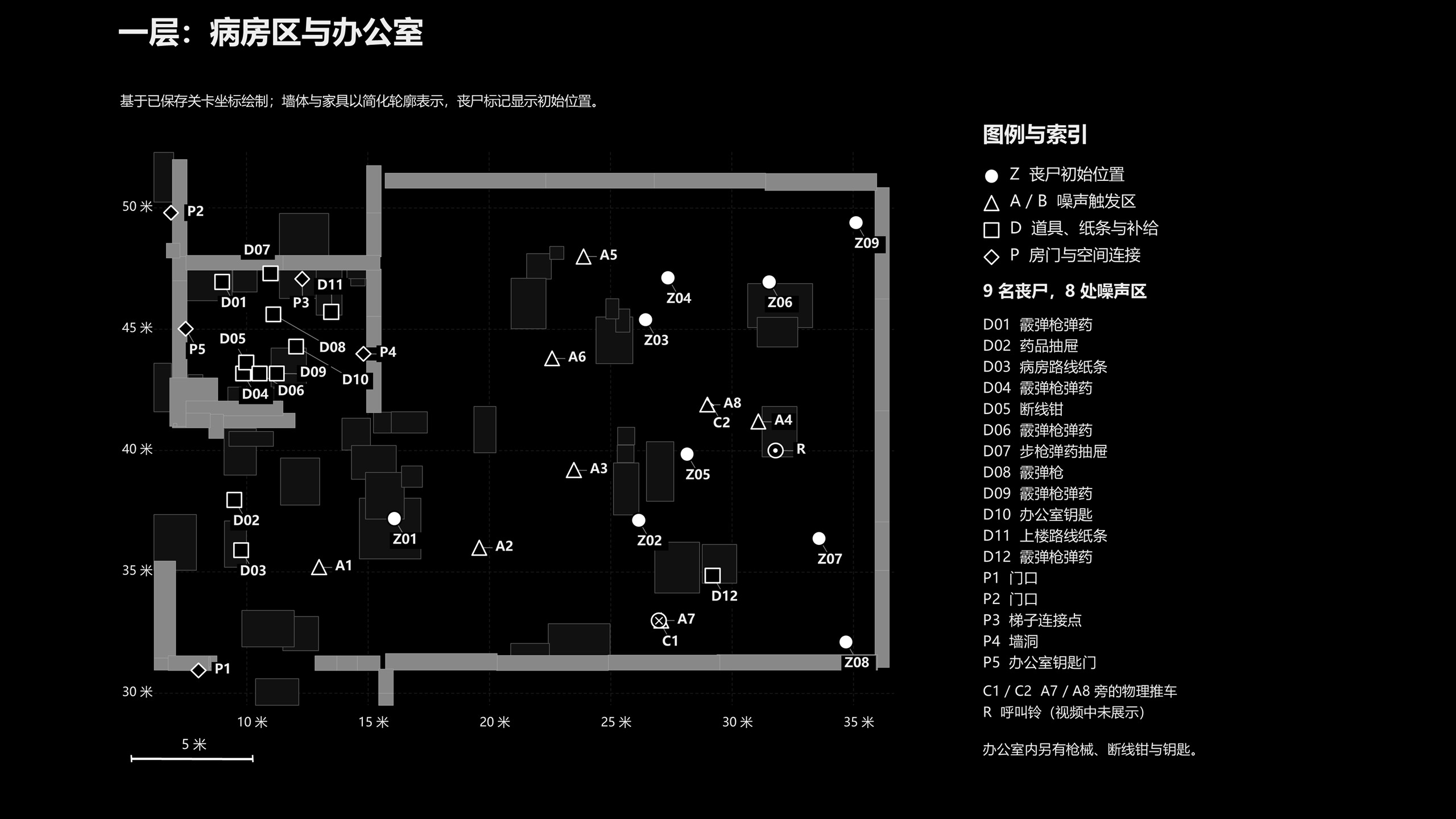
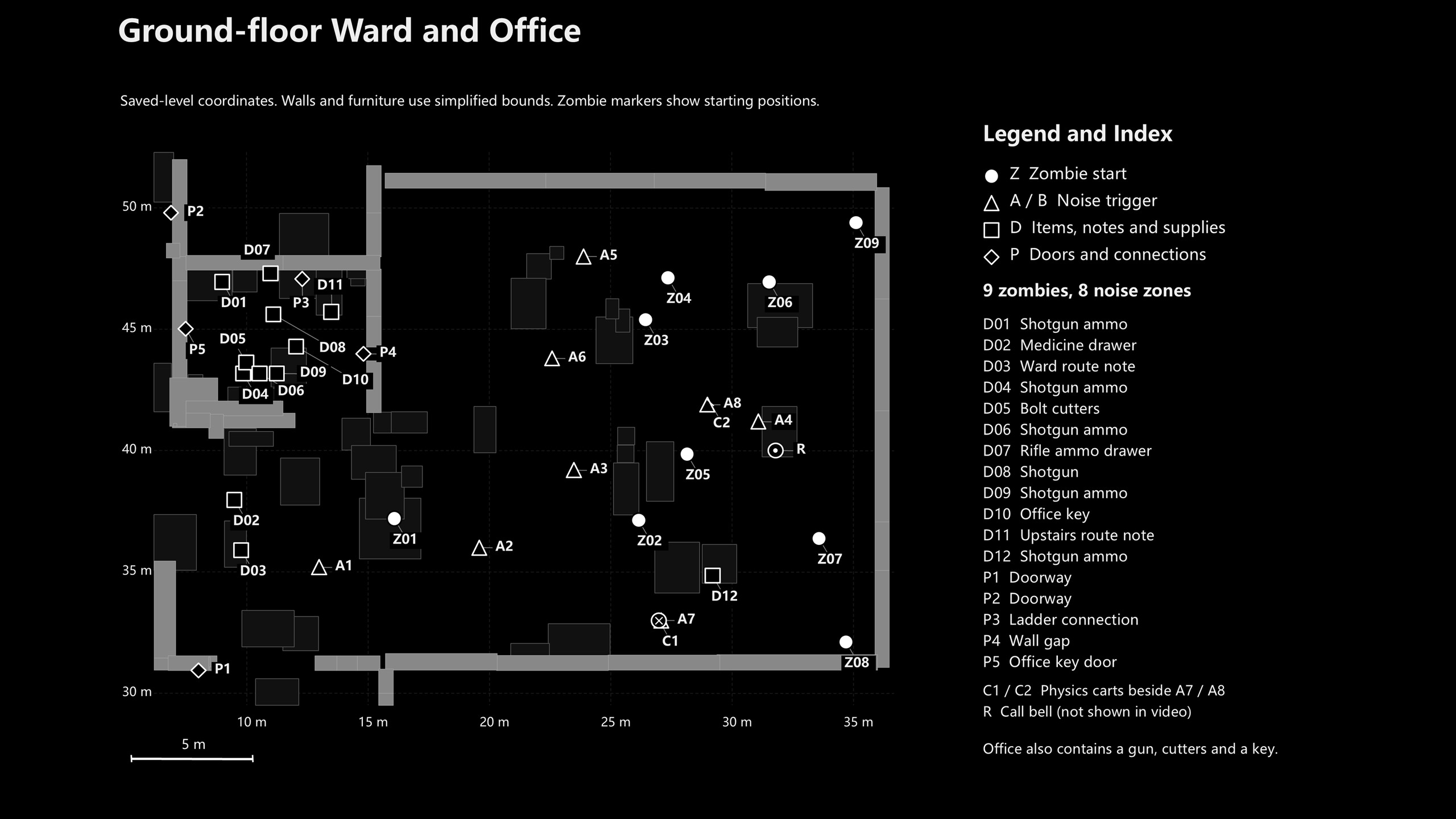
一层平面图Ground floor map基于已保存的关卡坐标绘制。Z 丧尸初始位置 · A 噪声触发区 · D 道具、纸条与补给 · P 房门与连接。9 名丧尸,8 处噪声区。图例里一层的霰弹枪、断线钳与办公室钥匙是录制时的测试摆放;正式流程中它们都在二层获得。Drawn from saved level coordinates. Z zombie start · A noise trigger · D items and notes · P doors. 9 zombies, 8 noise zones. The ground-floor shotgun, bolt cutters and office key in the legend were test placements during recording; in the real run all three are found upstairs.
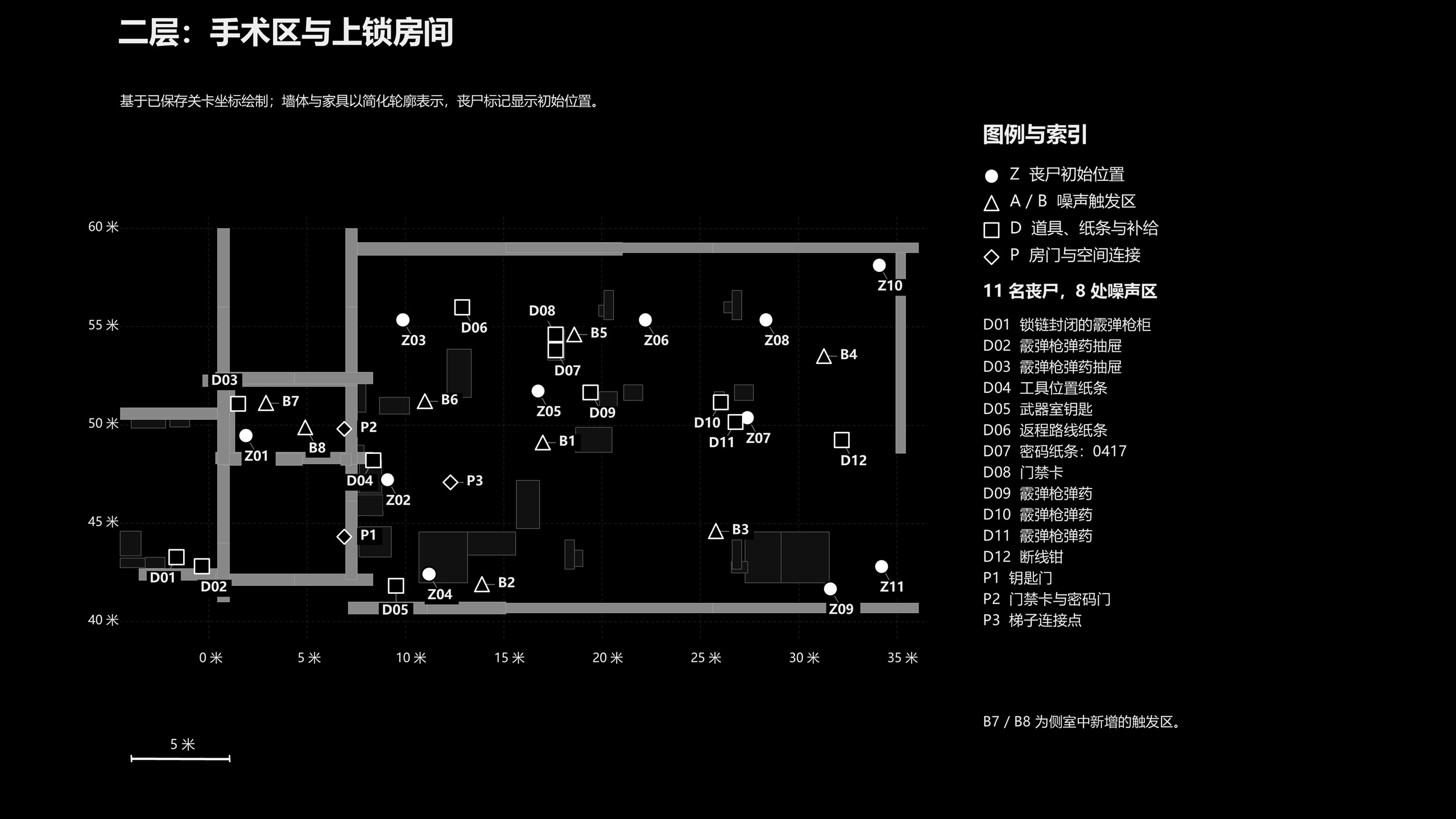
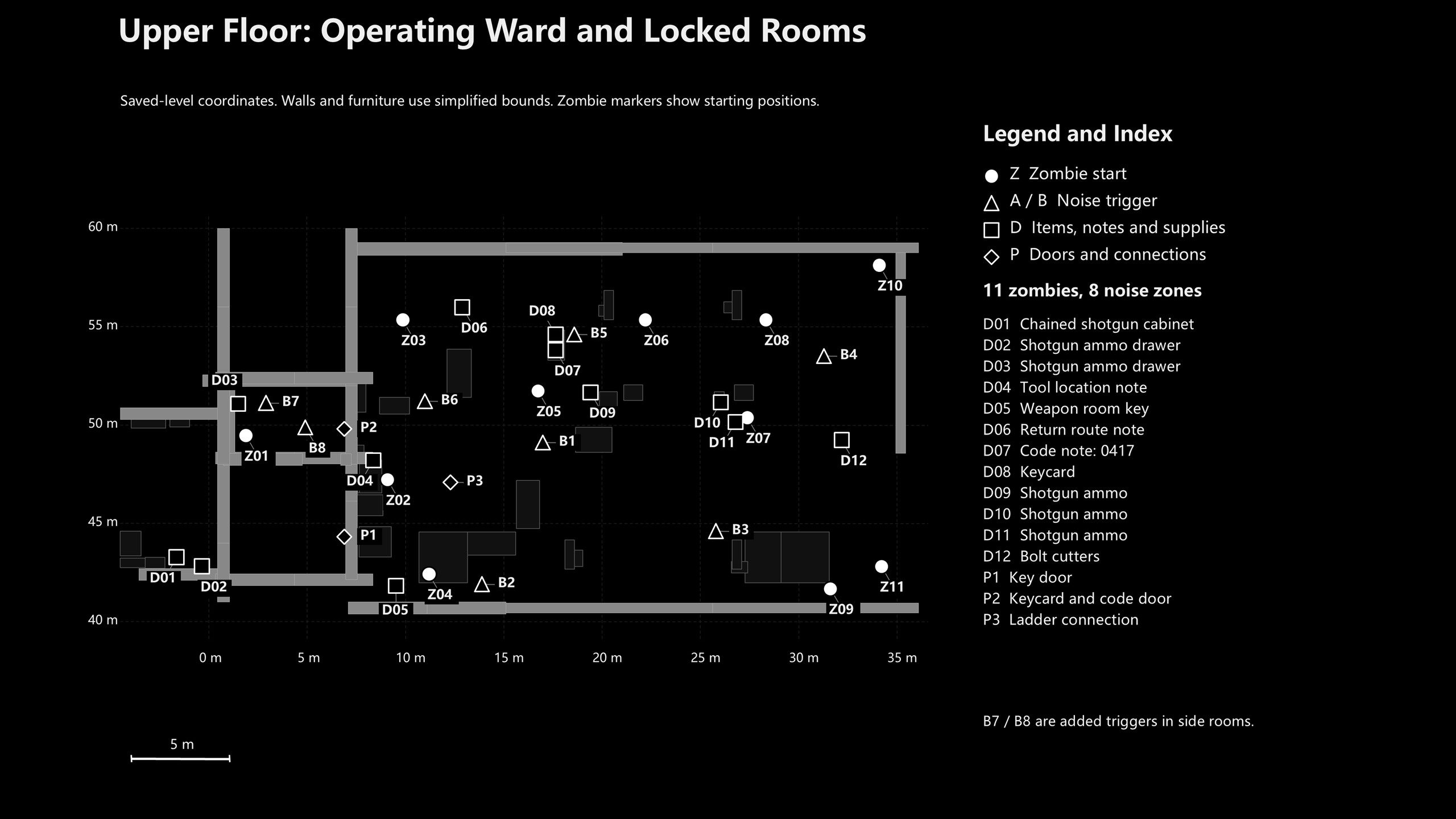
二层平面图Upper floor map11 名丧尸,8 处噪声区;B7 / B8 为侧室中新增的触发区。11 zombies, 8 noise zones; B7 / B8 were added in the side rooms.
进入病房区Enter the ward学习噪声风险Learn noise risks
寻找墙洞Find the wall gap抵达办公室,阅读工具线索Reach the office, read the tool clue
爬梯上楼Climb upstairs搜寻手术区:钥匙、密码与断线钳Search for keys, code and cutters
解锁两个房间Unlock both rooms收集武器与装备,顺序自选Collect weapon and gear, any order
返回办公室Return to the office钥匙打开此前封闭的门The key opens the blocked door
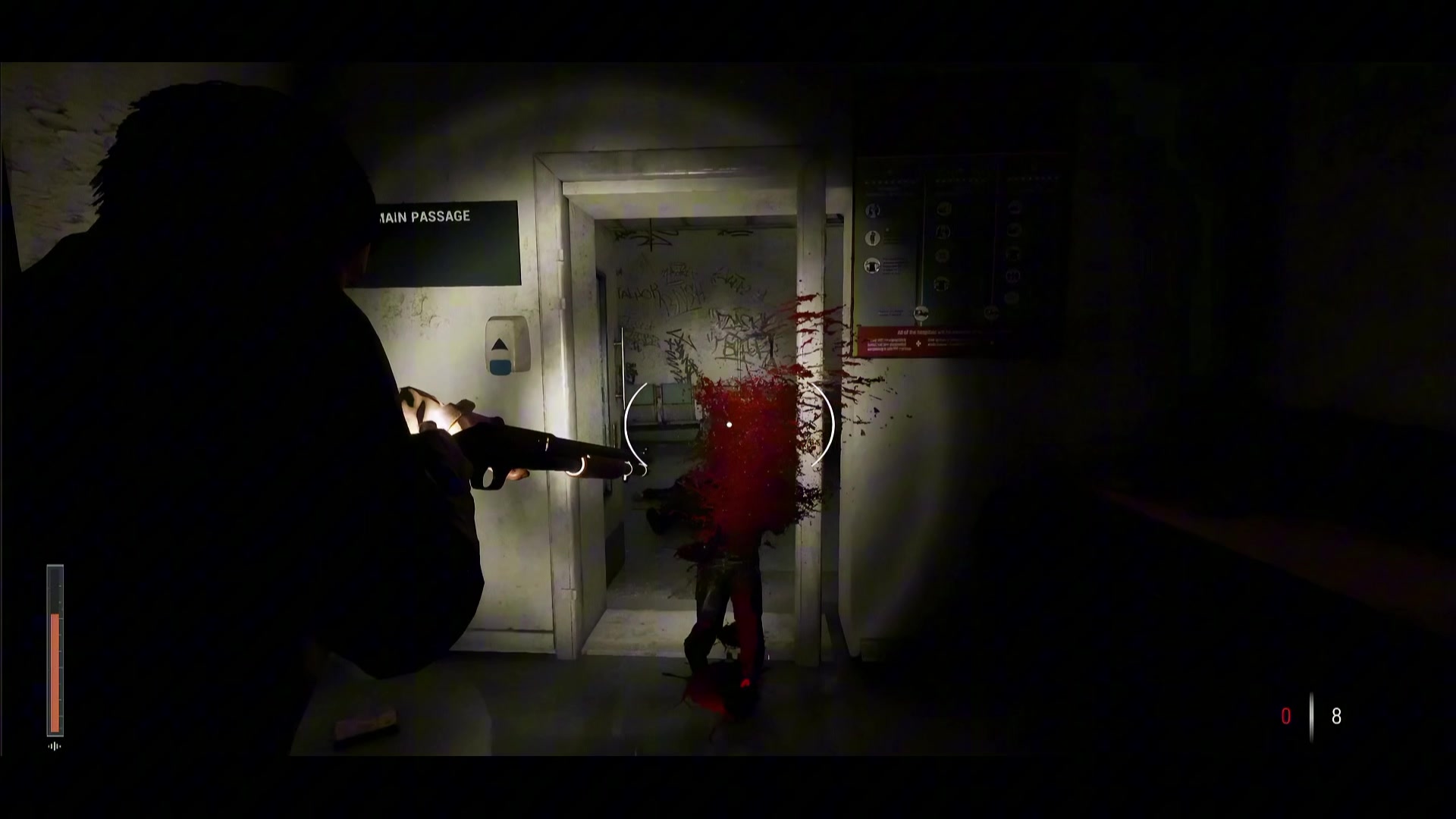
走廊战斗Corridor fight分配有限弹药,剪断出口锁链,逃离Spend limited ammo, cut the chain, escape
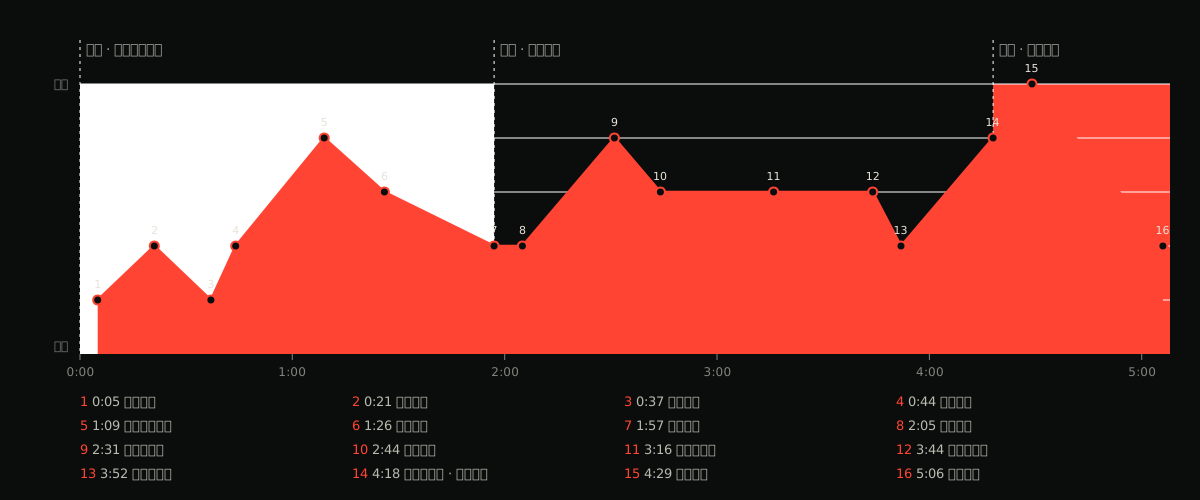
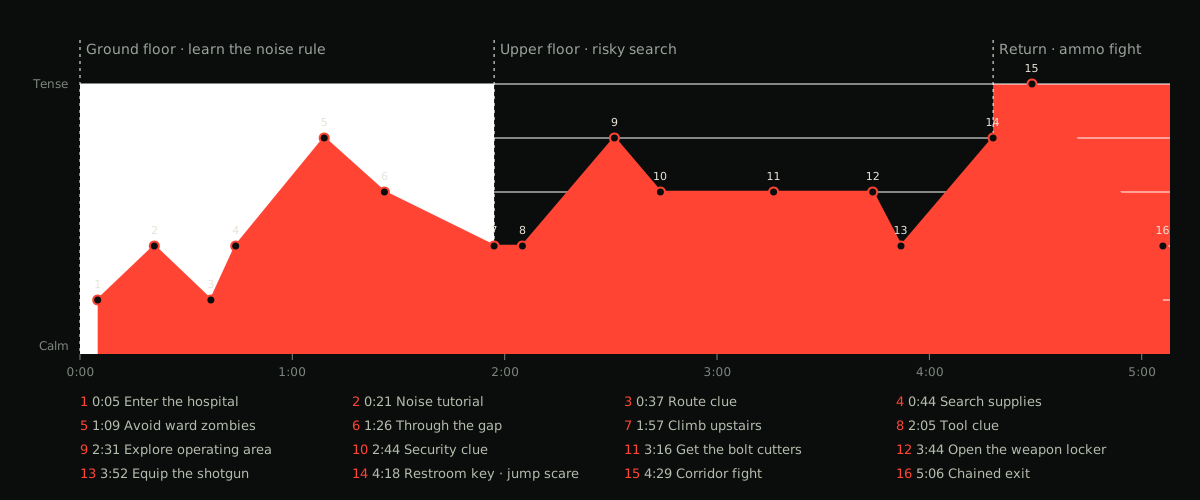
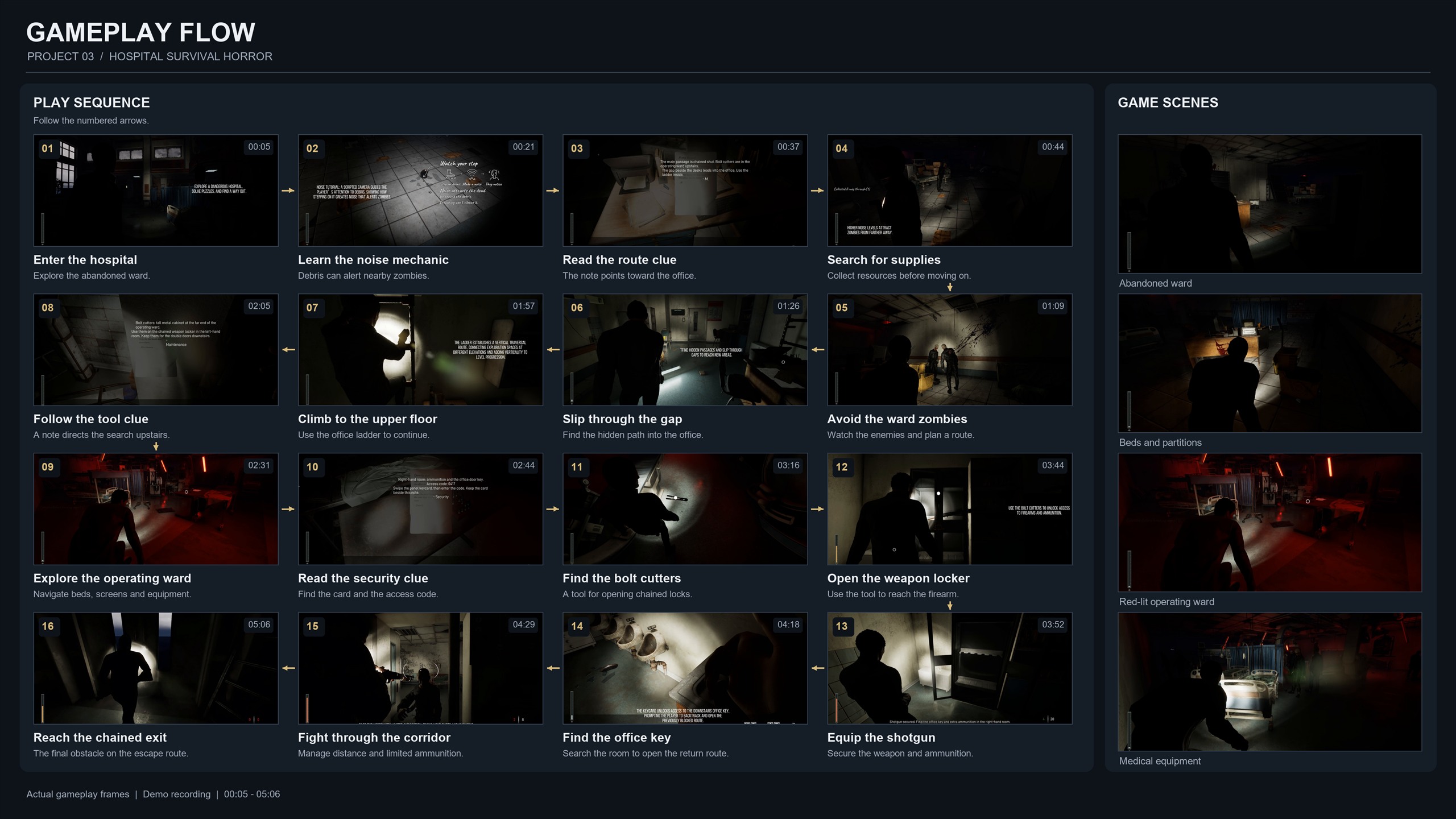
紧张度曲线Tension curve横轴是完整实机流程的 16 个时间点,高低按每个事件的威胁程度标注。三次高峰逐级升高,爬梯上楼和拿到霰弹枪是两次喘息。The horizontal axis follows 16 moments of the full playthrough; height marks each event's threat. Three peaks rise in turn, with climbing upstairs and picking up the shotgun as two breathers.
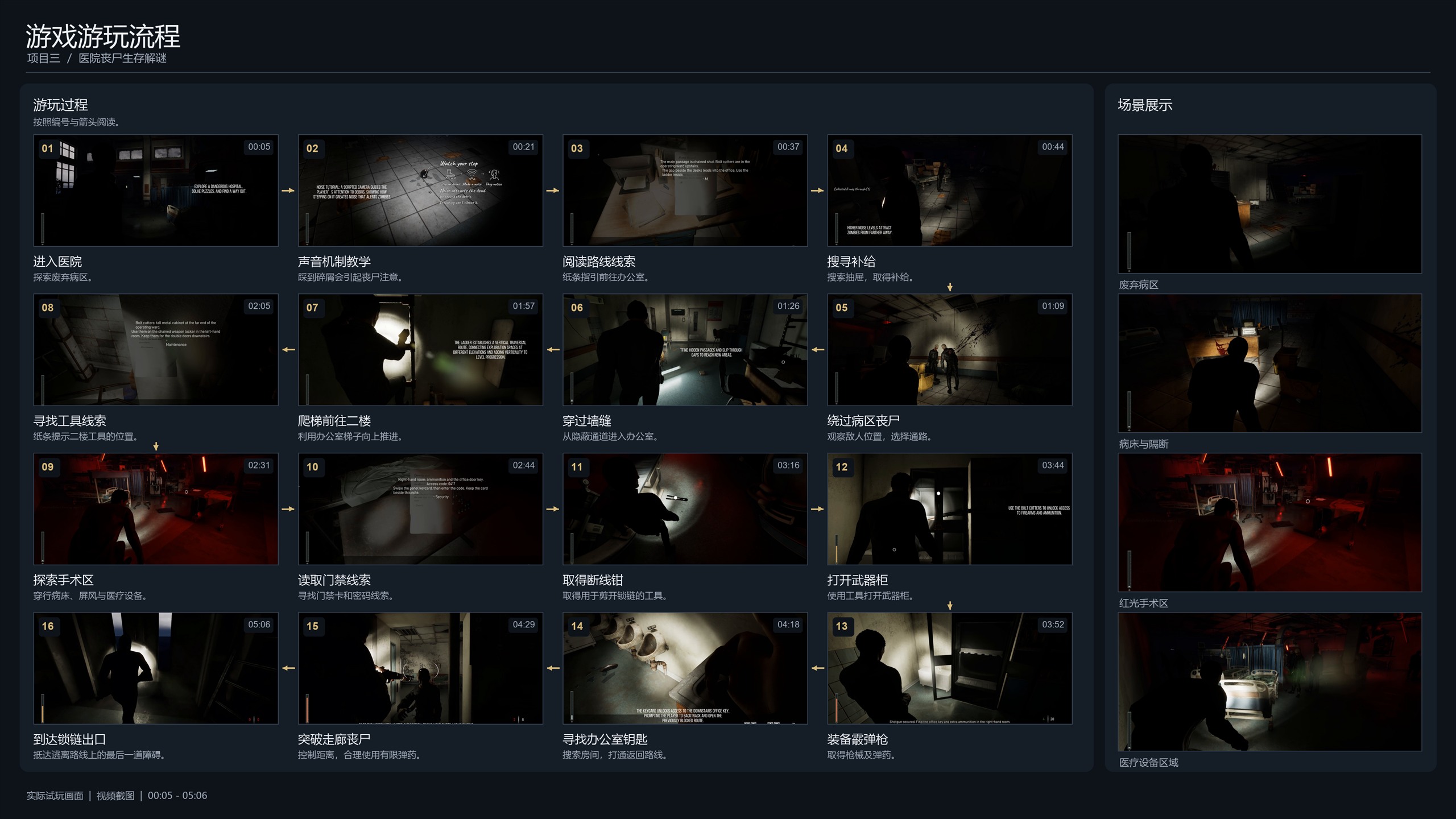
游戏流程Gameplay flow截自完整实机流程。点击看大图。Frames from the full gameplay run. Click to enlarge.
My contribution我如何搭起这条路线How I built the route
场景搭建Environment build
从空区域出发,围绕目标、路线与陷阱搭建病房区和手术区,布置病床、隔断、交互点与空间连接。
Built the ward and operating ward from empty areas around objectives, routes and traps: beds, partitions, interaction points and connections.
关卡设计Level design
组织探索流程与道具依赖:一层教授规则,二层通过有风险的搜寻检验规则,返程解锁后进入最终战斗。
Structured exploration and item dependencies: the ground floor teaches, the upper floor tests through risky searches, and the return unlock leads to the final fight.
门锁与道具依赖Locks and items一次搜寻,在多个阶段发挥作用One search, several payoffs
武器室钥匙Weapon room key二层钥匙门Upstairs key door
门后是武器房:用断线钳剪开武器柜,拿霰弹枪和霰弹。
Behind it is the weapon room: cut the locker open with the bolt cutters and take the shotgun and shells.
门禁卡 + 0417Keycard + 0417二层密码门Upstairs code door
密码写在纸条上,与门禁卡放在同一张桌上。门后是厕所,里面有办公室钥匙和霰弹。
The code note and keycard share one desk. Behind the door is the restroom, with the office key and shells.
断线钳Bolt cutters武器柜与出口锁链Weapon cabinet & final chain
同一把断线钳先开武器柜,最后剪断出口锁链。
The same cutters open the cabinet and, finally, the exit.
办公室钥匙Office key一层办公室门Downstairs office door
在二楼厕所拿到;回到熟悉的办公室,钥匙打开通往战斗区的新路。
Found in the upstairs restroom; back in the office, it opens a new route into combat.
02 / 07
研究参考与设计目标Research and design goals
研究了什么,以及如何转化为路线、资源与声音的设计目标。What I studied, and how it shaped goals for routes, resources and sound.
References研究参考:关卡结构、资源管理与声音感知References: level structure, resources and sound
研究问题:如何让玩家权衡前进的收益、暴露的风险与资源的消耗?
Research question: how can players weigh the reward of pushing on against the risk of exposure and the cost of resources?
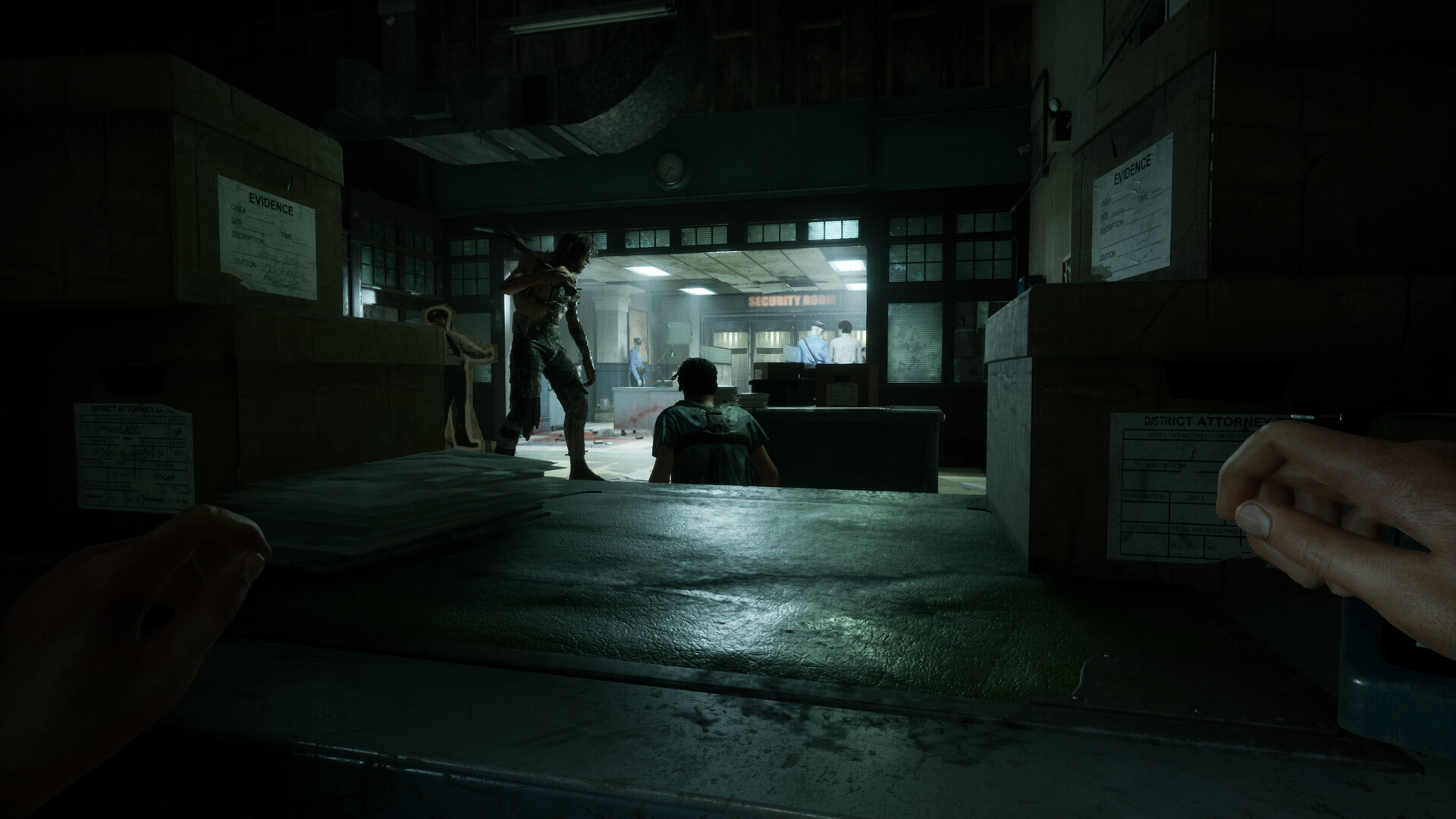
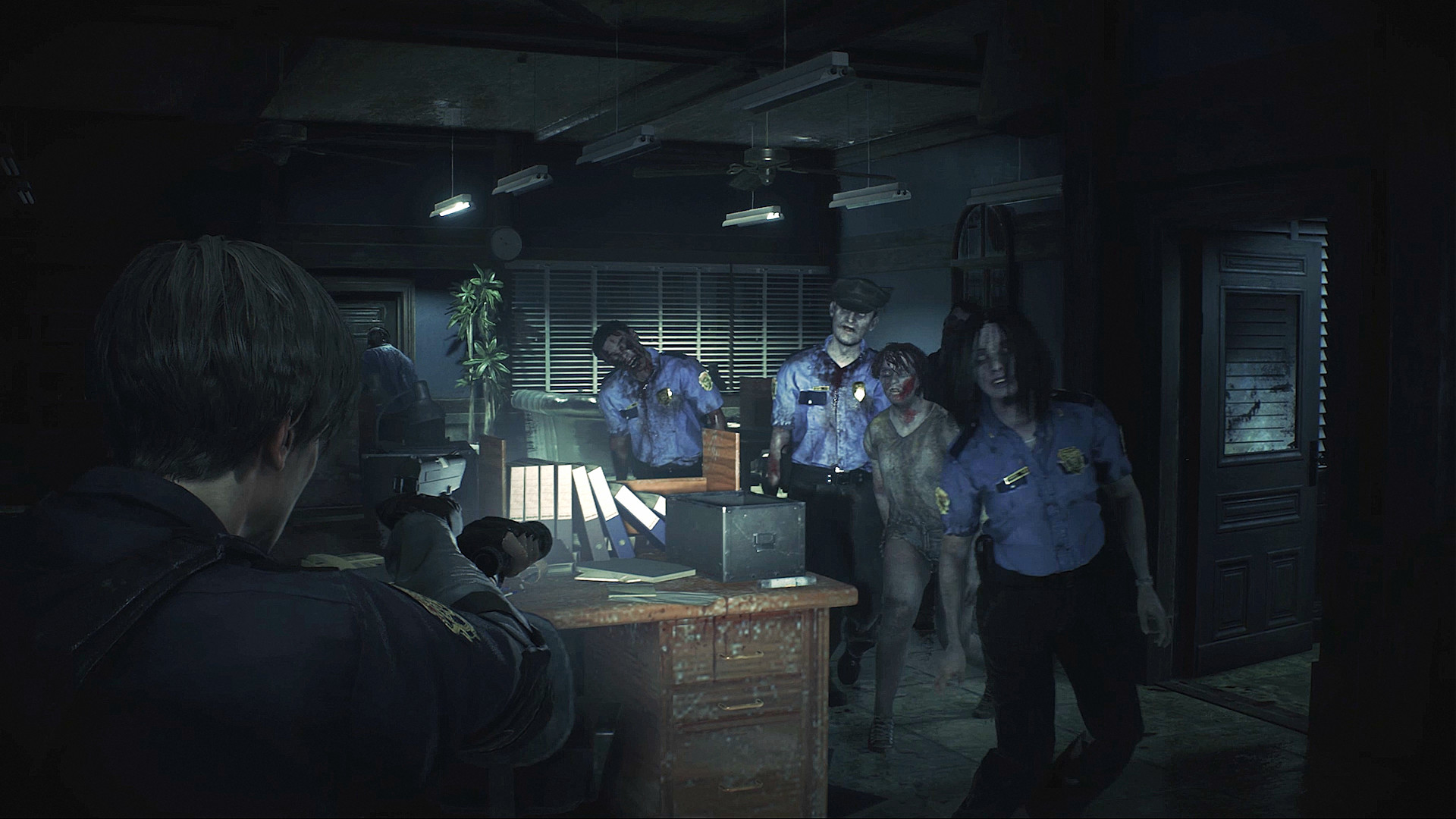
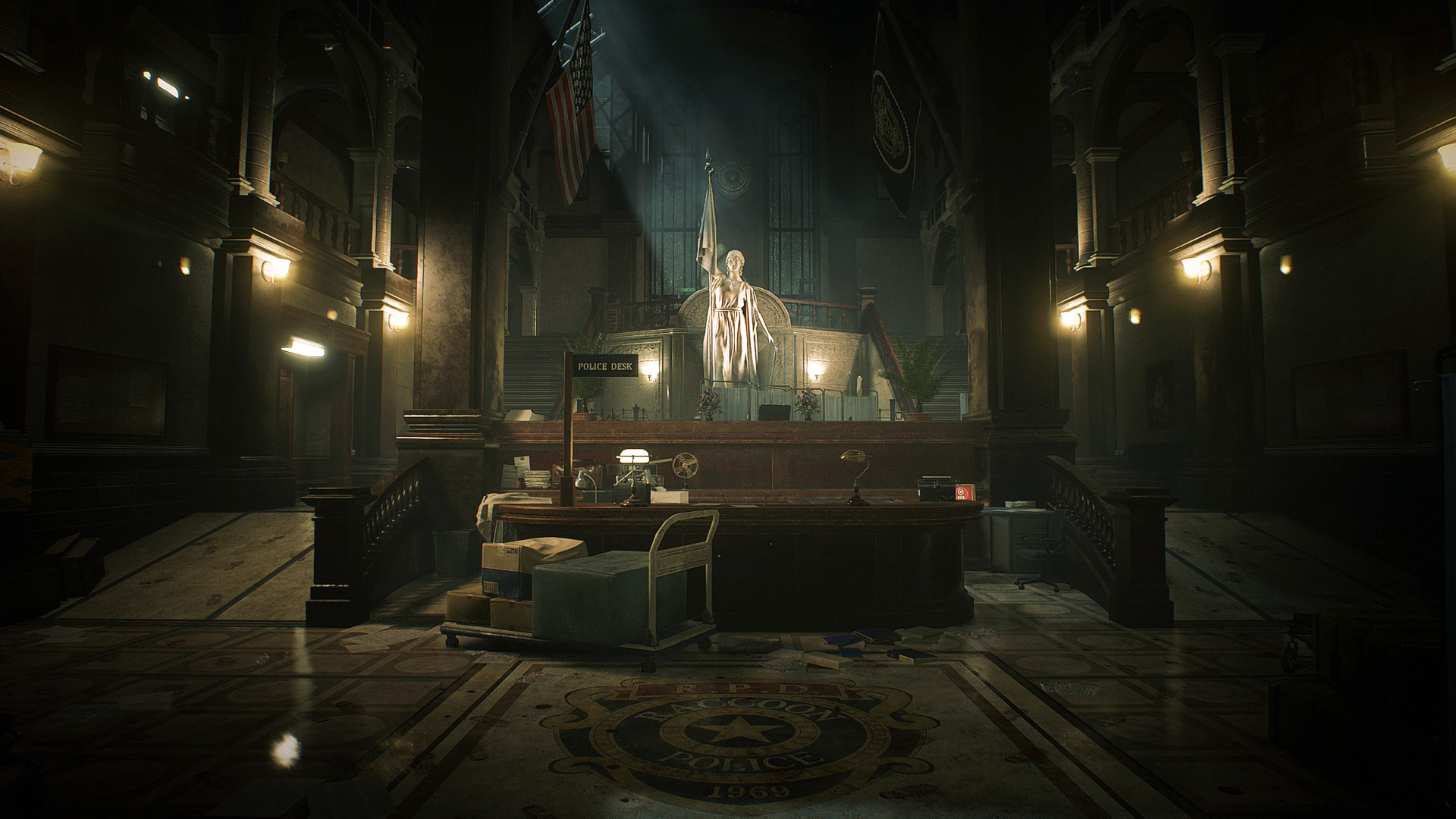
Reference: the police station weaves rooms, locked doors and keys into one space you cross again and again; returning with a key opens new routes through places you have already been. Taken: the ground-floor office door is locked at first; the key found in the upstairs restroom opens it on the way back, leading to the final corridor fight. An early obstacle becomes the new exit.
参考Reference《生化危机 2》重制版警察局大厅,CAPCOM,图源 Steam 商店页Resident Evil 2 (remake), police station hall, CAPCOM; image from the Steam store page
我的关卡My level一层平面图:办公室钥匙门早先锁着,返程时用二层拿到的钥匙打开。Ground floor map: the office key door stays locked until you return with the key from upstairs.
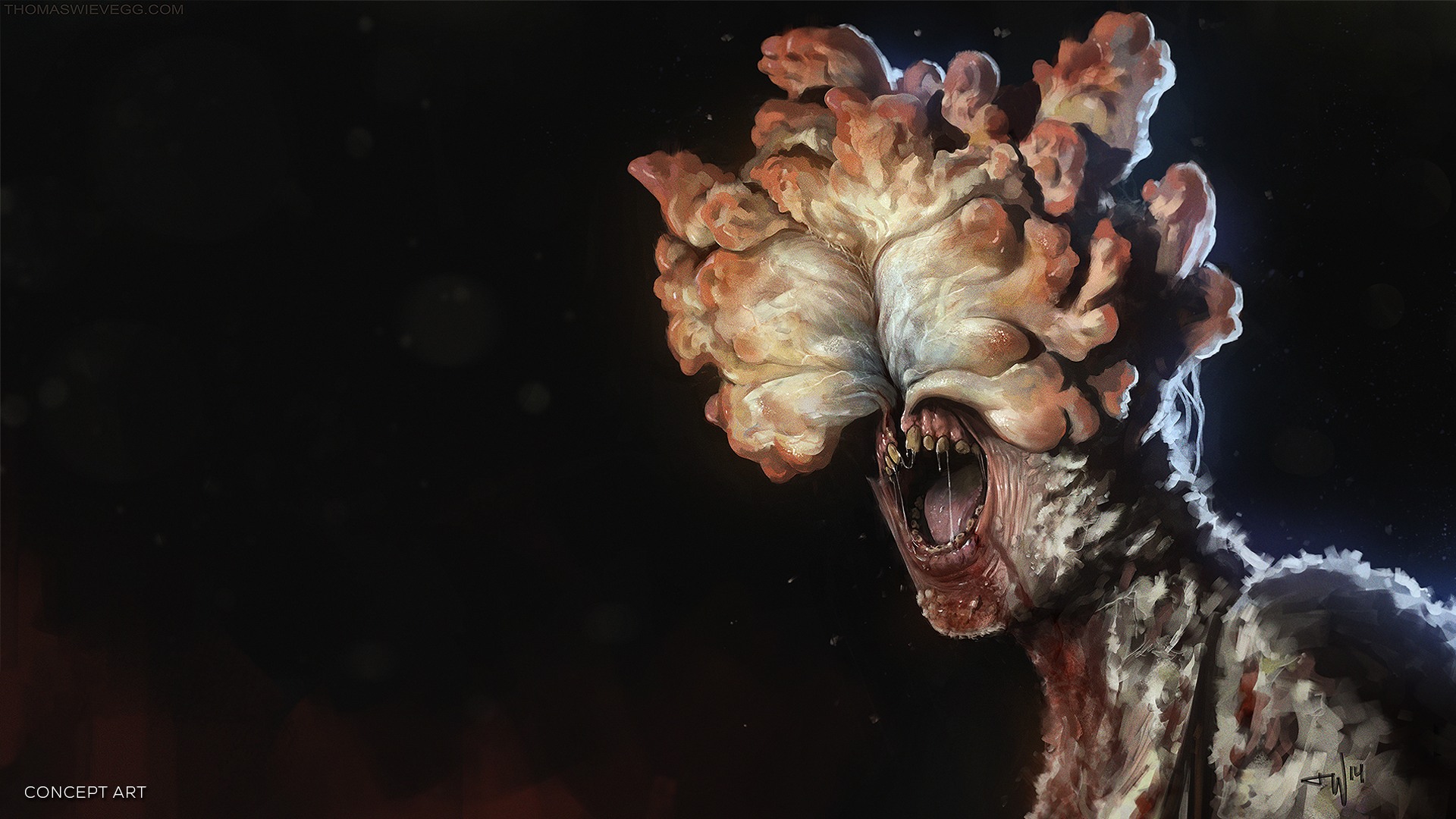
《最后生还者》循声者The Last of Us — Clickers
参考:失去视觉,依靠声音感知环境;警觉反应帮助玩家判断风险。借鉴:让移动方式改变敌人的注意力。
Reference: blind, they sense by sound; alert reactions help players judge risk. Taken: how you move changes what enemies notice.
参考Reference循声者官方概念图(非实机画面),Naughty DogOfficial Clicker concept art (not gameplay), Naughty Dog
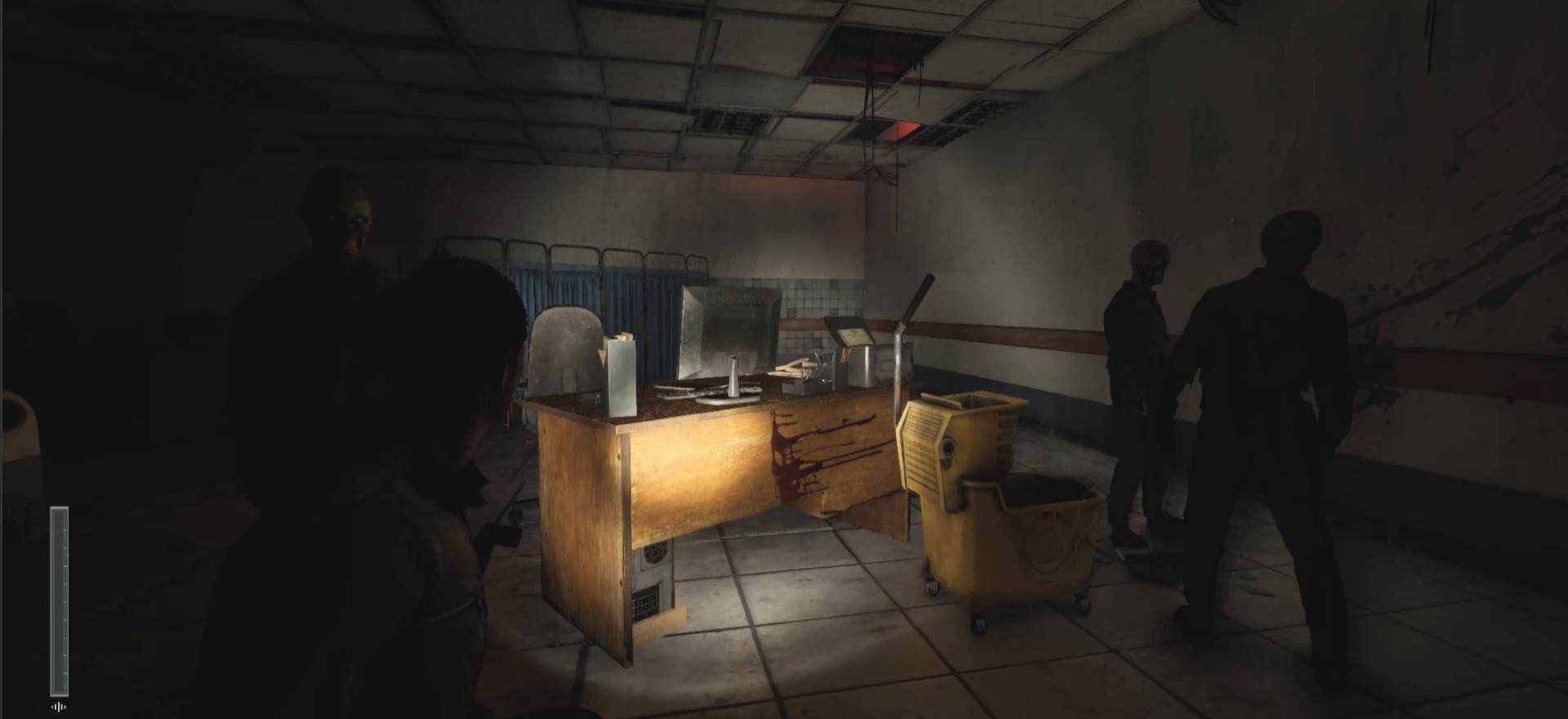
我的关卡My level病房区:走捷径会靠近丧尸,脚步和碰到的东西决定会不会被听见。The ward: shortcuts pass close to the dead, and your steps and what you touch decide whether you are heard.
如何通过场景布置影响玩家的移动选择,并让每次搜寻都有明确目的?
How can set dressing shape movement choices and give every search a clear purpose?
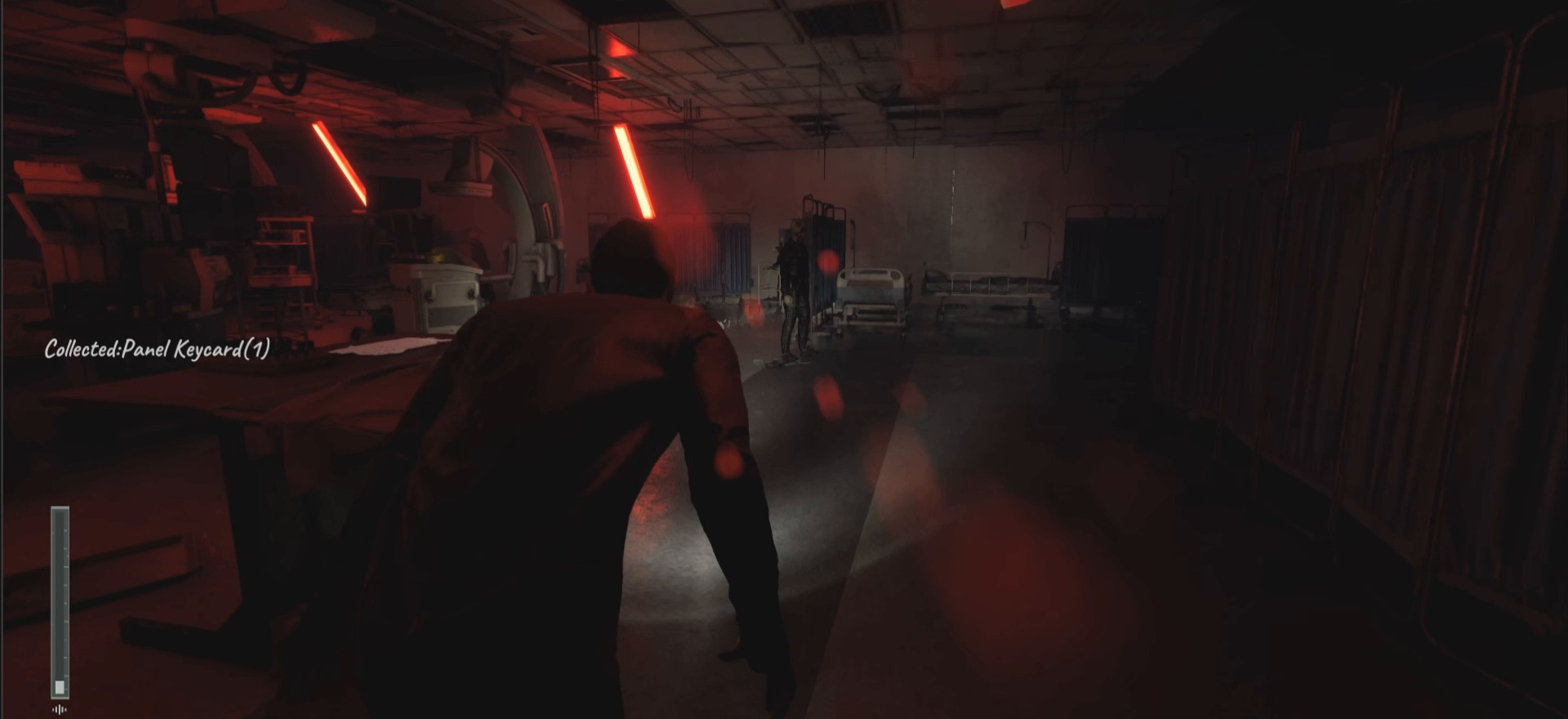
After an outbreak the hospital has fallen silent. The infected wander the wards, while blocked passages and locked rooms complicate escape. Players search the ward and operating area for clues, tools and weapons before working back to an exit.
声音会在楼内传播。一次不慎的踩踏就可能将附近的感染者引向声源,改变原本安全的路线。
Sound carries through the building. A careless step can draw nearby infected toward its source and change the safest route.
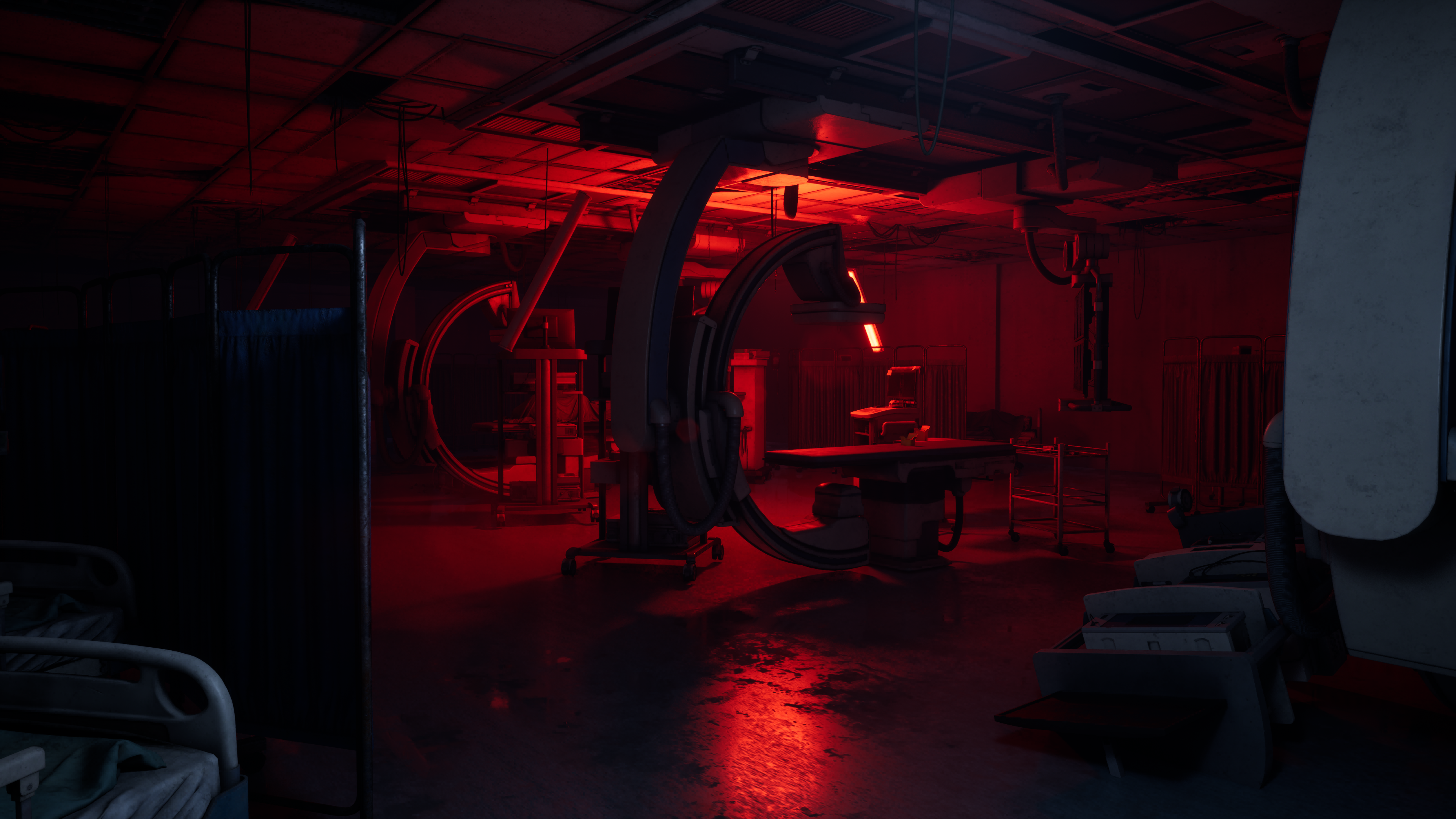
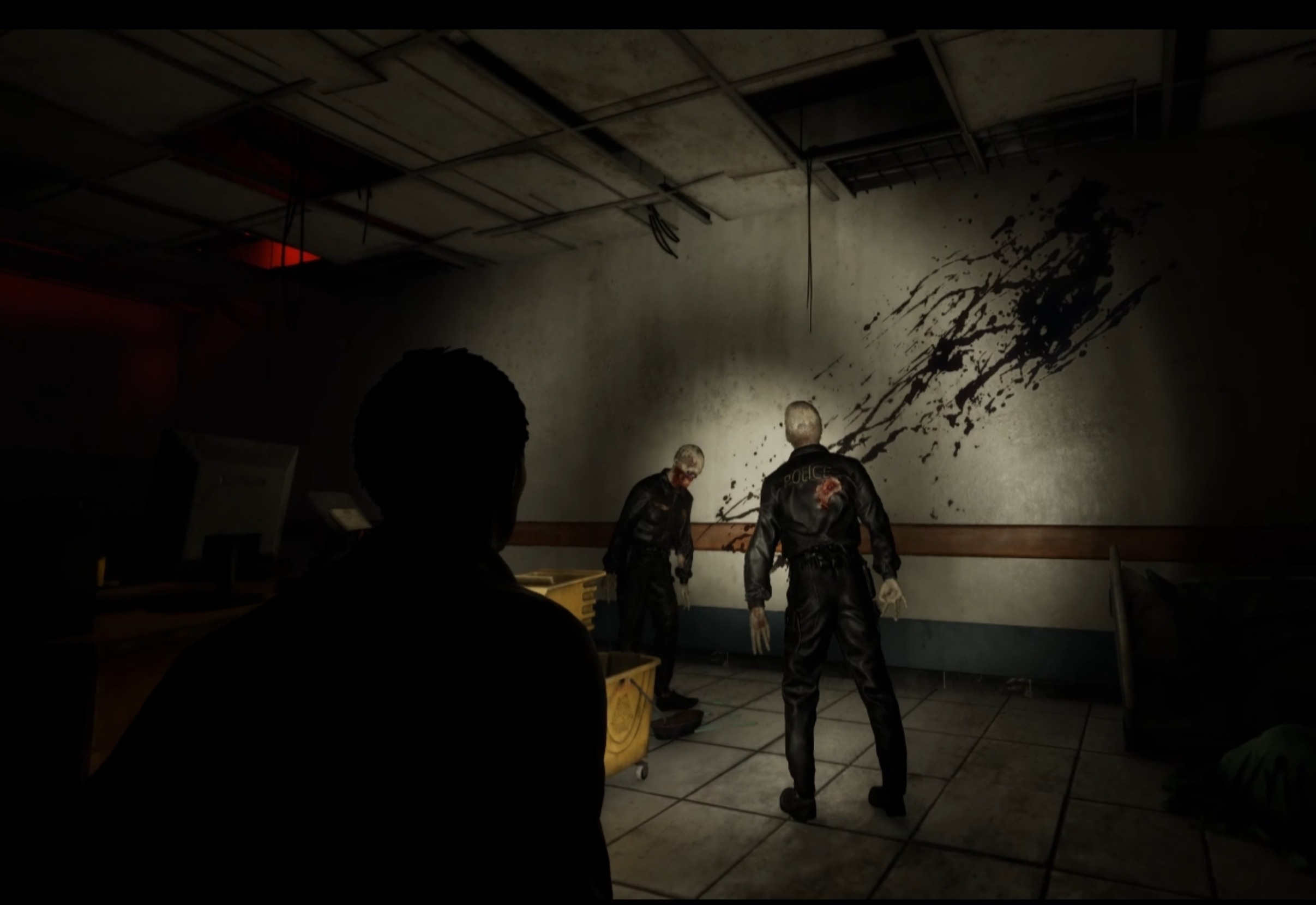
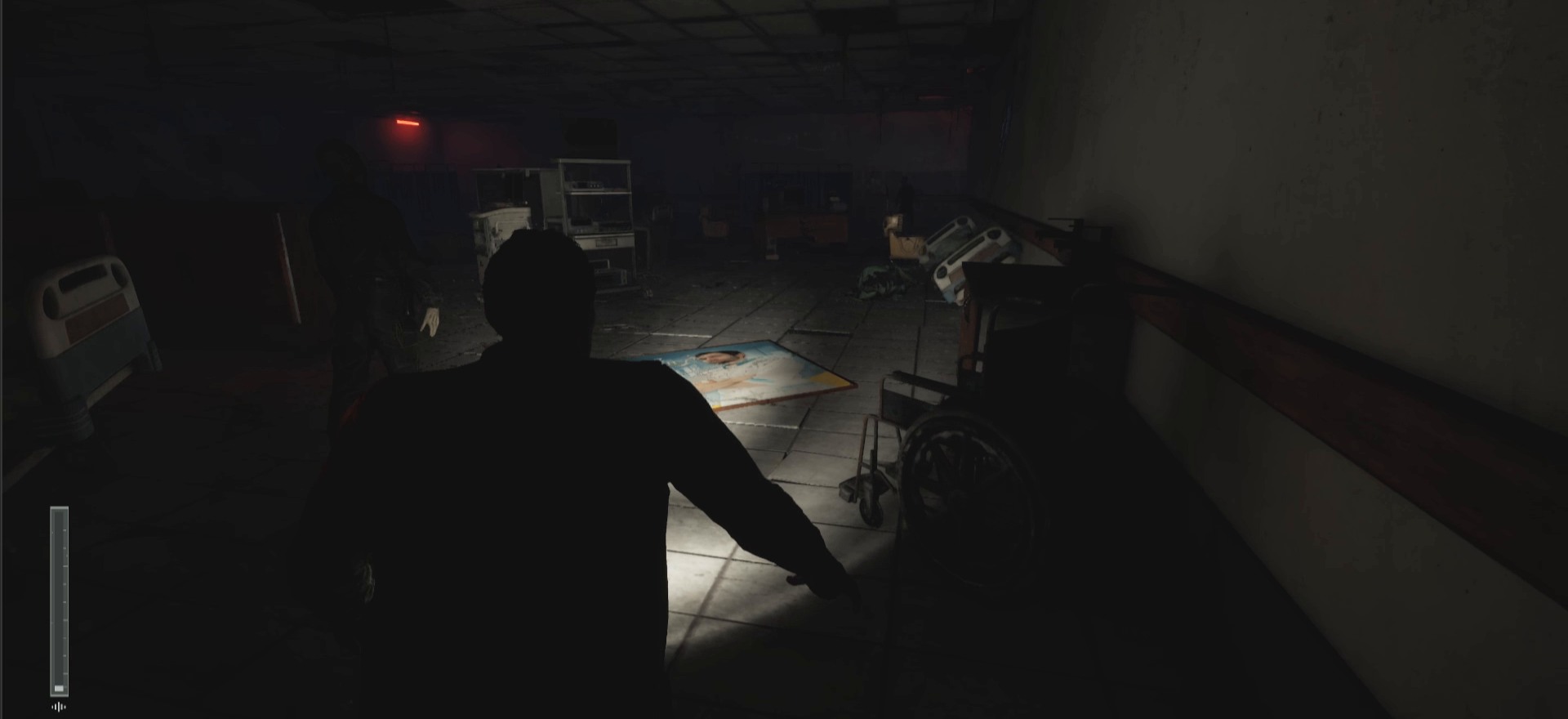
实机Gameplay走廊里的感染者。The infected in a corridor.
Design goals三个设计目标Three design goals
01
风险Risk
玩家在决定绕行之前,就能看到碎片和敌人。
Debris and enemies are visible before a detour decision.
02
搜寻Search
线索与门锁赋予每个房间明确的探索目的。
Clues and locks give each room a clear purpose.
03
节奏Pacing
先教噪声规则,再引入道具门槛,最后用走廊战斗考验有限弹药的分配。
Teach noise rules, introduce item gates, then test limited ammo in corridor combat.
03 / 07
一层:病房区与办公室Ground floor: ward and office
教授噪声规则,让玩家穿过病床区寻找墙洞。Teach the noise rule, then send players through the beds to find the wall gap.
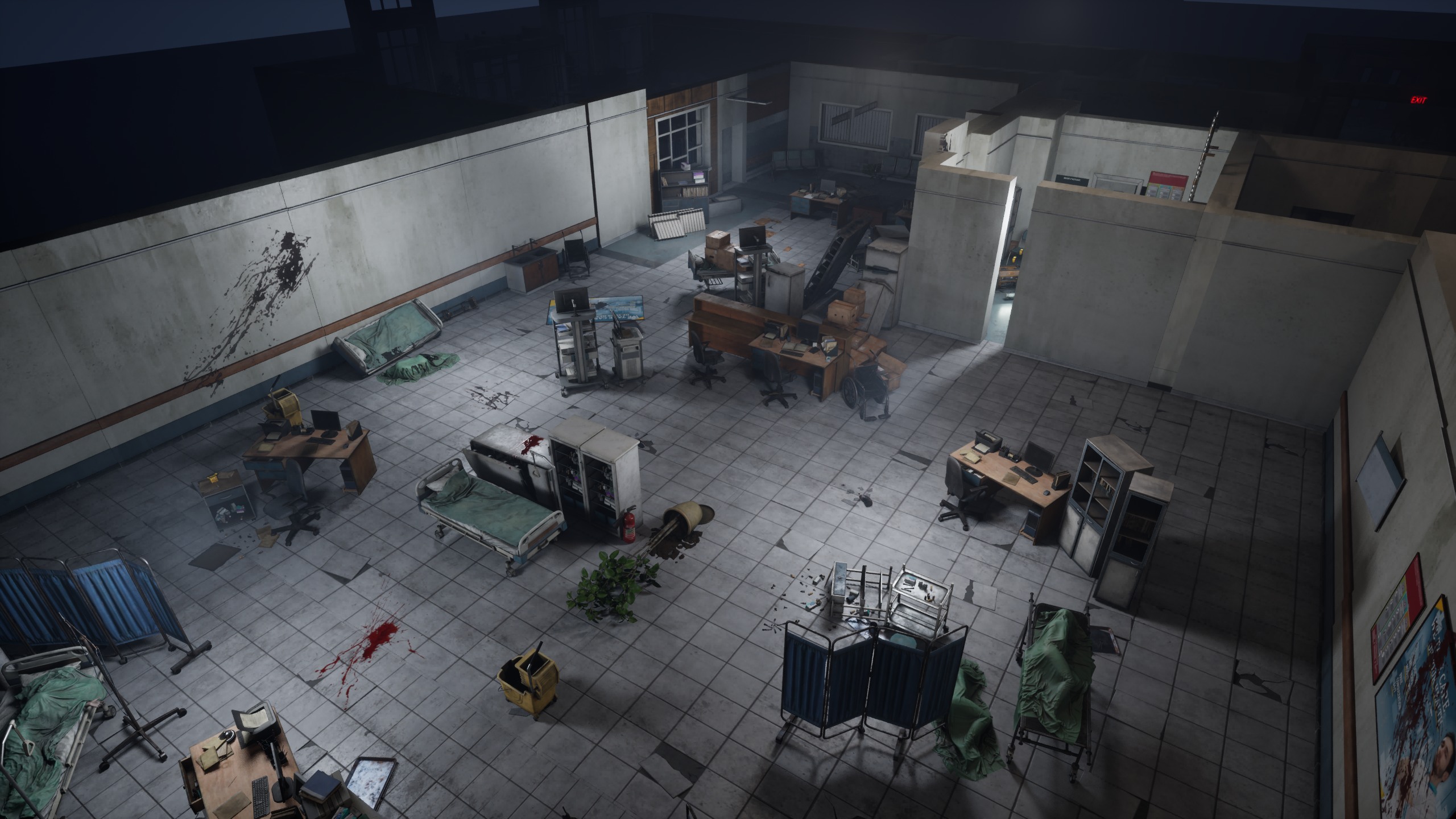
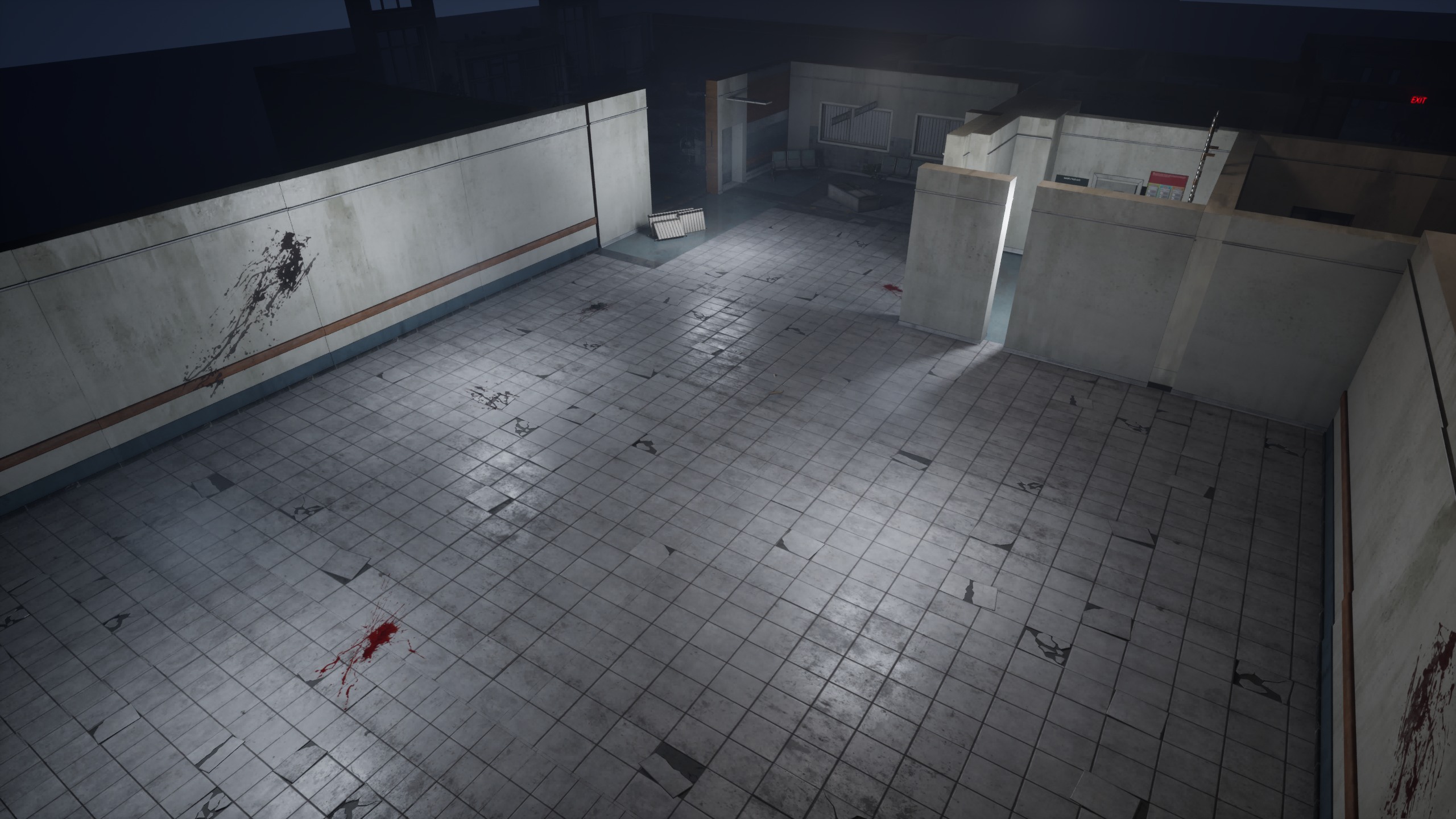
同机位对比 · 拖动看改前改后Same camera · drag to compare从空房间,到能做选择的空间From an empty room to a space of choices
基础空间Base space完整搭建Completed layout
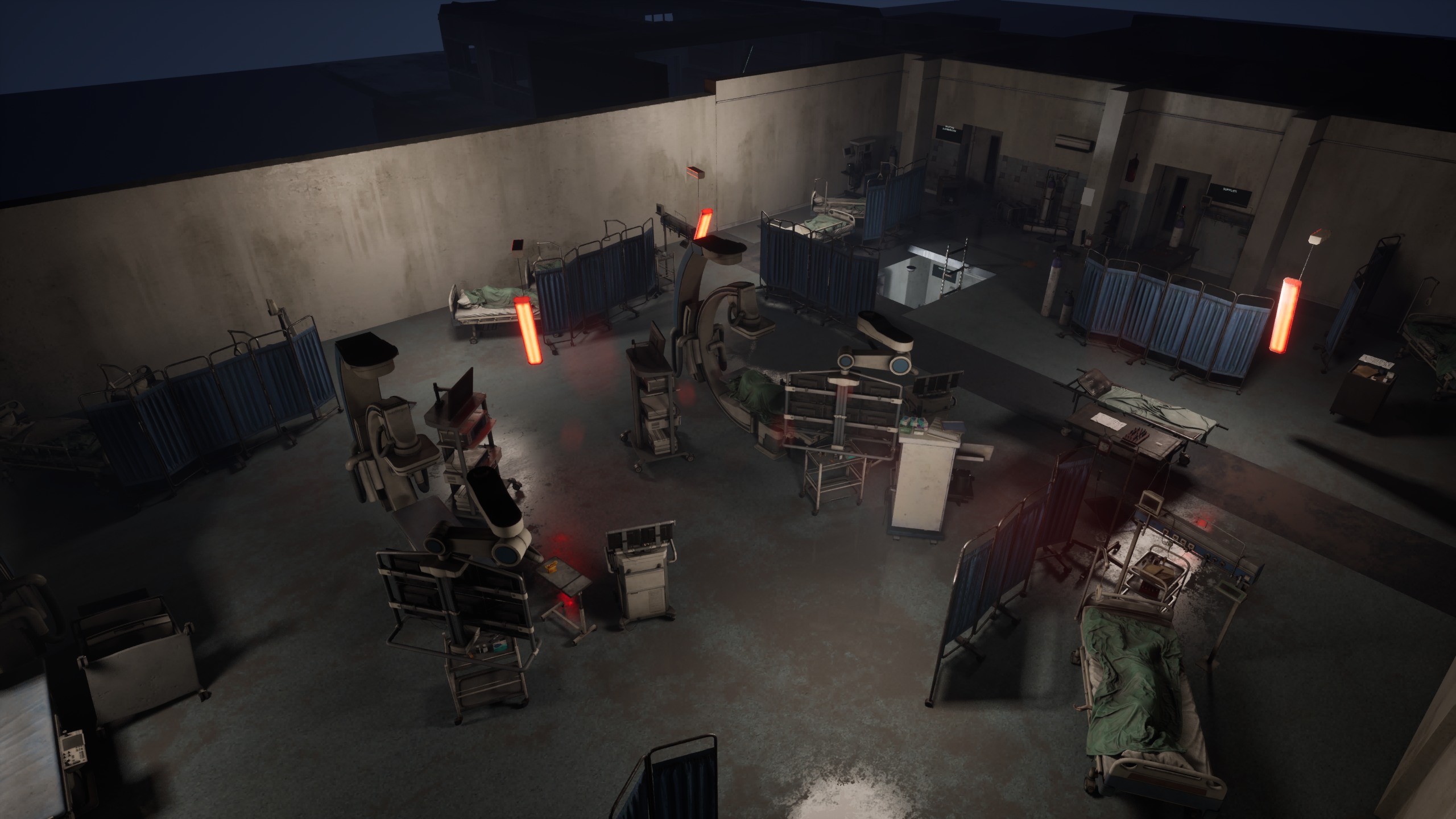
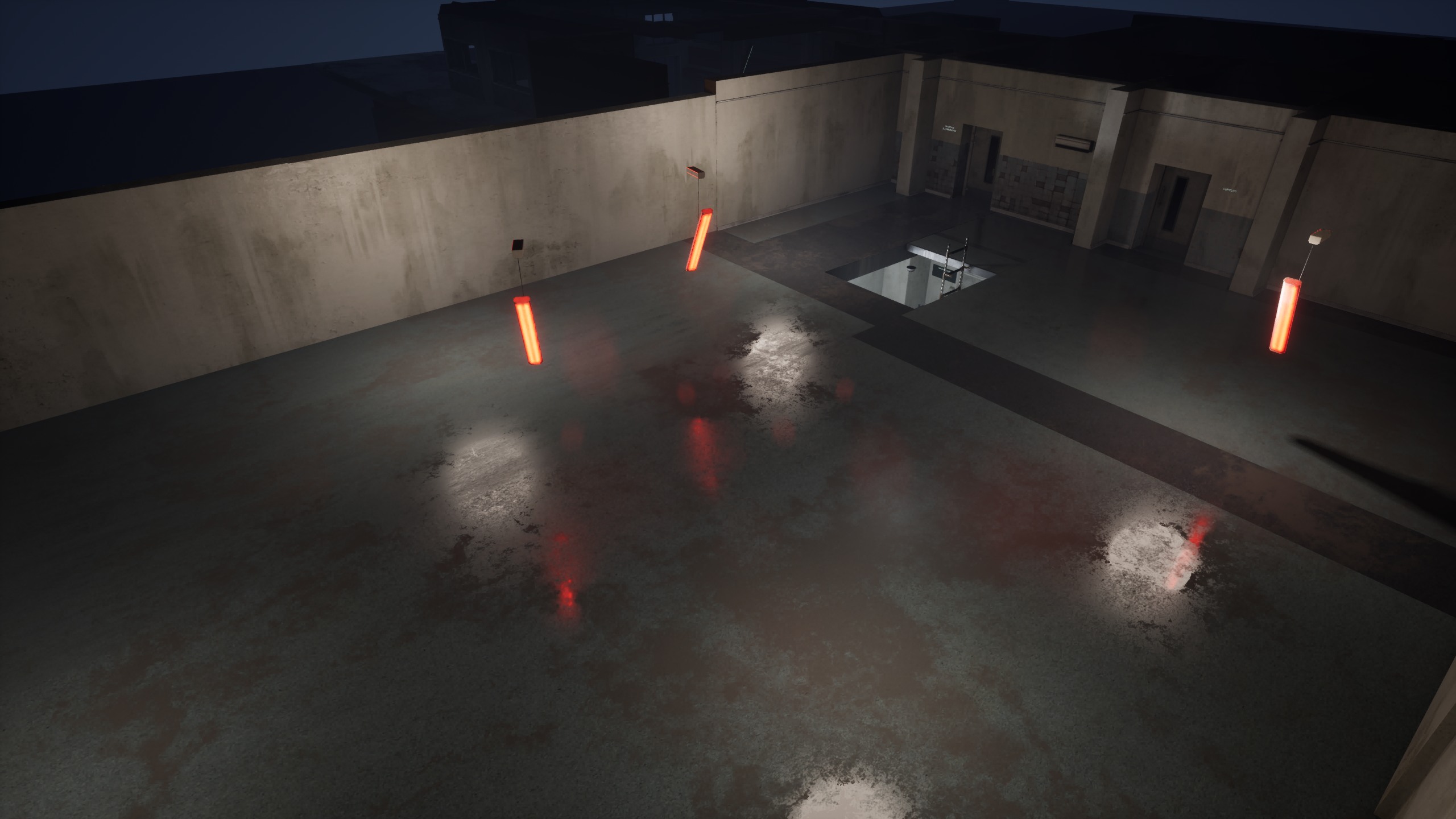
病房区Ward地面与墙体界定可用于路线设计的空间;病床、柜体与设备分割路径、形成绕行,陷阱影响玩家前往墙洞的路线。两图都隐藏了天花板。Floors and walls define the space for route design; beds, cabinets and equipment divide paths and create detours, and traps shape the route to the wall gap. Ceiling hidden in both.
A1
入口与首排病床Entrance and first beds
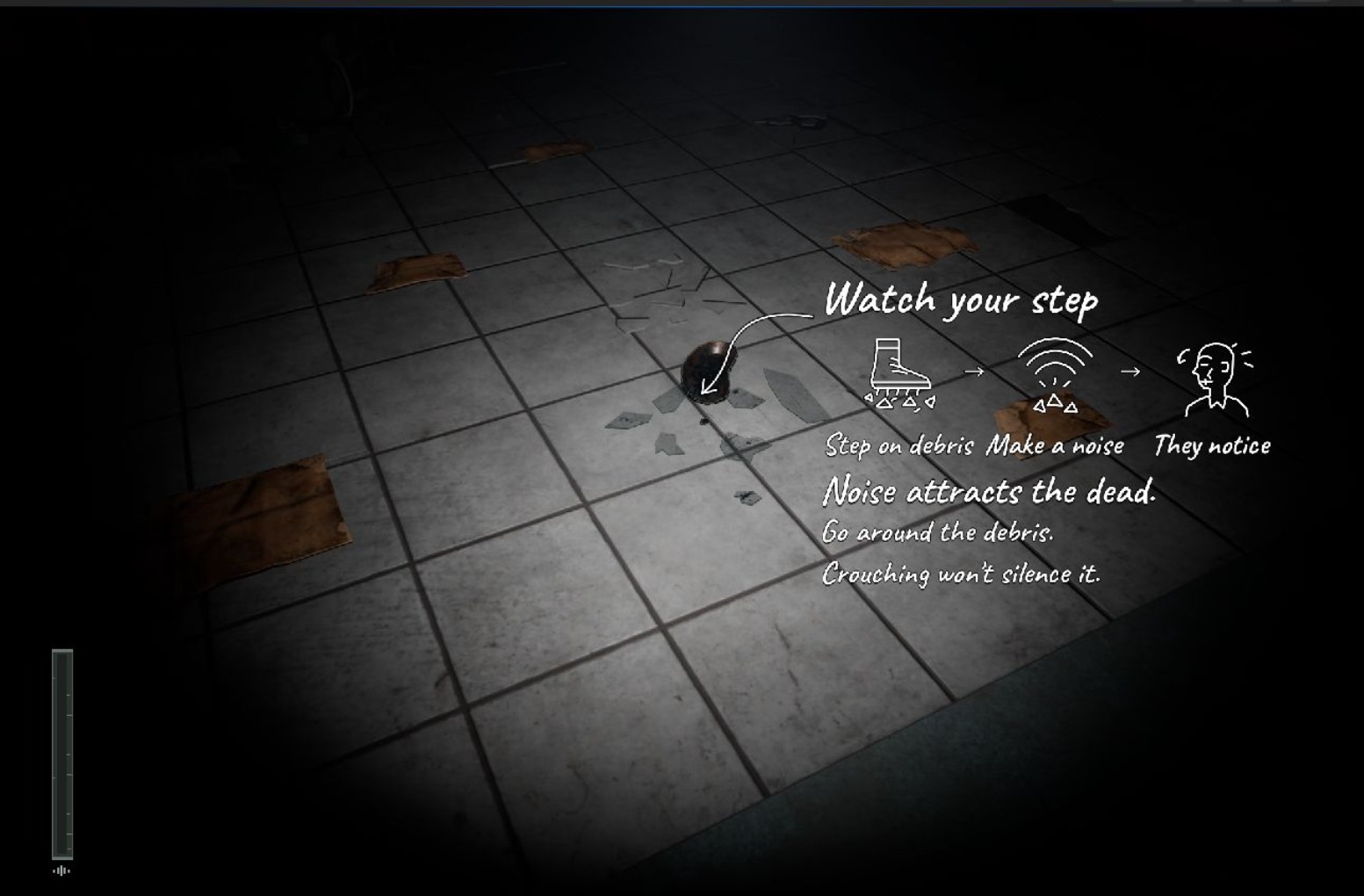
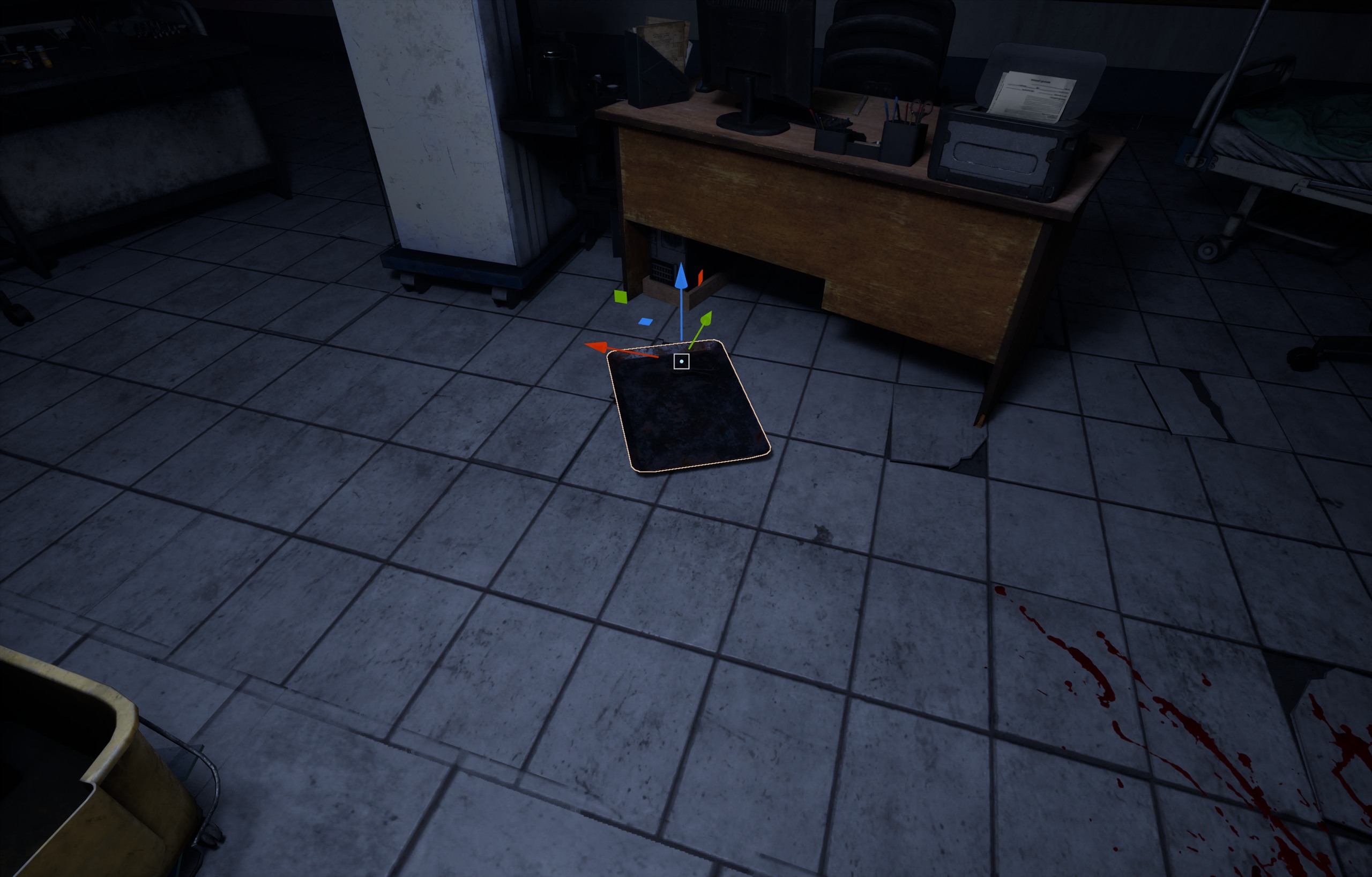
A1 位于入口病床旁,教程聚焦地面碎片,建立「陷阱外观 = 噪声」的关联,再把控制权交还玩家。
A1 sits by the entrance beds. The tutorial focuses on floor debris, linking its look to noise, then returns control.
入口教程Entrance tutorial特写与场景内教程介绍第一个碎片陷阱。A close-up and in-world tutorial introduce the first debris trap.
A4
远端病床与返程路径Far beds and return path
A4 占据内侧捷径,A5、A6 靠近开口与返程路线——往返两个方向都需要选择路线。
A4 takes the inner shortcut; A5 and A6 sit near openings and the return route — both directions need a choice.
陷阱布置Trap placementA4 横跨远端病床间的捷径,周围保留绕行空间。触发区 84 × 76 × 44 厘米,不阻挡移动。A4 spans the far-bed shortcut with room to detour. Triggers are 84 × 76 × 44 cm and never block movement.
A2
病床排列与柜体转角Bed rows and cabinet turns
A2、A3 位于转角与路线中段,促使玩家观察地面与前方路径,打断不加观察的持续前进。
A2 and A3 sit at turns and mid-route, so players check the ground and path instead of pushing blindly.
P4
墙洞与办公室Wall gap and office
墙洞标明阶段出口,办公室通向上楼的梯子,为自由搜寻提供明确的目的地。
The wall gap marks the stage exit; the office leads to the ladder upstairs — a clear destination for open searching.
病床绕行空间Detours between beds玩家恢复控制后,在病床间运用噪声规则。Back in control, players apply the noise rule between beds.
桌柜区与敌人Desks and an enemy捷径节省时间,也带来风险。Shortcuts save time but carry risk.
04 / 07
二层:手术区与上锁房间Upper floor: operating ward and locked rooms
在二层搜寻中运用噪声规则:门锁确立目标,病床与设备提供不同的接近路线。Apply the noise rule while searching: locks set the goals, beds and equipment offer different approaches.
基础空间Base space完整搭建Completed layout
手术区Operating ward病床、屏风与设备塑造搜寻路线;工具与密码线索让冒险探索有明确目的。Beds, screens and equipment shape search routes; tool and code clues give risky exploration a purpose.
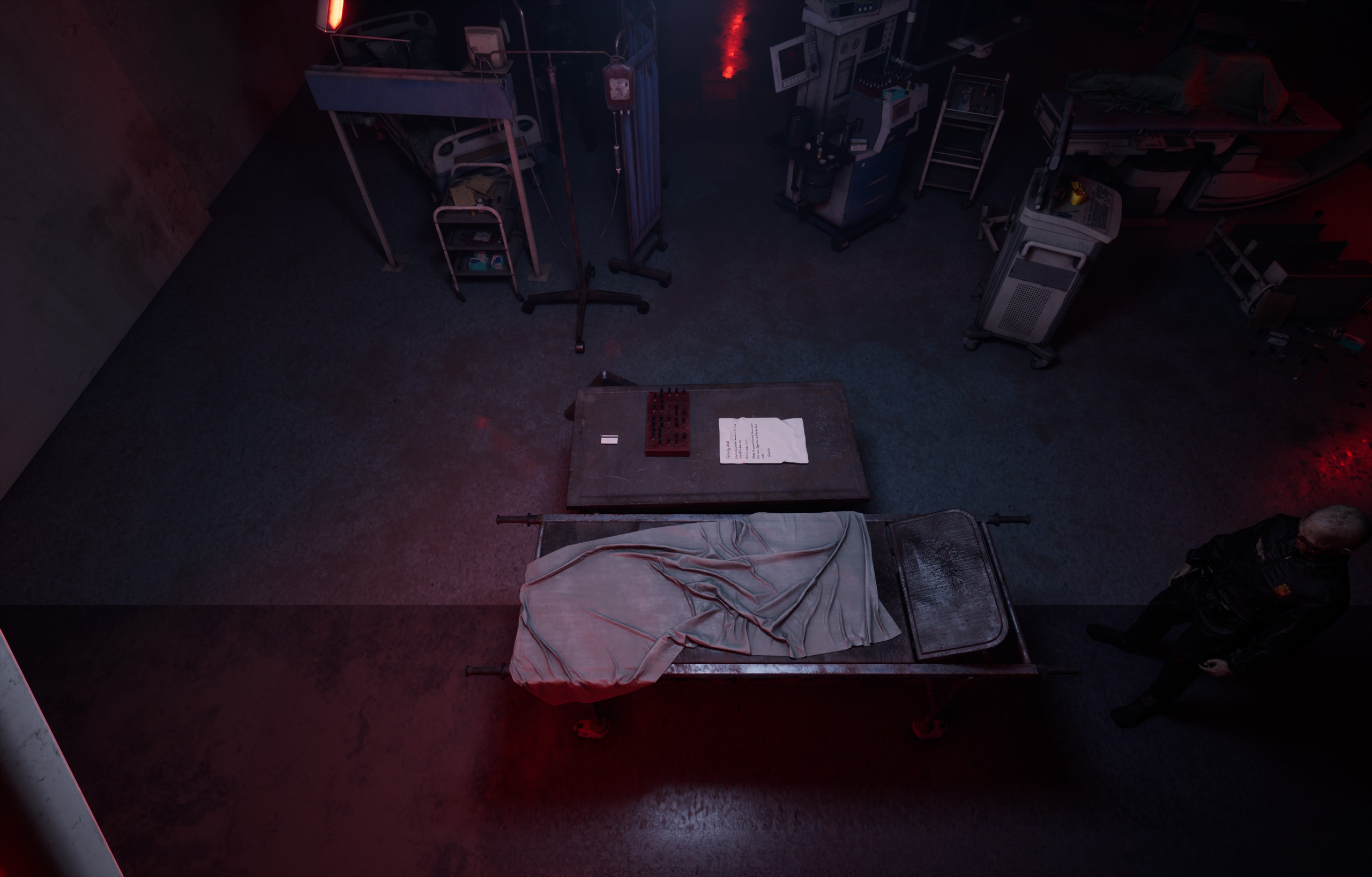
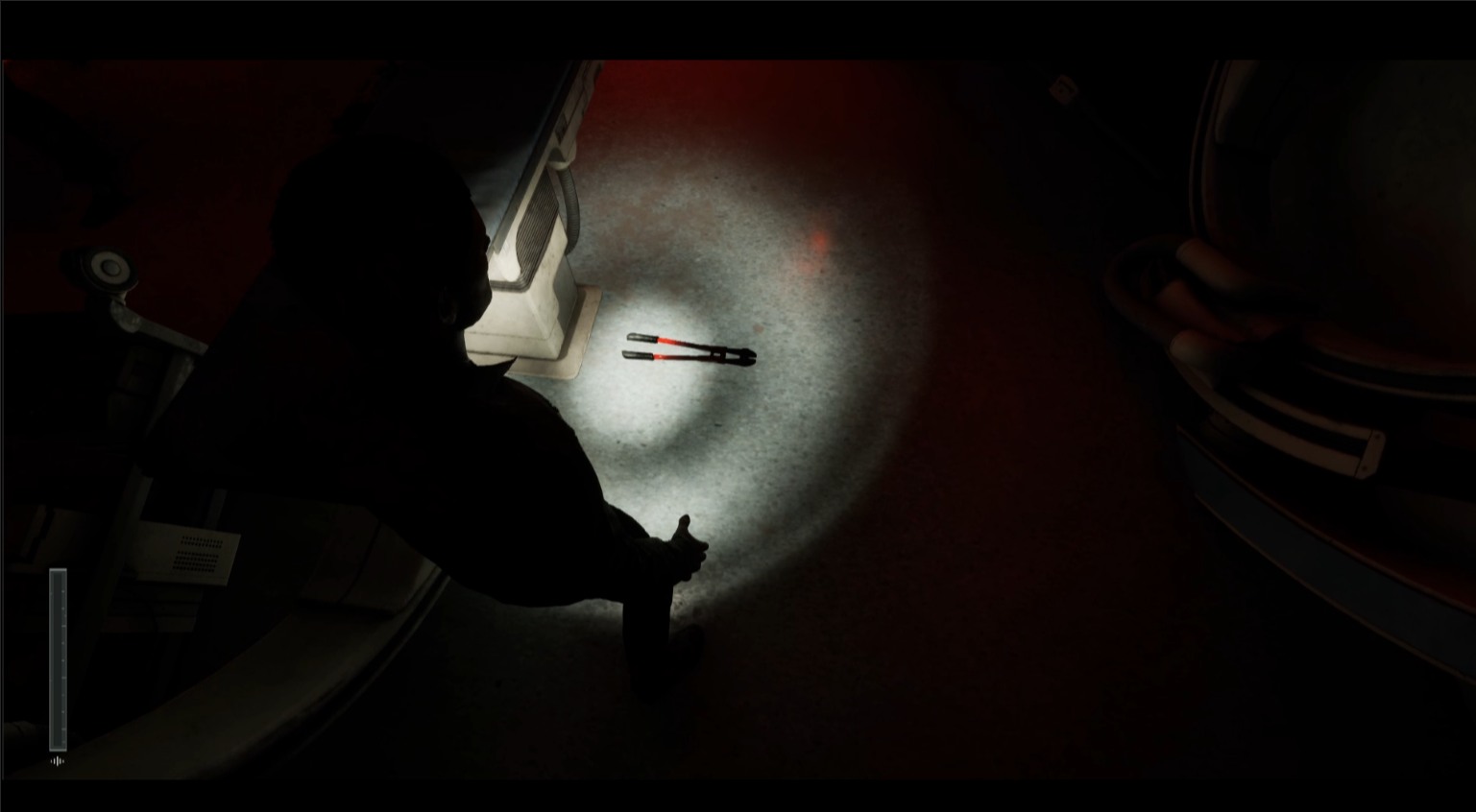
密码桌与工具Code desk and tools
门禁卡与密码线索在同一张桌上;断线钳用于打开武器柜。
Keycard and code share a desk; bolt cutters open the weapon cabinet.
玩家决策Decision
把线索与对应的门锁匹配起来。
Match each clue to its lock.
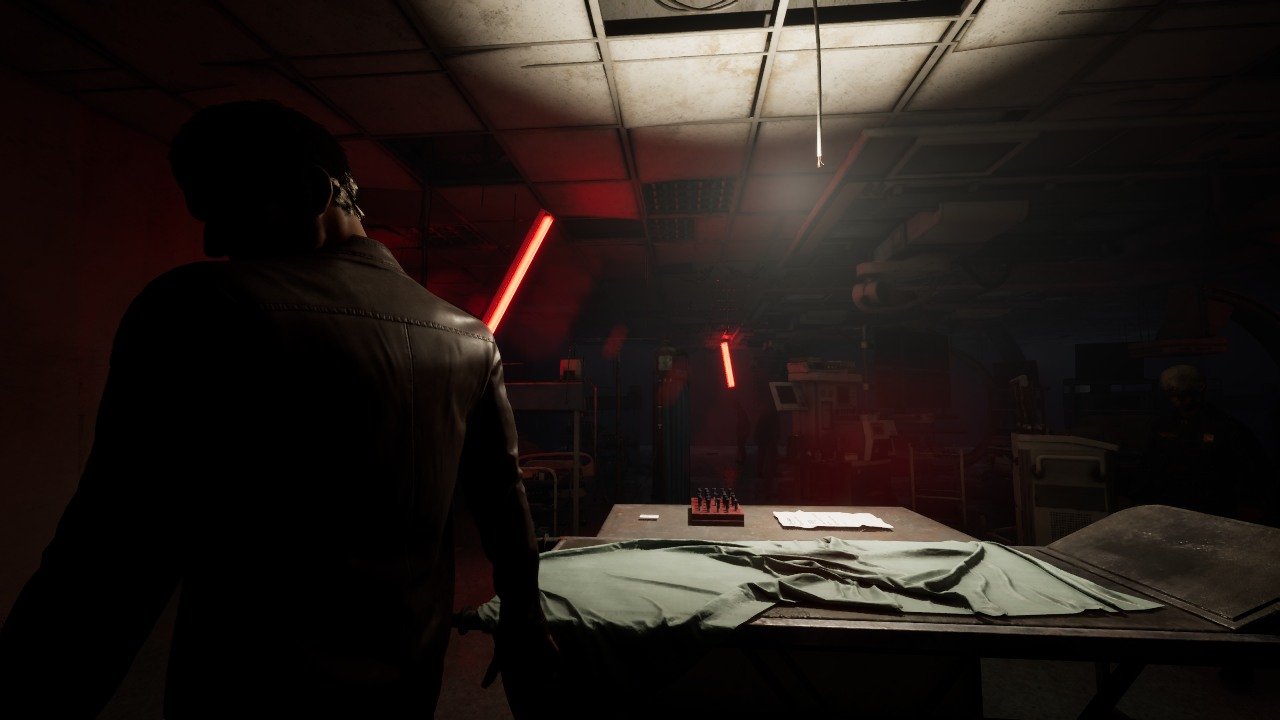
密码桌Code desk纸条与门禁卡同桌;拾取半径从 110 厘米缩小到 60 厘米,避免选错目标。Note and keycard share the desk; pickup radius cut from 110 cm to 60 cm to avoid wrong picks.
两个上锁房间Two locked rooms
钥匙门后是武器房(霰弹枪与霰弹),门禁卡加密码的门后是厕所(办公室钥匙与霰弹)。
Behind the key door is the weapon room (shotgun and shells); behind the keycard-and-code door is the restroom (office key and shells).
玩家决策Decision
按任意顺序探索,下楼前收齐关键道具。
Explore in either order; collect essentials before going down.
返程走廊战斗Return corridor fight霰弹枪中后期才拿到,前中期沿途收集的子弹会一路带到这里;两个房间再分别补 3 发和 5 发霰弹,奖励支线搜寻。一只丧尸要 3 枪,丧尸还会随机触发独有技能:喷出不明液体。有限弹药让距离与开枪时机变得重要。The shotgun only arrives mid-to-late; ammo collected earlier carries through to here, and the two rooms add 3 and 5 shells, rewarding side searches. Each zombie takes 3 shots, and any of them may randomly use a unique skill: spraying an unknown fluid. Limited ammo makes distance and timing matter.
梯子落点与隔断Ladder landing
布置工具线索,保持返程连接点清晰。
Place the tool clue; keep the way back clear.
玩家决策Decision
识别二层目标,记住返程路线。
Read the upstairs goal; remember the way back.
病床与设备Beds and equipment
搜寻路线穿过病床间隙,接近目标的路上布置噪声区。
Search routes thread between beds; noise zones guard the approaches.
玩家决策Decision
观察敌人与地面危险,选择接近目标的路线。
Watch enemies and hazards; choose an approach.
手术区中央Operating ward centre纵深方向的搜寻路线。The search route running into depth.
门锁反馈Lock feedback缺少道具时,提示需要什么。Missing an item? The prompt says what you need.
05 / 07
声音是规则,也是反馈Sound is the rule and the feedback
噪声系统、可读性,以及灯光与音乐如何跟着威胁变化。The noise system, its readability, and how light and music follow the threat.
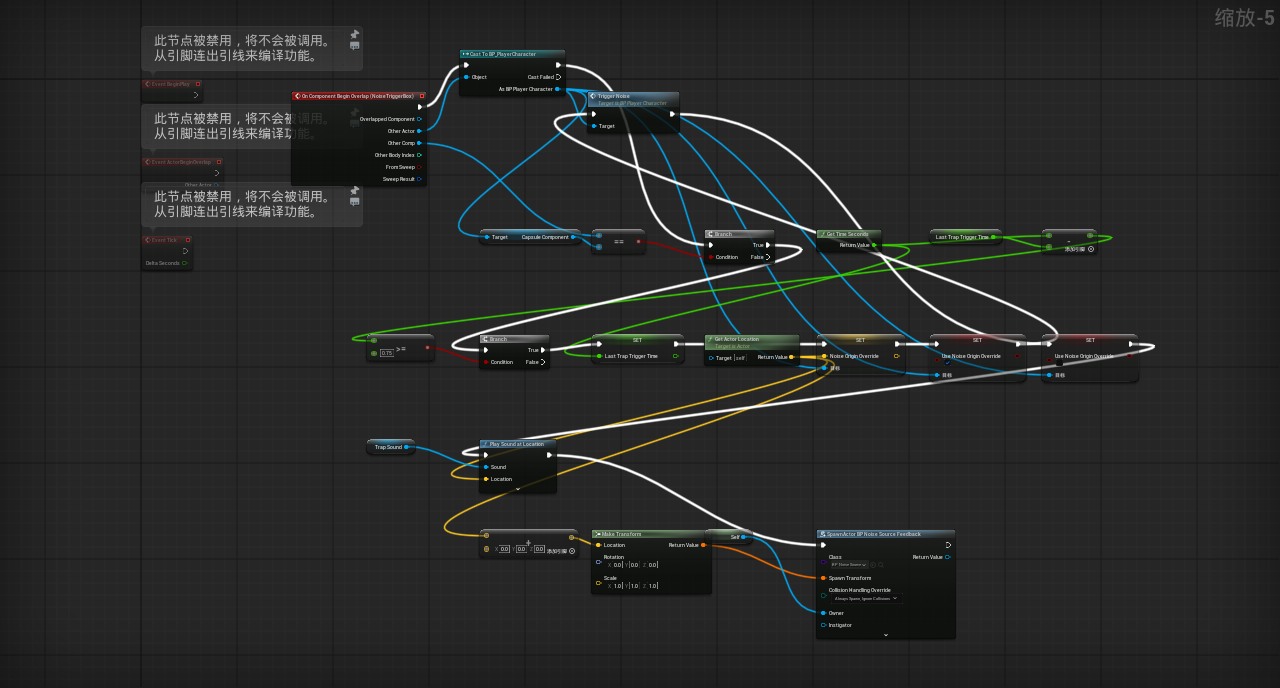
触发Trigger踩踏碎片时,在陷阱位置产生噪声。Stepping on debris emits noise at the trap.
状态State噪声累积扩大传播范围,安静时逐渐衰减。Noise accumulates and spreads, then decays in silence.
反馈Feedback声波标记声源,耳朵图标标记真正听到的敌人。Waves mark the source; ear icons mark actual listeners.
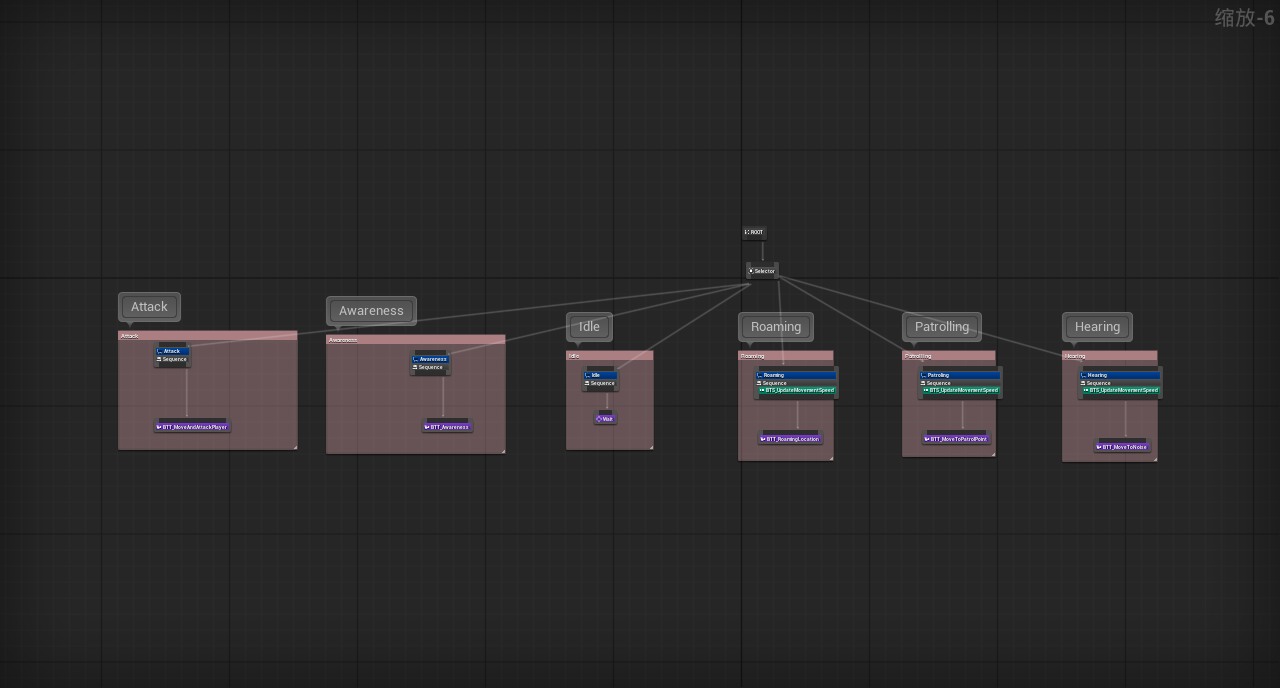
行为Behaviour丧尸先调查声源,确认玩家后才进入追击。Zombies investigate first and chase only once they confirm you.
把调查声源和追击玩家分开,给玩家留出离开声源、调整路线的时间。
Separating investigating the source from chasing the player gives players time to leave and change route.
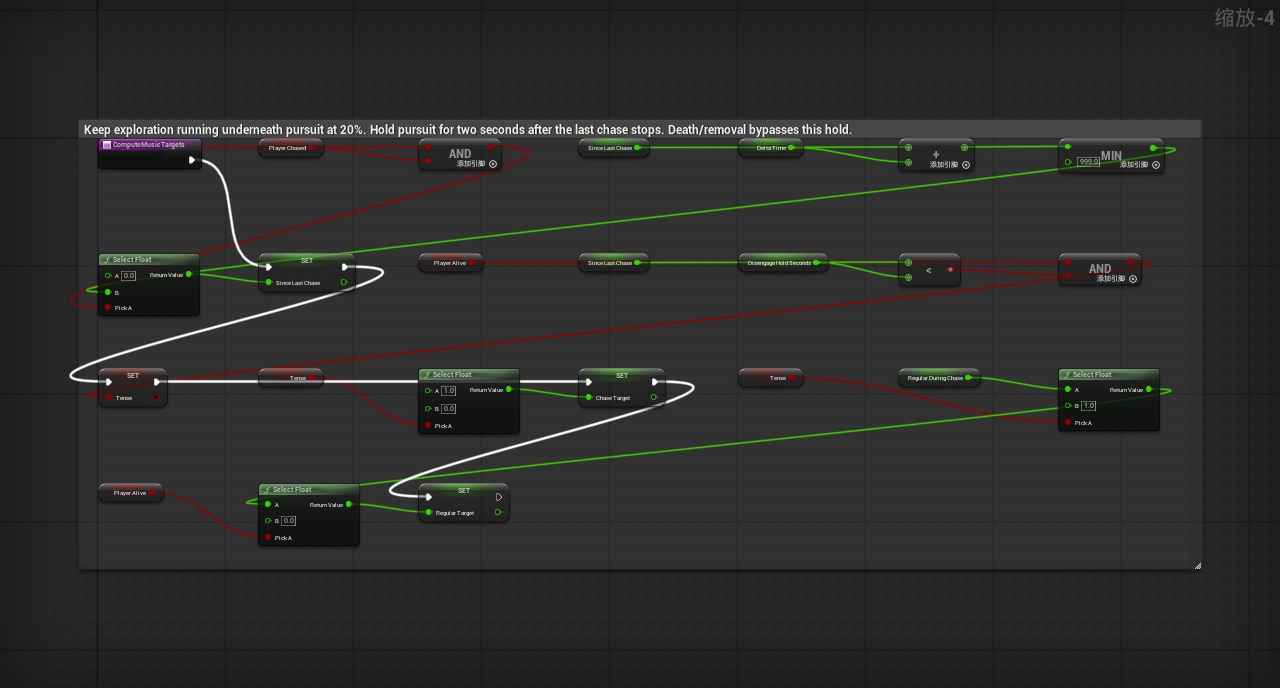
战斗反馈Combat feedback灯光与音乐,由真正的追击驱动Light and music, driven by real pursuit
~
探索:持续的不安Exploration: sustained unease
灯光以 6 秒为周期缓慢呼吸;探索音乐低音量循环,给玩家留下观察环境的空间。
Lights breathe on a 6 s cycle; quiet exploration music leaves room to observe.
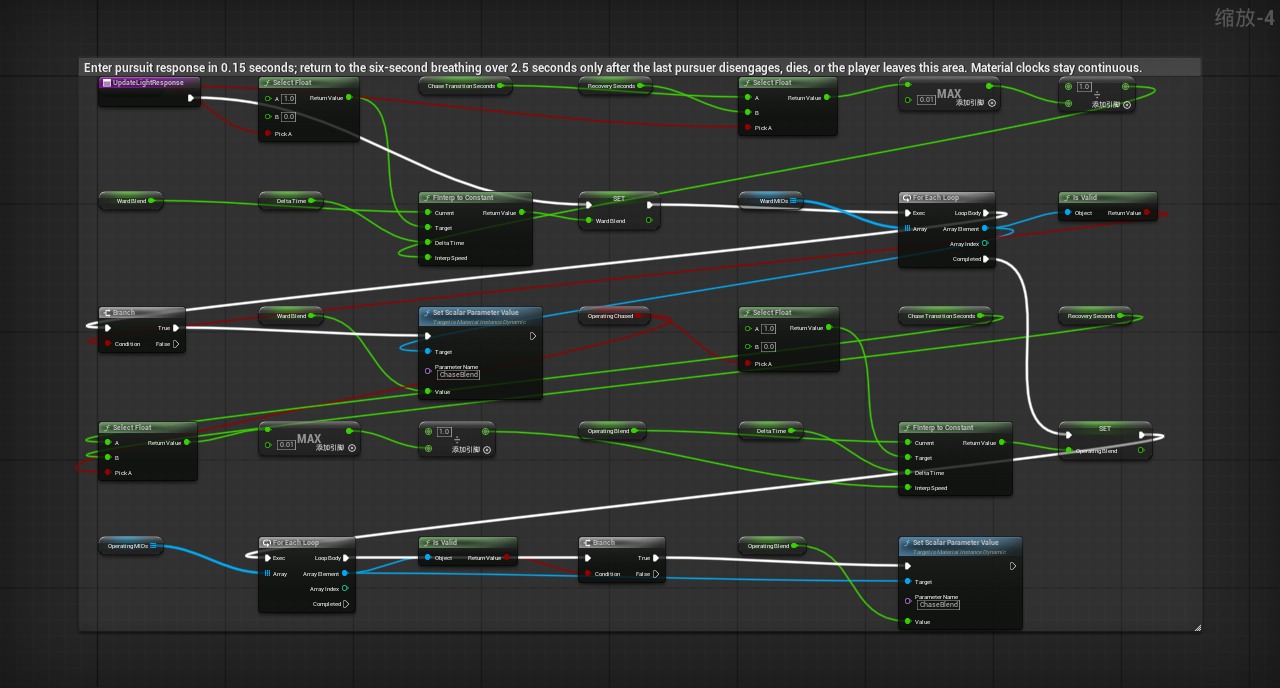
Lights switch in ~0.15 s to a 0.7 s pulse; chase music enters in ~0.35 s; exploration drops to 20%.
↘
脱战:逐渐缓和Disengage: gradual release
灯光 2.5 秒内恢复慢呼吸;追击音乐保持 2 秒再用约 5 秒淡出。再次被追击时不重播前奏。
Lights recover over 2.5 s; chase music holds 2 s, fades over ~5 s. Renewed pursuit doesn't replay the intro.
只调查声源不会触发灯光快闪;灯光按区域响应,音乐采用全局状态,跨房间、跨楼层都保持连续。Investigation alone never triggers rapid pulses; lighting responds per area, music is global and stays continuous across rooms and floors.
调整前Before调整后After
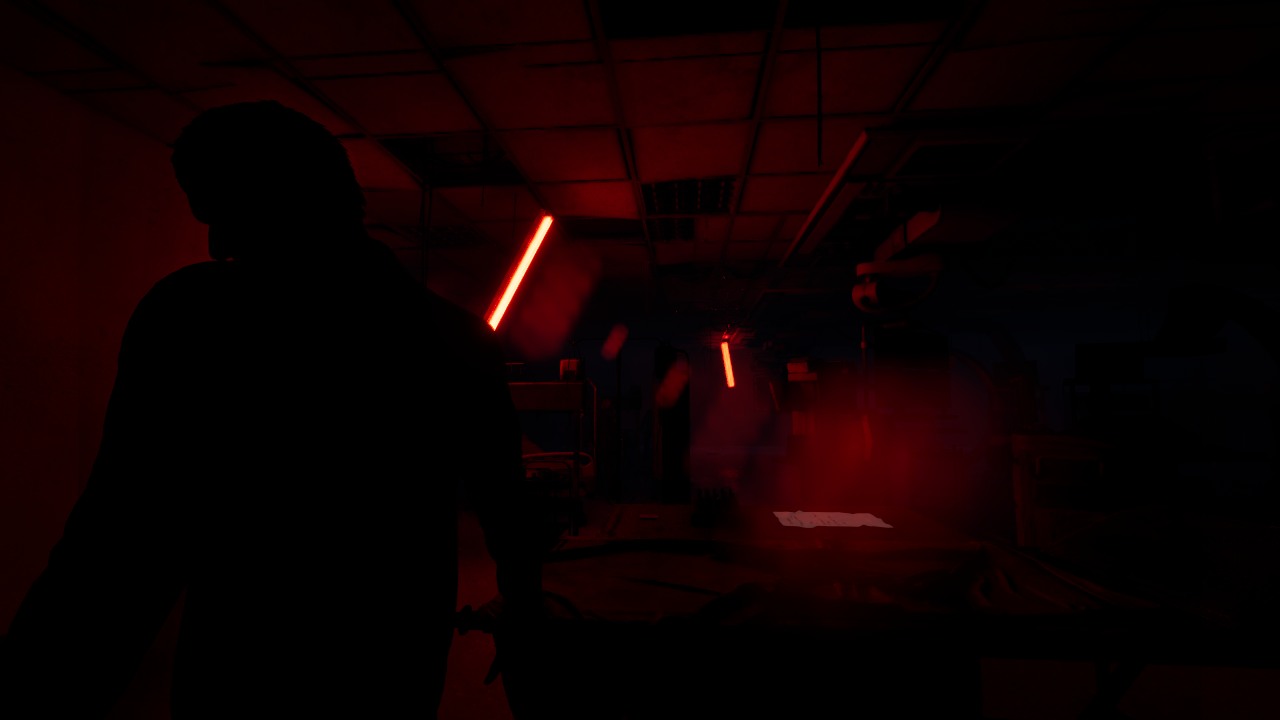
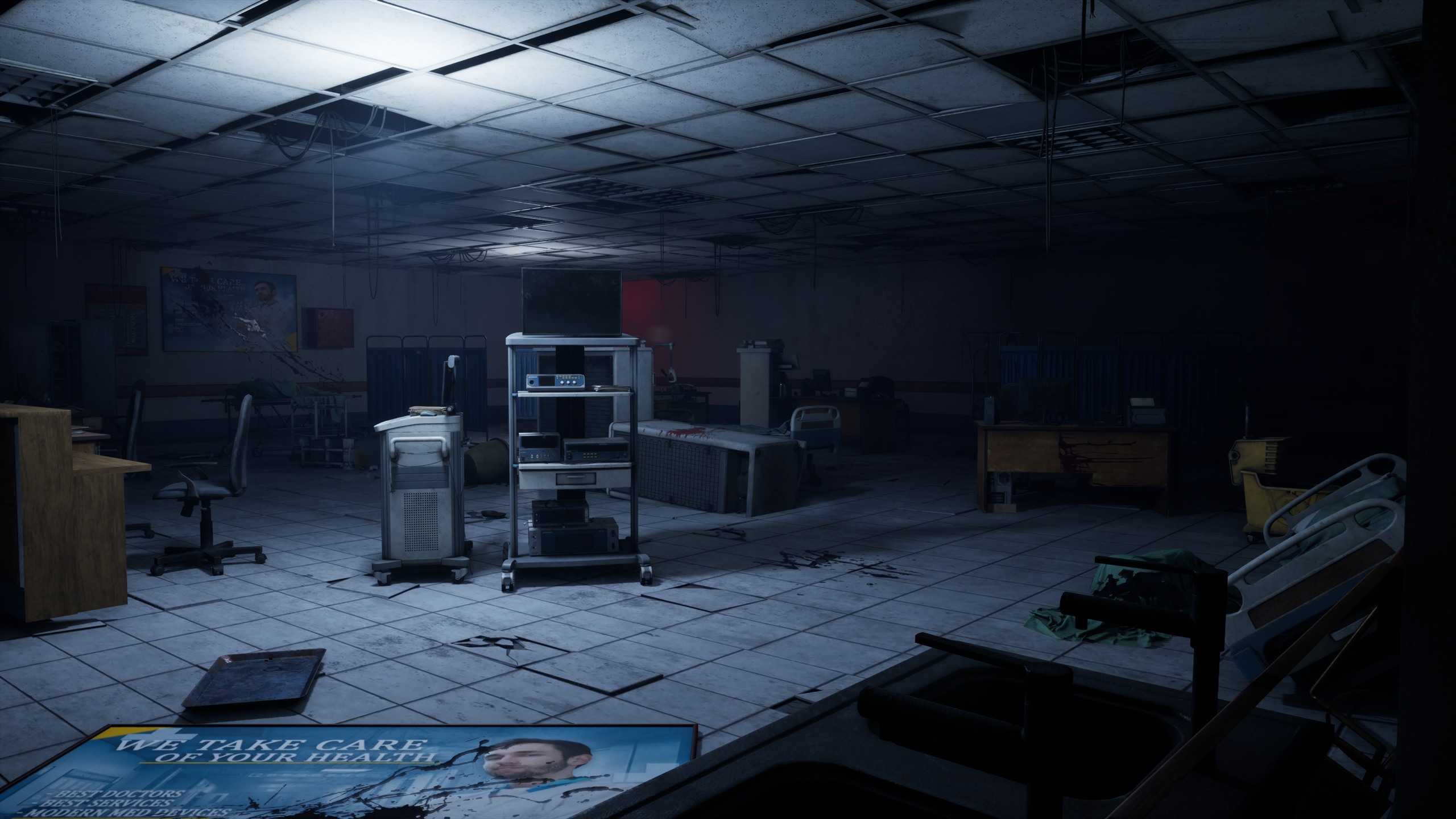
病房区灯光自查Ward lighting self-review白色桌面灯削弱了红色灯具的氛围:关闭白色补光,增强红灯自发光与间接反射,降低暗相位比例;灯具布局不变。A white desk light weakened the red fixtures: it was disabled, red emission and bounce were raised, the dark phase lowered; fixture layout unchanged.
06 / 07
蓝图实现与数值迭代Blueprints and tuning
噪声、AI、门锁怎样实现,朋友测试和自测中改了哪些数。How noise, AI and locks were built, and which numbers changed in friend and self-testing.
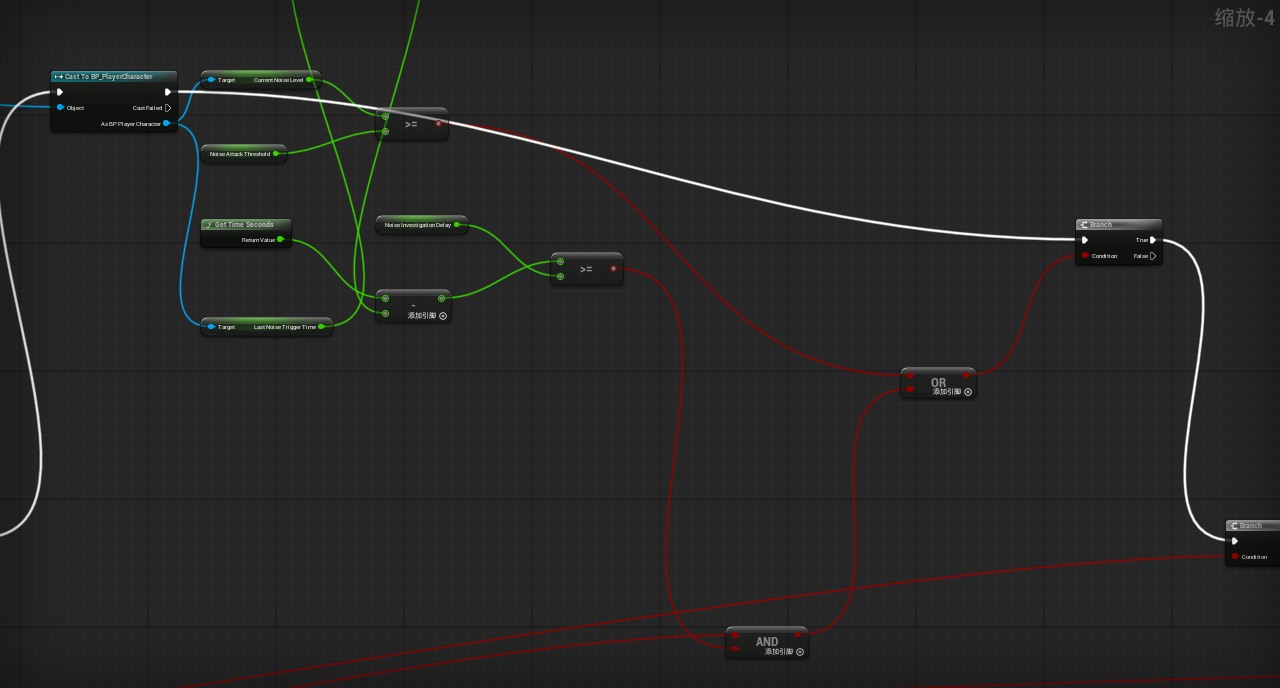
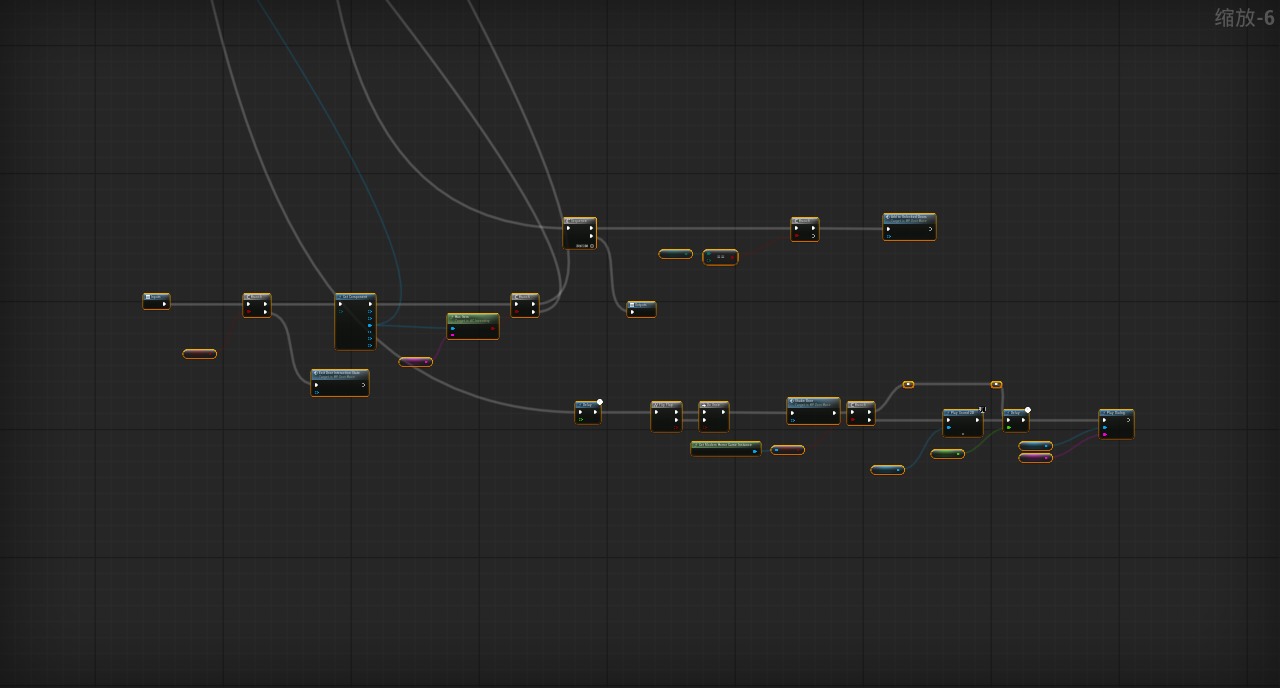
Drawn by noise, enemies finished investigating but never attacked. Fix: a confirmation step during investigation — accumulated noise reaching a threshold, or a short close-range wait at low noise — followed by alive, height and sight checks before the attack branch.
迭代 BIteration B降低轻微噪声的惩罚,保留撤离时间Softer penalties for minor noise, keeping time to escape
正常行走噪声Normal walking noise15→6点。减少常规移动带来的干扰。points. Less disruption from routine movement.
每点噪声传播距离Range per noise point30→20厘米。限制一次失误影响的敌人数量。cm. Limits how many enemies one mistake affects.
提前确认玩家的阈值Early confirmation threshold45→60点。单次失误可以恢复,只有持续制造噪声才会被直接确认。points. A single slip is recoverable; only sustained noise gets you confirmed outright.
低噪声确认延迟Low-noise confirmation delay1.5→3s留出离开声源的时间。Time to leave the sound source.
每次陷阱触发增加 15 点噪声,从安静状态起步时覆盖 3 米;16 项已记录的运行检查覆盖噪声累积、范围、高度与玩家确认。新声音不会重置已确认的追击。Each trap adds 15 points, reaching 3 m from quiet; 16 recorded runtime checks cover accumulation, range, height and confirmation. New sounds don't reset a confirmed chase.
开发阶段Development关卡开发与迭代Level development and iteration
空间搭建Build the space围绕路线搭建两大区域,布置病床、隔断与连接点。Build both areas around routes; place beds, partitions, connections.
噪声布置与反馈Noise and feedback初版 12 处碎片陷阱(迭代后增至 16 处,含侧室新增的 B7 / B8),加入声源反馈与 AI 调查。12 debris traps at first (16 after iteration, including B7 / B8 in the side rooms); source feedback and AI investigation.
教程与目标链Tutorial and goals入口特写、纸条与补给;完善二层门禁卡与返程提示。Entrance close-up, notes, supplies; upstairs keycard and return prompts.
体验优化Refinement降低轻微噪声惩罚,简化门锁,优化交互与灯光。Softer minor-noise penalties, simpler locks, better interaction and light.
07 / 07
测试与反思Testing and reflection
调整从哪里来,以及这个关卡留下的设计经验。Where the adjustments came from, and what this level taught me.
测试与素材Testing and assets
调整来自朋友测试和自测。玩法与蓝图系统均为本人实现;模型与音频使用现有素材。
Adjustments came from friend and self-testing. All gameplay and Blueprint systems are my own; models and audio are existing assets.
风险需要清晰的提示和反应时间。数值平衡、交互范围与环境灯光,都会影响一条路线是否可玩。
Risk needs clear signals and time to react. Balance values, interaction ranges and lighting all decide whether a route is playable.
— 设计反思— design reflection
Project 03 · 实机约 5 分 08 秒About 5 min 08 s of gameplay
别出声, 看清楚再走。Stay quiet. Look before you step.
两层平面图、同机位对比和流程图都可以点开看高清大图。
Maps, same-camera comparisons and the flow chart all open in high resolution.