Project 04 · Unreal Engine 5.8 · 系统、关卡与 AI 设计Systems, level & AI design
骰碰骰DiceClash
骰子留在桌上,让每次碰撞和每一张牌,都改写下一手的选择。
Dice stay on the table; every collision and every card reshapes the next decision.
Project 04 · Unreal Engine 5.8 · 系统、关卡与 AI 设计Systems, level & AI design
骰子留在桌上,让每次碰撞和每一张牌,都改写下一手的选择。
Dice stay on the table; every collision and every card reshapes the next decision.
我的贡献 · 玩法目标、桌面路线、卡牌取舍、计分规则与迭代方向由我确定。AI 工具辅助实现与资料整理;环境、角色和动捕使用现有素材。My contribution · I set the play goals, table routes, card trade-offs, scoring rules and iteration direction. AI tools assisted implementation and documentation; environment, character and mocap assets are third-party.
整理玩法目标、桌面路线、卡牌取舍、计分规则及可读性改进。设计方向由我确定,AI 工具辅助实现与资料整理。
Play goals, table routes, card trade-offs, scoring rules and readability. I set the design direction; AI tools assisted with implementation and documentation.
环境与角色使用 Nordic Tavern、Modular Medieval NPC 等现有素材;酒客与反应动作来自 Anderson Rohr 免费动捕。卡牌与 UI 装饰包含 AI 生成内容。
Existing assets such as Nordic Tavern and Modular Medieval NPC; patron mocap by Anderson Rohr. Cards and UI decoration include AI-generated content.
ambientCG 纹理、RandomMind 音乐、Kenney 与 Freesound 音效(CC0);VoiceBosch 为 CC BY-SA 4.0,玩家配音 theuncertainman 为 CC BY 4.0。
ambientCG textures, RandomMind music, Kenney and Freesound effects (CC0); VoiceBosch CC BY-SA 4.0; player voice by theuncertainman, CC BY 4.0.
从一次具体选择,看位置、点数与行动机会怎样互相制约。One decision shows the trade-off between position, pips and a limited move.
Round 02 / Last move
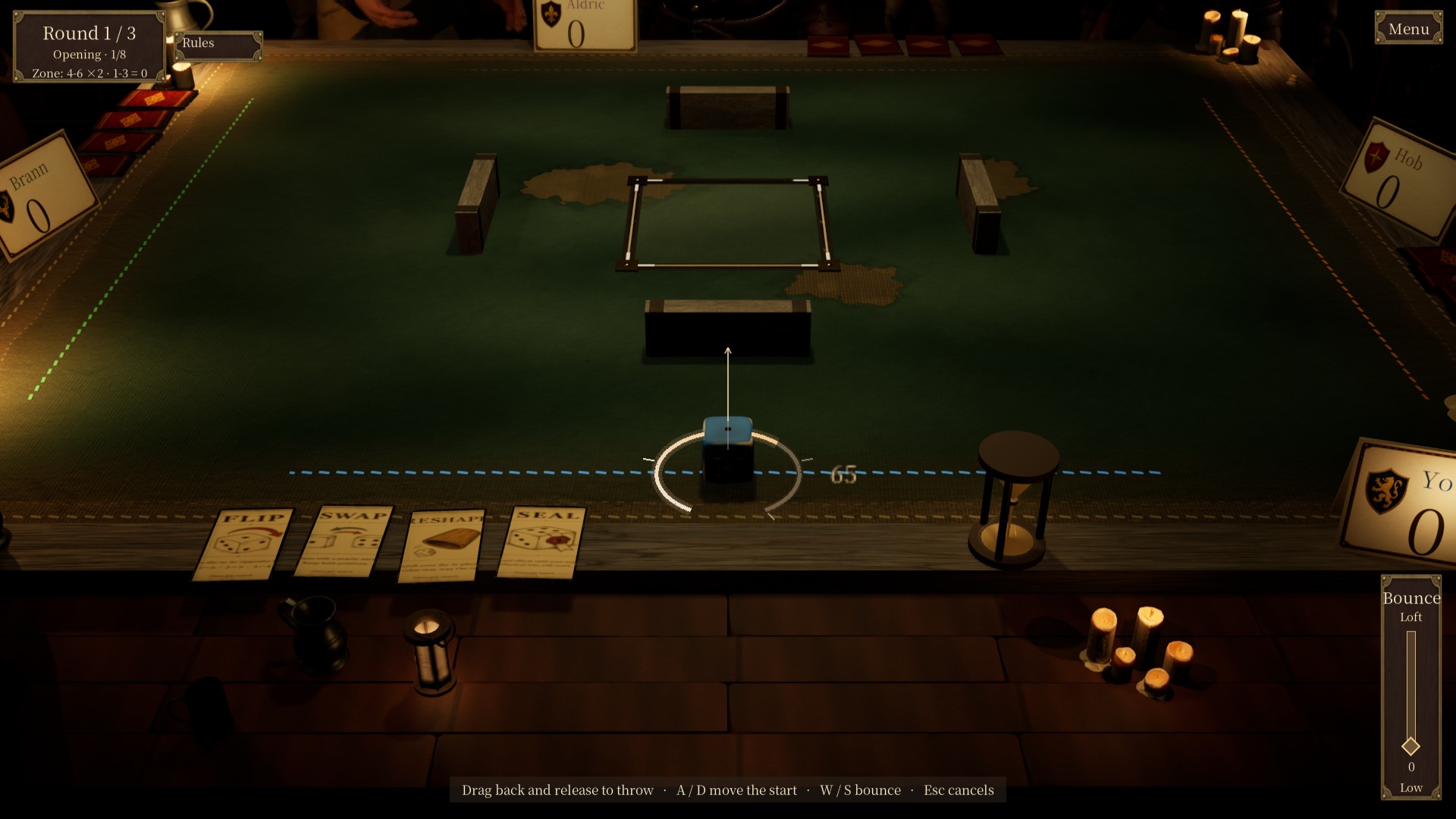
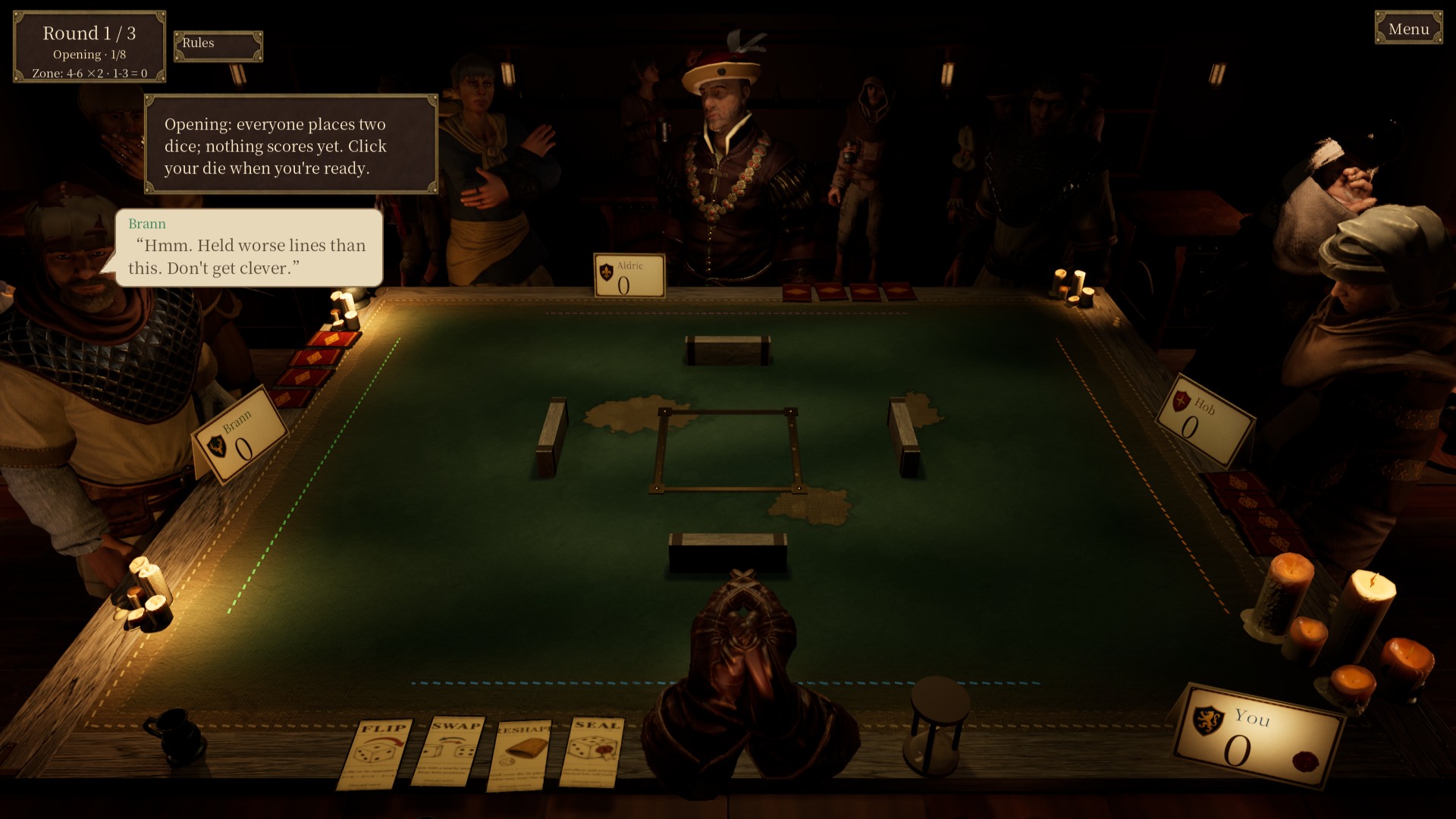
第二回合只计奇数点(有效点数 × 2),偶数不得分。区内蓝骰 3 点值 6 分,橙骰 5 点值 10 分。最后一手,是冒险撞开对手,还是用掉本局唯一的翻面牌?
Round 2 scores only odd pips (valid pips × 2); even pips score zero. In the zone, blue 3 is worth 6; orange 5 is worth 10. With one move left, risk a hit or spend the match's only Flip?
进区占分;用低分骰挡住路线;把对手撞出得分区。
Take the zone; block routes with low dice; knock rivals out.
代价Cost进攻可能打散自己的站位;第三回合区域换位。
Attacking can scatter your own dice; the zone moves in round 3.
翻面、对调、重塑、封存。
Flip, Swap, Reshape, Seal.
代价Cost每张只有一次;出牌就不能投骰;封存挡不住物理撞击。
Once each; no throw after a card; Seal can't stop a physical hit.
在对手的必经之路上制造酒渍。
Spill on your rival's route.
代价Cost每局一次;酒渍对自己同样有效。
Once per match; it works on you too.
最后一手可以在结算前改写局面。
The last move can rewrite the table before scoring.
代价Cost先手每回合轮换;先出手的布局要经受三次干扰。
First player rotates; an early layout faces three interruptions.
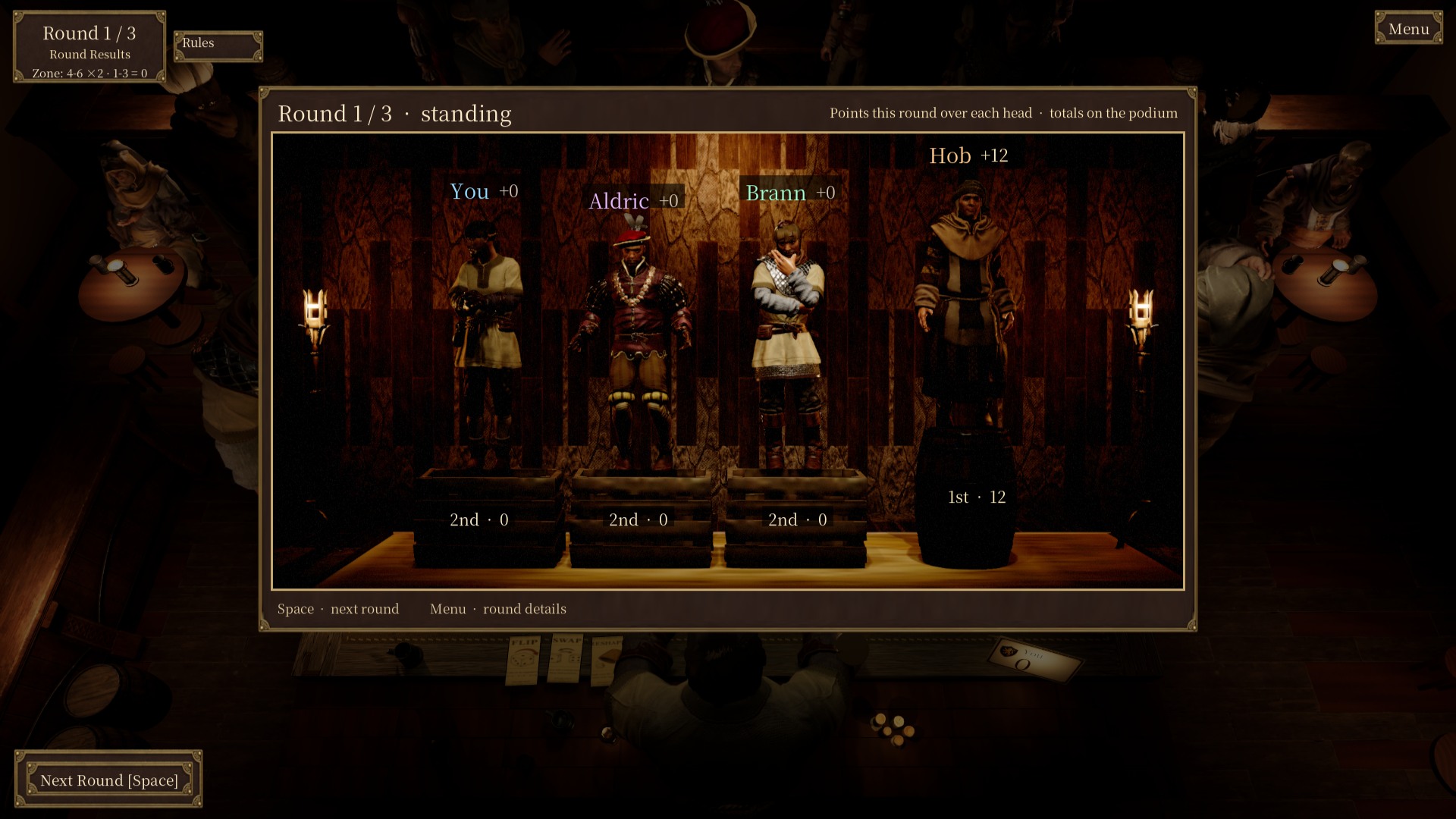
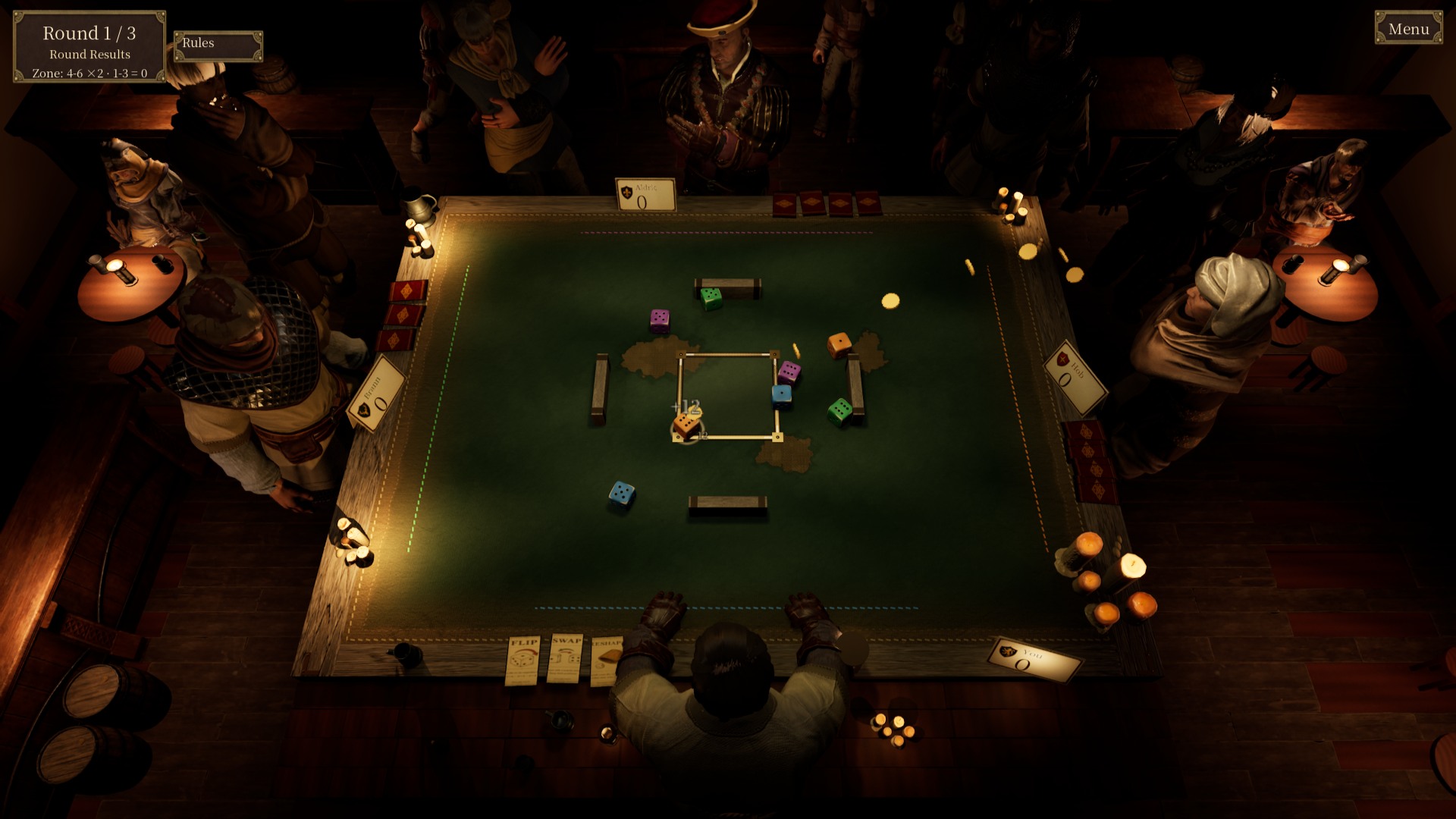
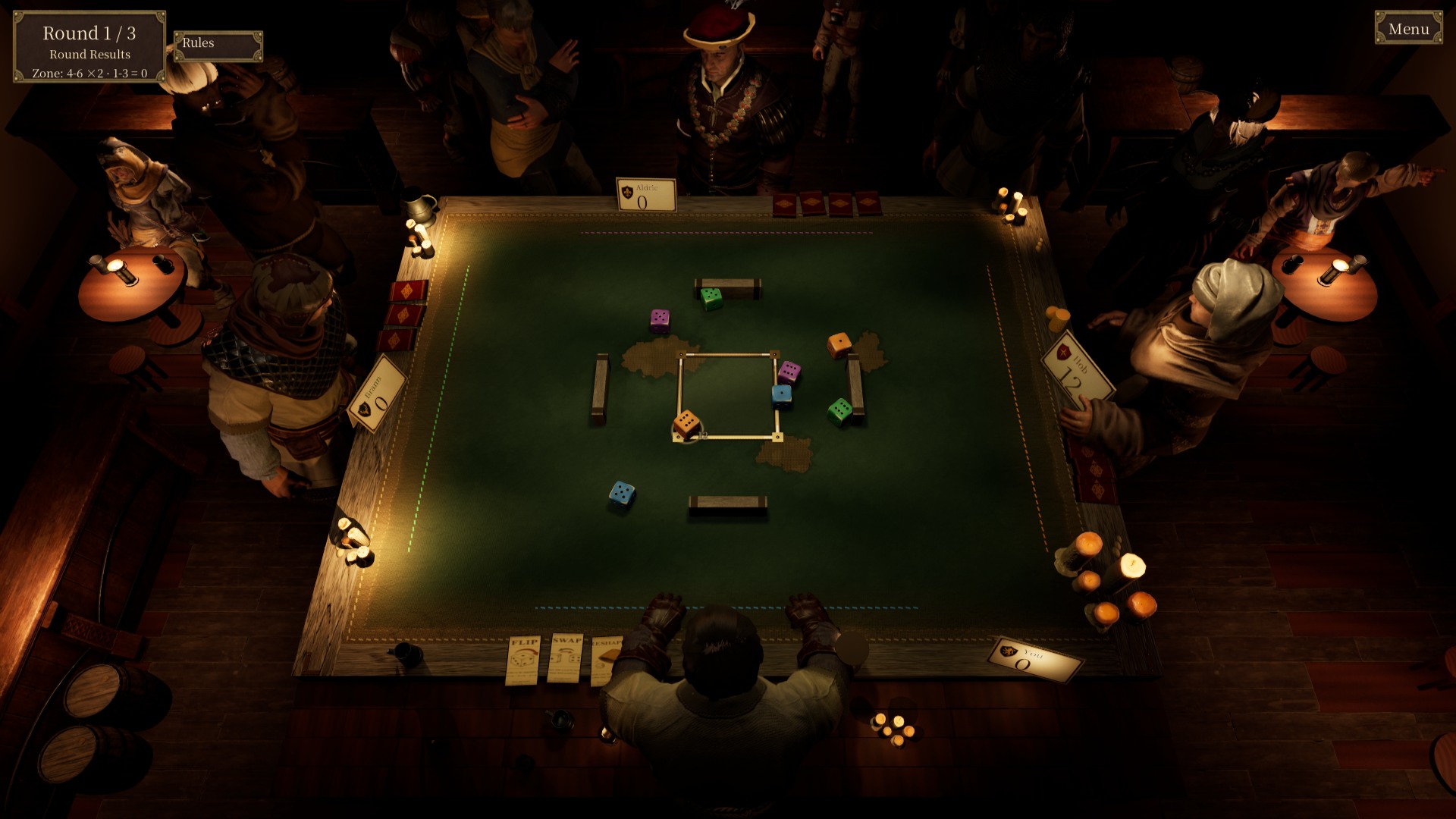
最后一手的出牌演出还没放完,账本就弹了出来;结算只有一张表。The ledger popped up before the last card show ended; scoring was just a table.
等演出放完、镜头到位、再停 1.4 秒;计分仍在同一帧入账,演出只决定何时显示。Wait for the show and camera, then 1.4 s; scoring still lands in the same frame — the show only decides when to display.
本章回答:参考了什么,要解决的核心问题是什么,游戏发生在怎样的世界里。This part answers: references, the core problem, and the world the game lives in.
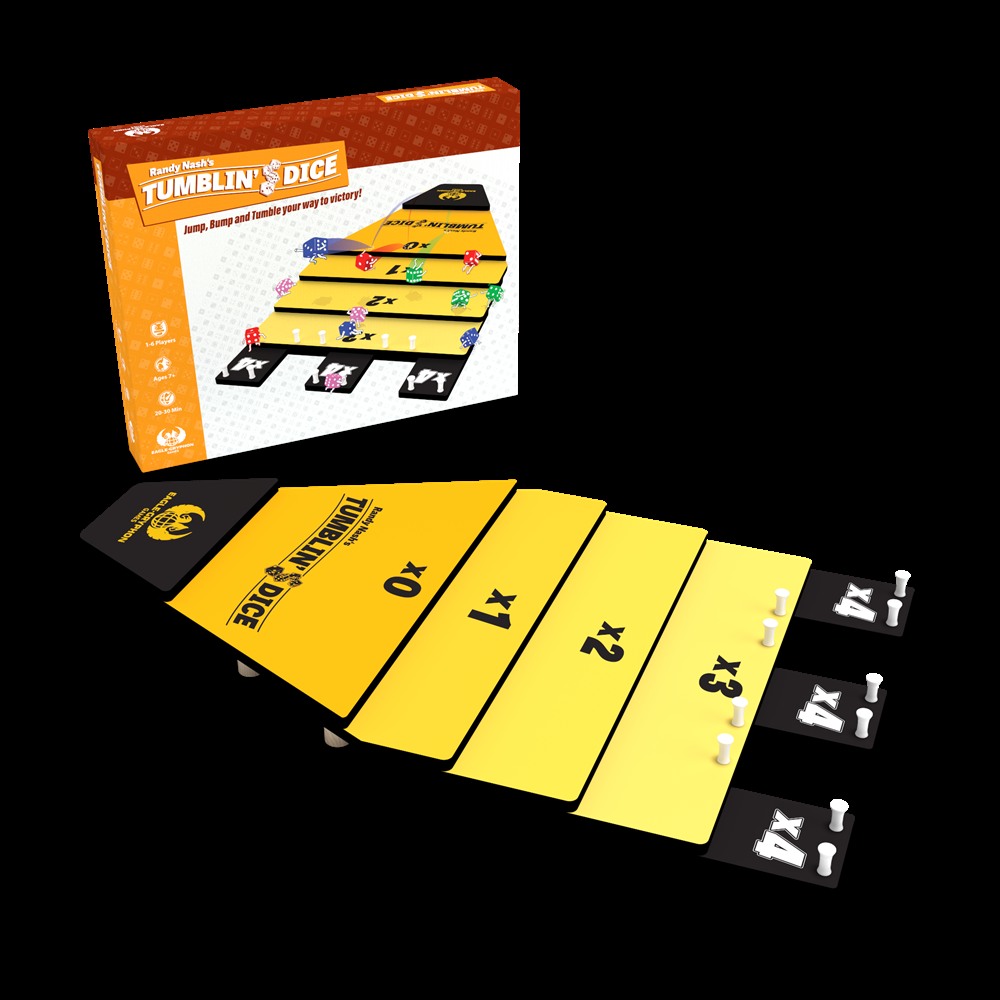
参考:弹射骰子,朝上点数 × 落点区域倍率。取舍:采用弹射与区域计分;改为骰子跨回合留桌。
Reference: flick dice; top face × zone multiplier. Choice: kept flicking and zones; dice now stay across rounds.
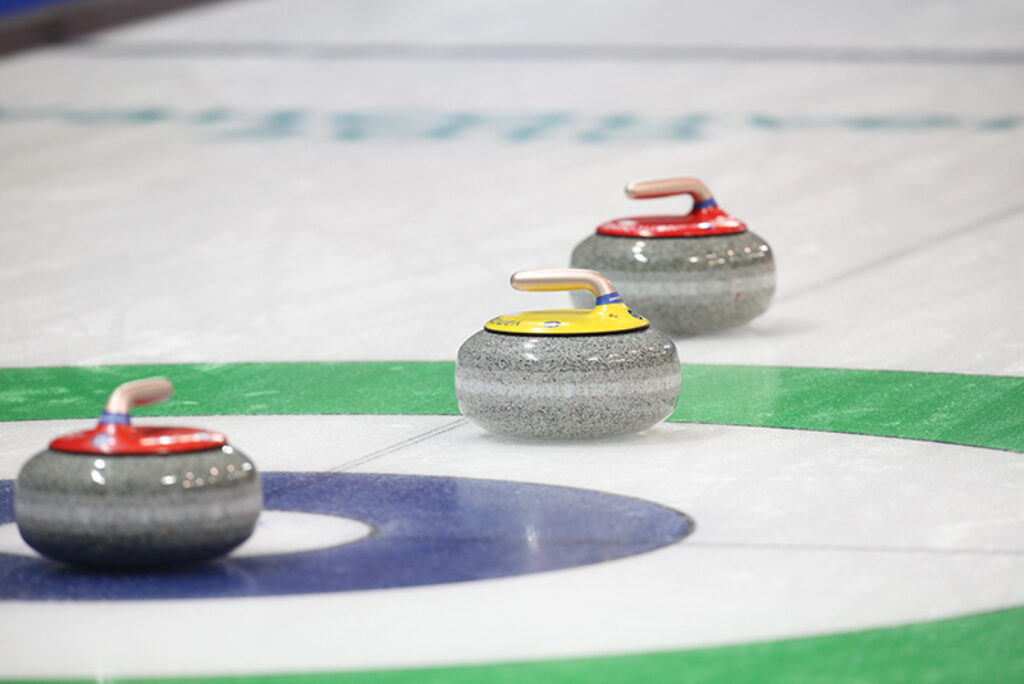
参考:占位、守卫、击打各有目的;最后一投优势。取舍:低分骰也能挡路线;常驻行动顺序与「最后一手」提示。
Reference: guarding, drawing and hitting each have a purpose; last-stone advantage. Choice: low dice can block routes; a constant turn order and a "last move" cue.
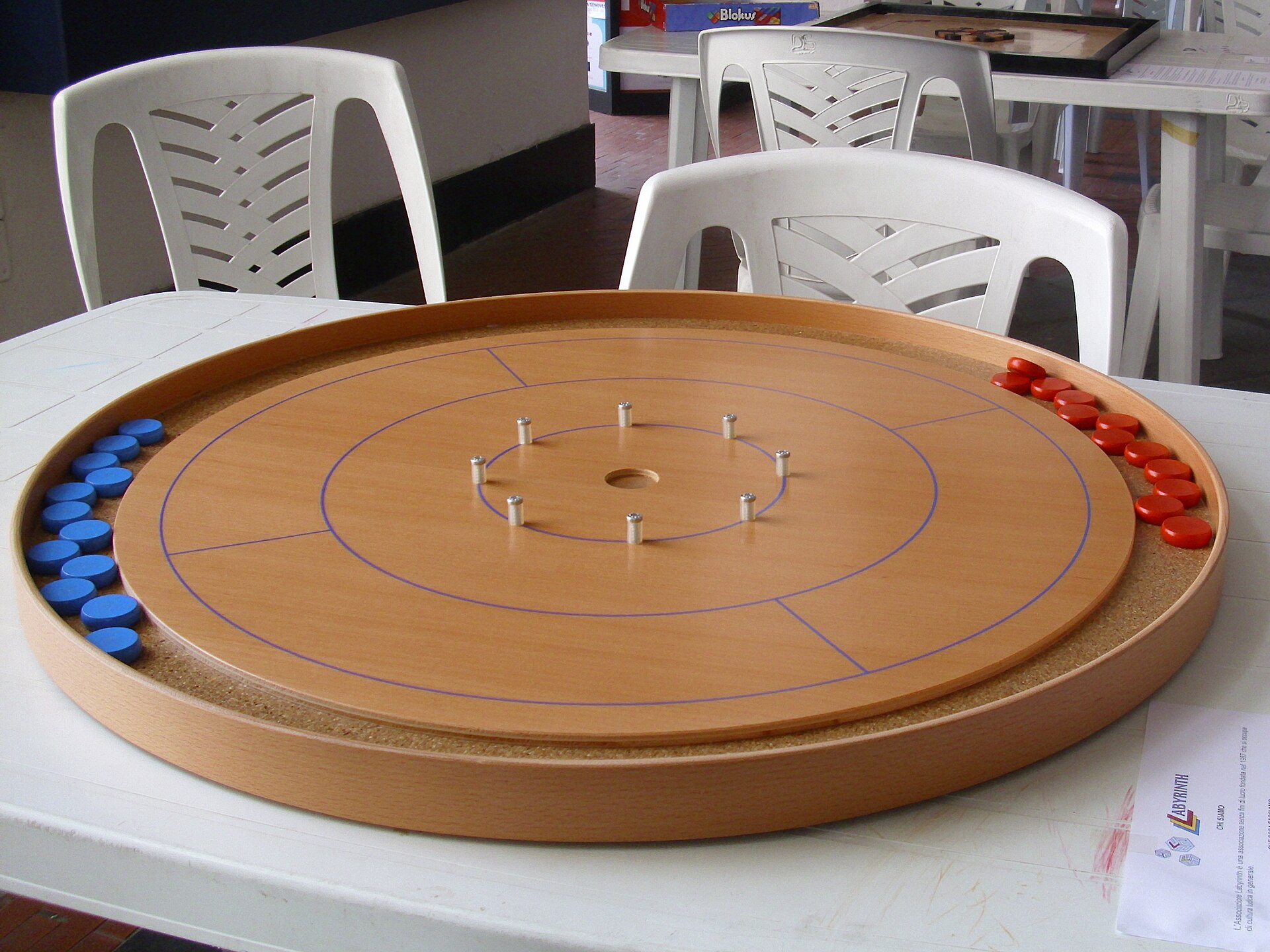
参考:把对手撞进低分位置也是进攻。取舍:撞出得分区就算有效进攻,不只有击出桌外。
Reference: knocking rivals into low spots is an attack too. Choice: knocking a die out of the zone counts, not only off the table.
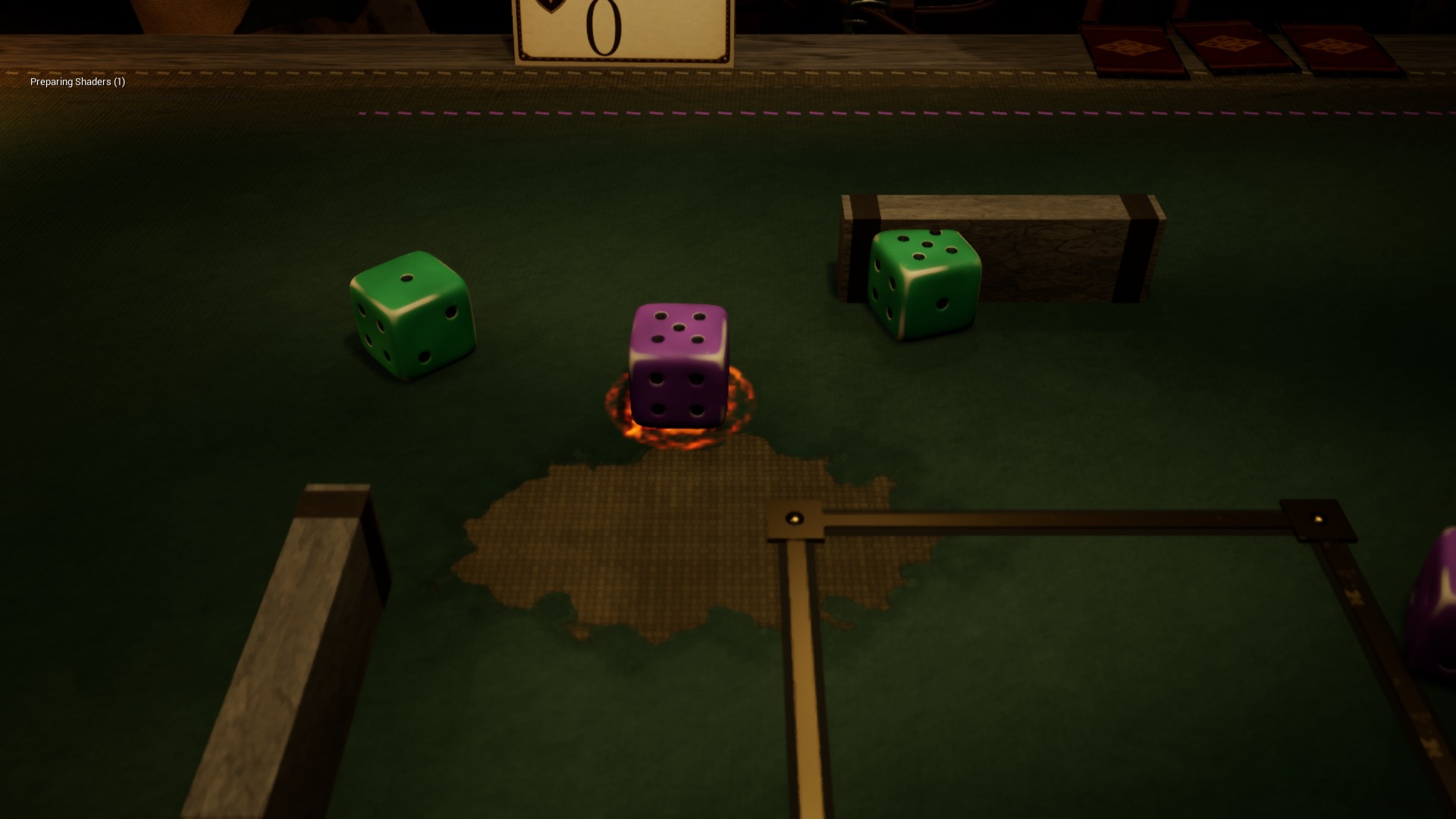
参考:特殊牌干预局面;不同对手提出不同问题。取舍:四张一次性卡牌;三位风格不同的对手。
Reference: special cards intervene; each opponent poses a different problem. Choice: four one-use cards; three opponents with distinct styles.
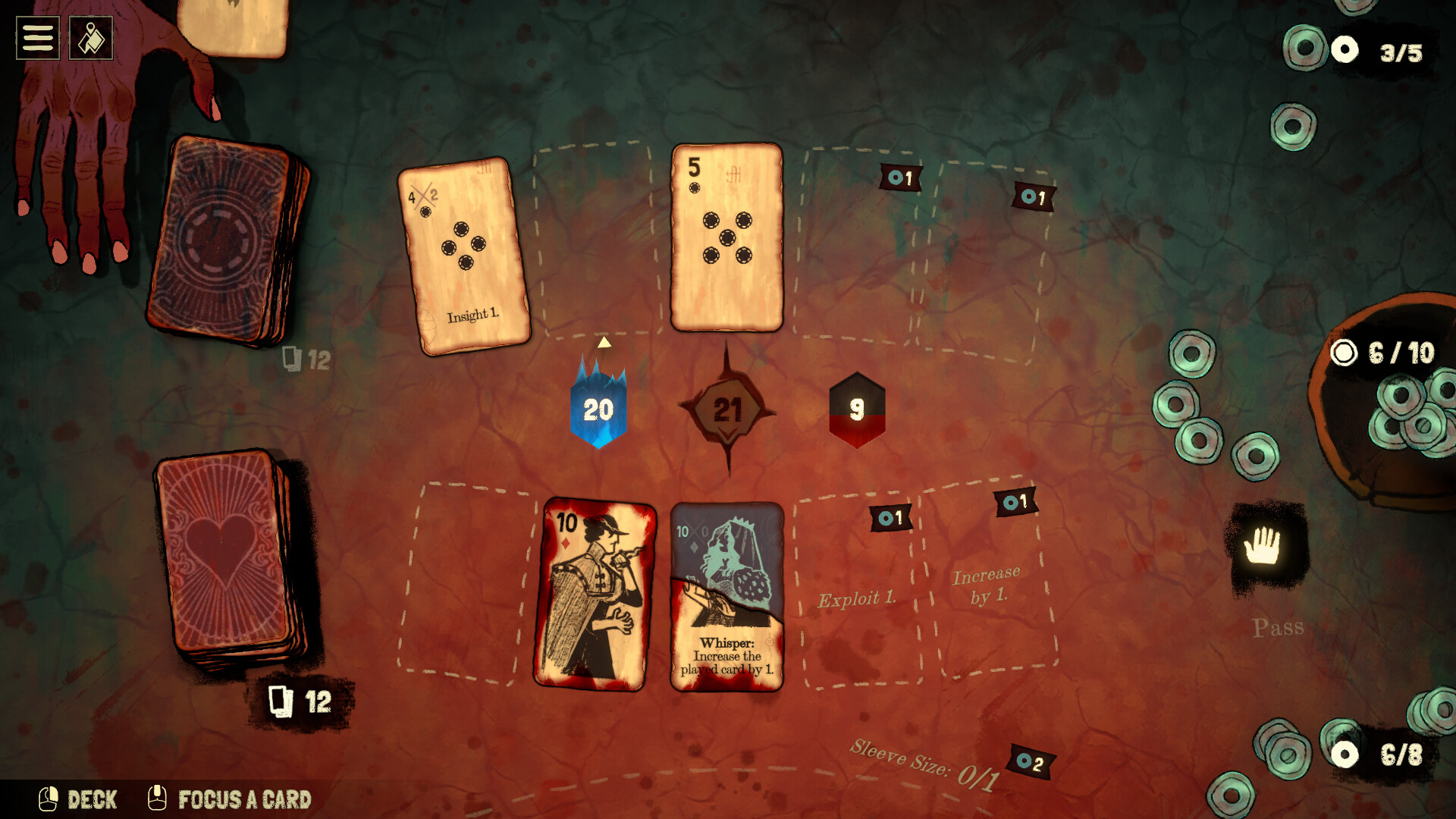
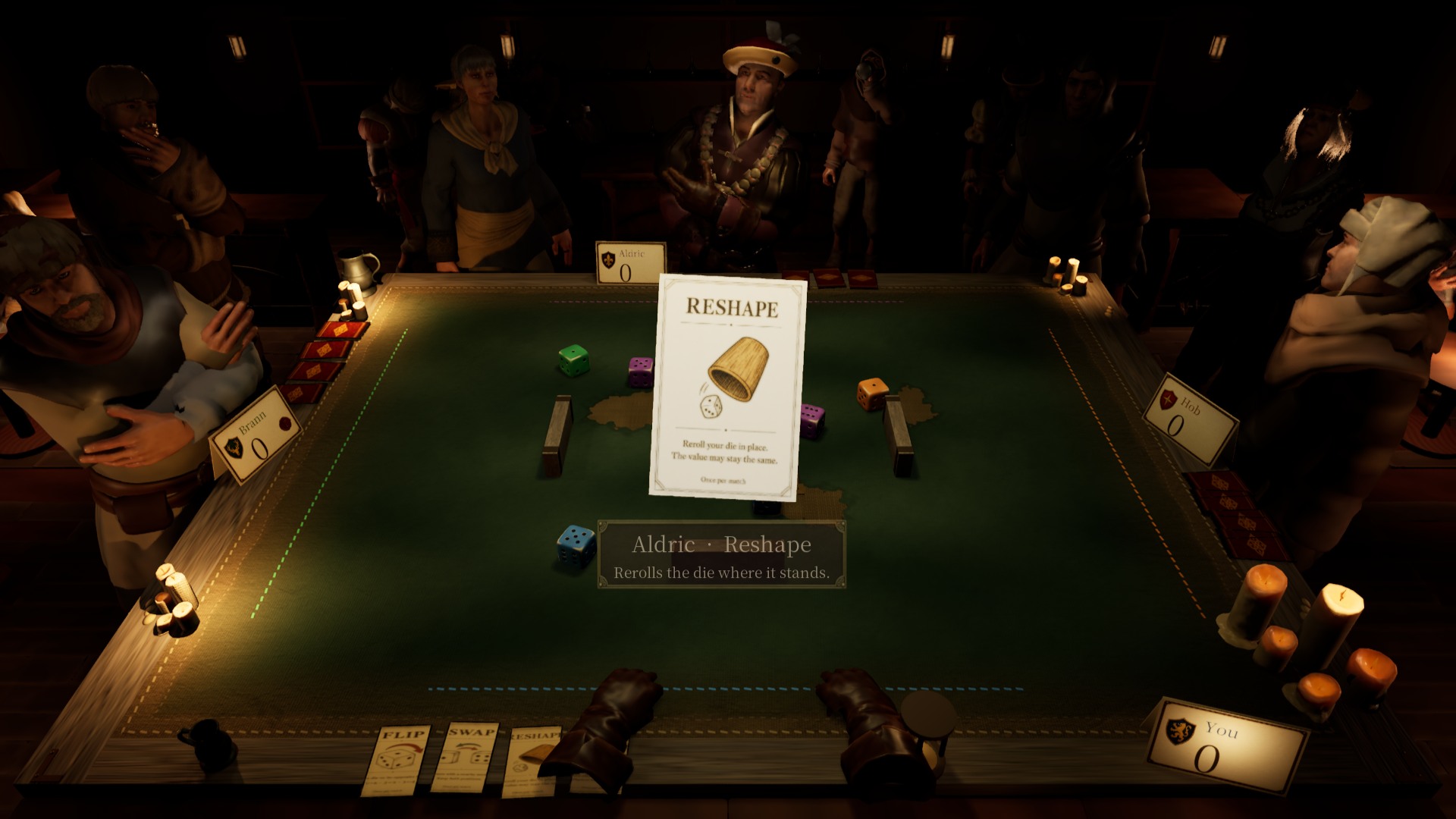
参考:行动前公开局面与对手意图。取舍:显示当前分、下一轮规则与合法目标。
Reference: the board and enemy intent are shown before you act. Choice: show live score, next rule and legal targets.
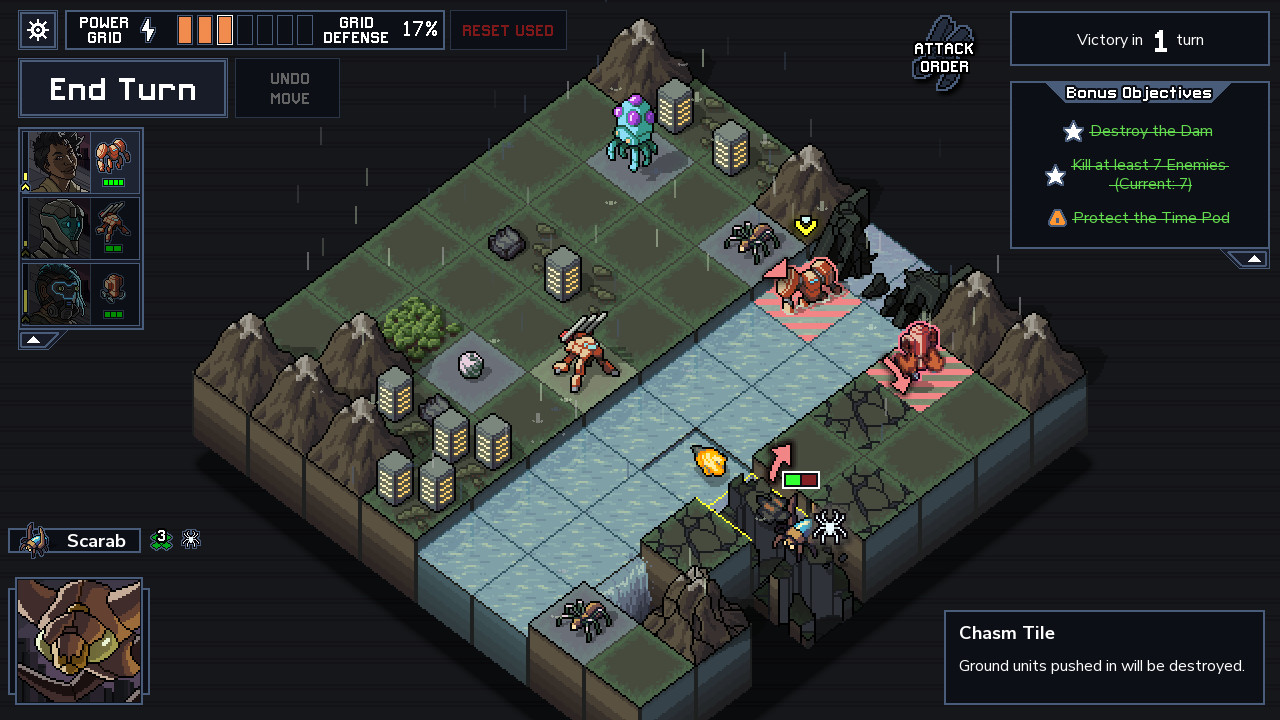
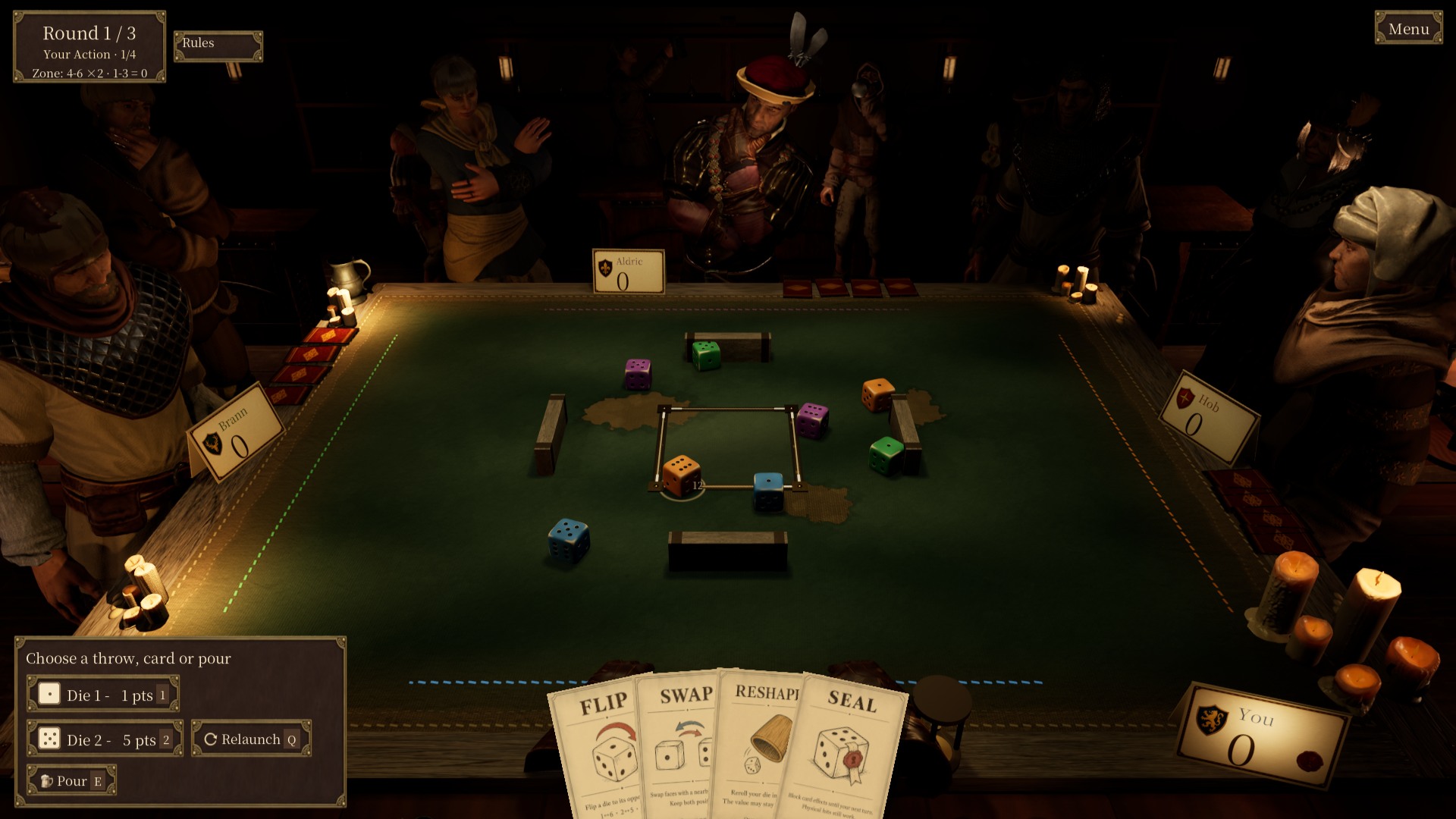
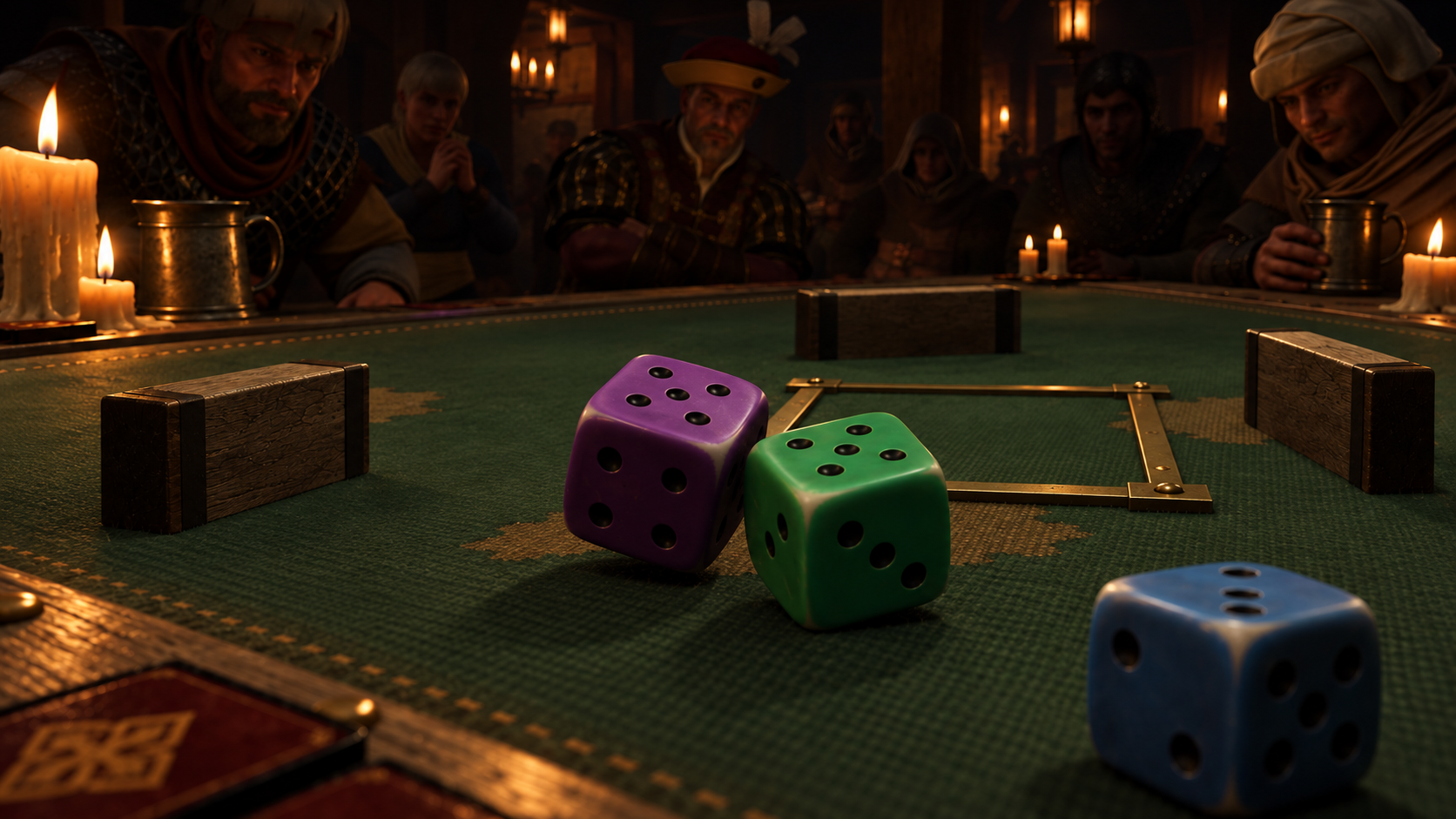
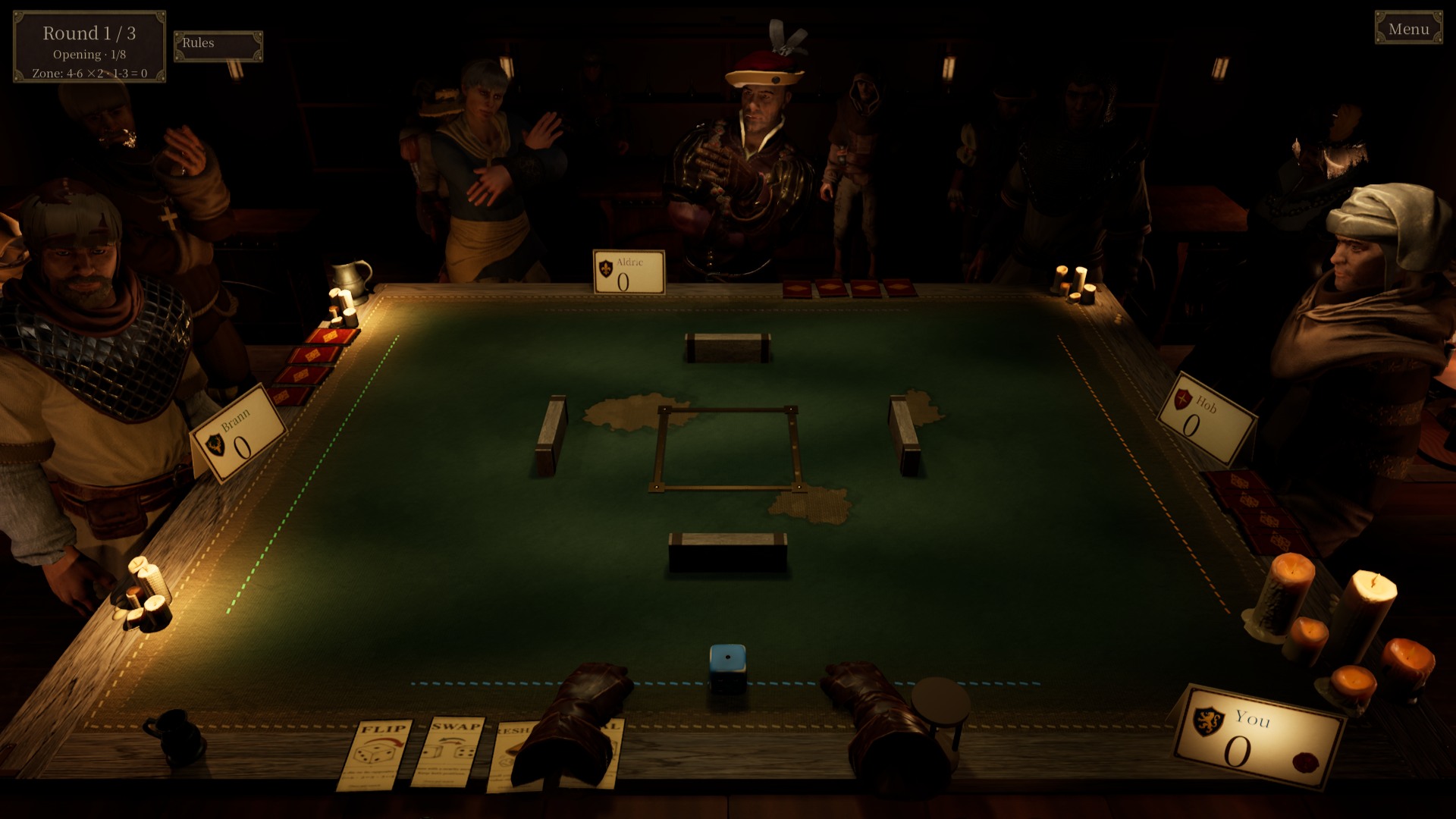
参考:烛光、木梁、粗糙的材质和嘈杂的人声,营造有生活感的中世纪世界;游戏和剧集都参考了。取舍:把这种氛围收进一间雨夜酒馆:烛光下的长桌、羊皮纸立卡、木挡板和围观的酒客。
Reference: candlelight, timber, rough materials and crowd noise build a lived-in medieval world; both the games and the TV series were references. Choice: that atmosphere is condensed into one rainy-night tavern: a candlelit table, parchment placards, wooden boards and watching patrons.
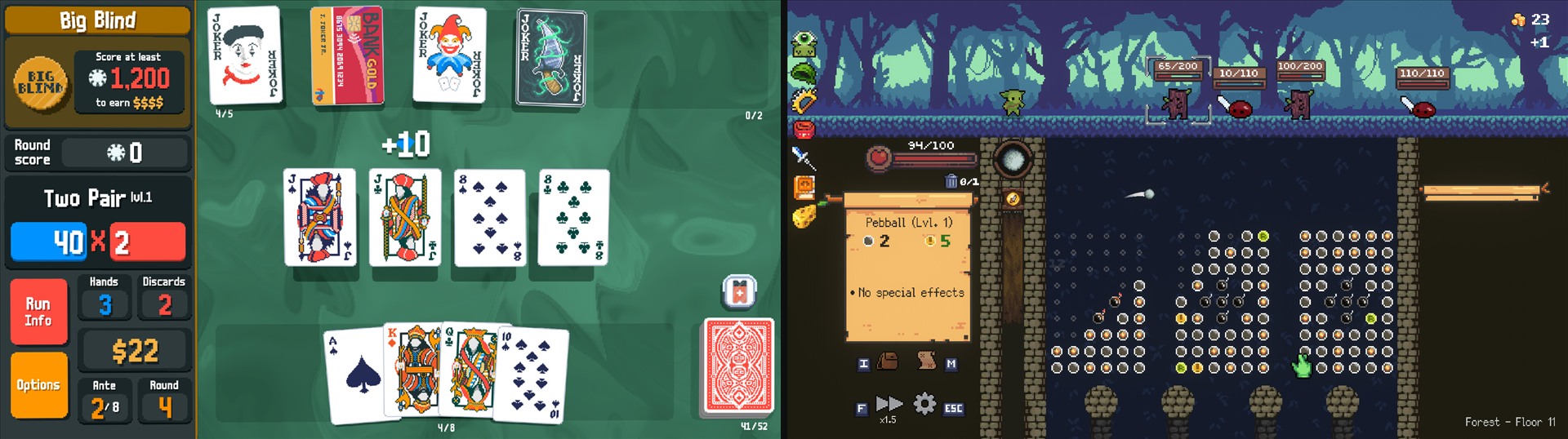
参考:规则改变决策;弹射加构筑成长。取舍:不采用商店与成长,先把核心对局做扎实。
Reference: rules reshape decisions; flicking plus deckbuilding. Choice: no shop or progression; the core match comes first.
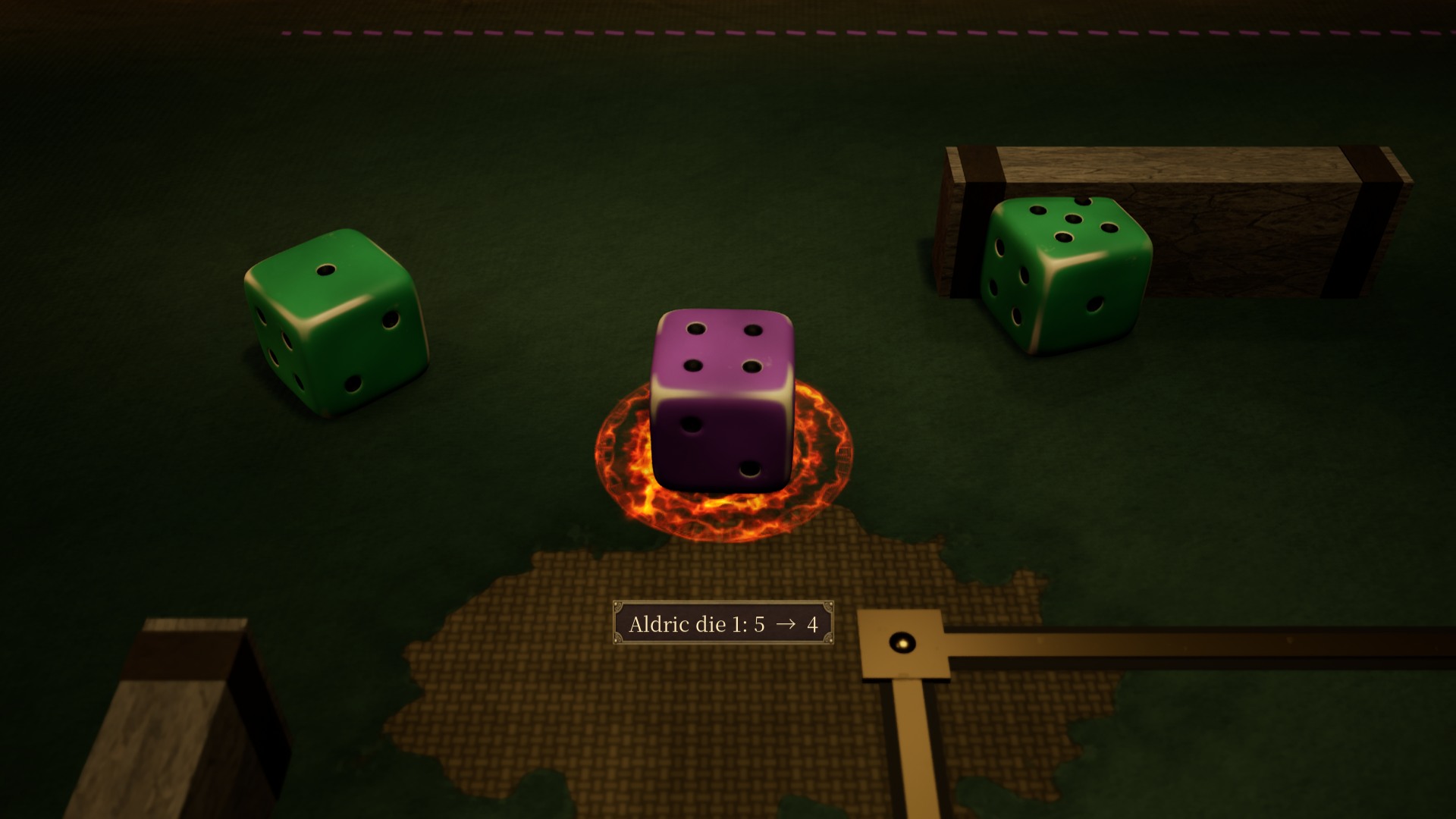
落下是几就是几,除非取回重投,没法改变。Whatever it lands on is what you get.
朋友测试和自测反馈Friend & self-testing
想留住区里的高分骰,改点却只能拆掉自己的局面。To change pips, I have to break up my own position.
朋友测试和自测反馈:「这是核心矛盾」Friend & self-testing: "this is the core conflict"
高抛撞了几次看不清,点数像是「突然变了」。After a lob bounces, the pips seem to change out of nowhere.
机制研究Mechanics research
随机本身不是问题——它制造惊喜和翻盘。问题是玩家面对随机无事可做。目标不是消除随机,而是给它一个结构:出手前能控制,结果出来后能干预,最后由规则筛选。
Randomness itself is not the problem — it creates surprises and comebacks. The problem is that players have nothing to do about it. The goal is not to remove it but to give it a structure.
只保守,不对抗Only defensive, no conflict
新地图苍白、看不懂New maps were bland and unclear
太呆板,停留在讨论阶段Too mechanical; never shipped
翻面、对调、重塑、封存,每张每局一次;出牌或投骰共用一手Flip, Swap, Reshape, Seal — once each; a card or a throw, never both
随机制造局面,选择决定胜负。Chance makes the position; choices decide the game.
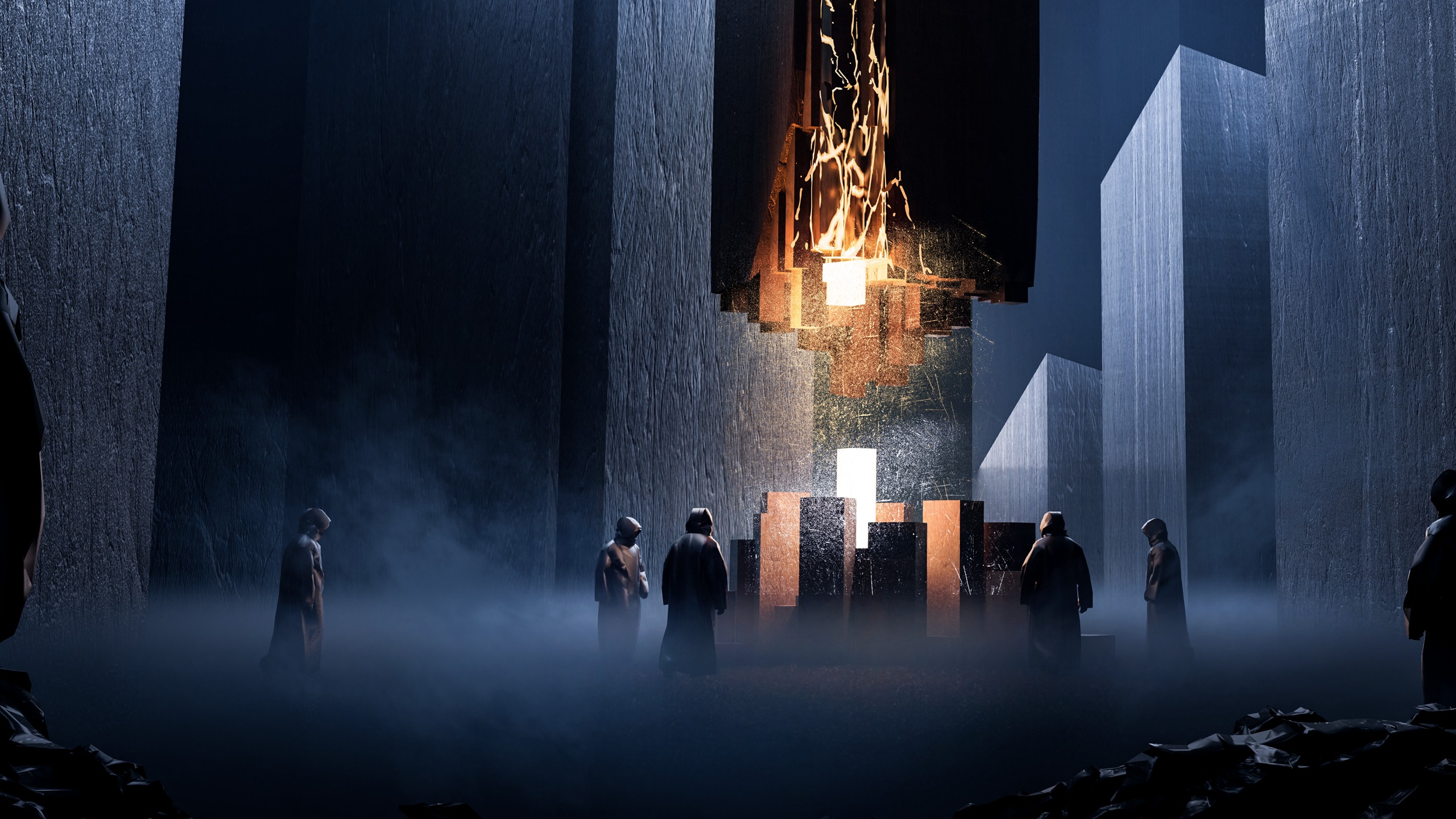
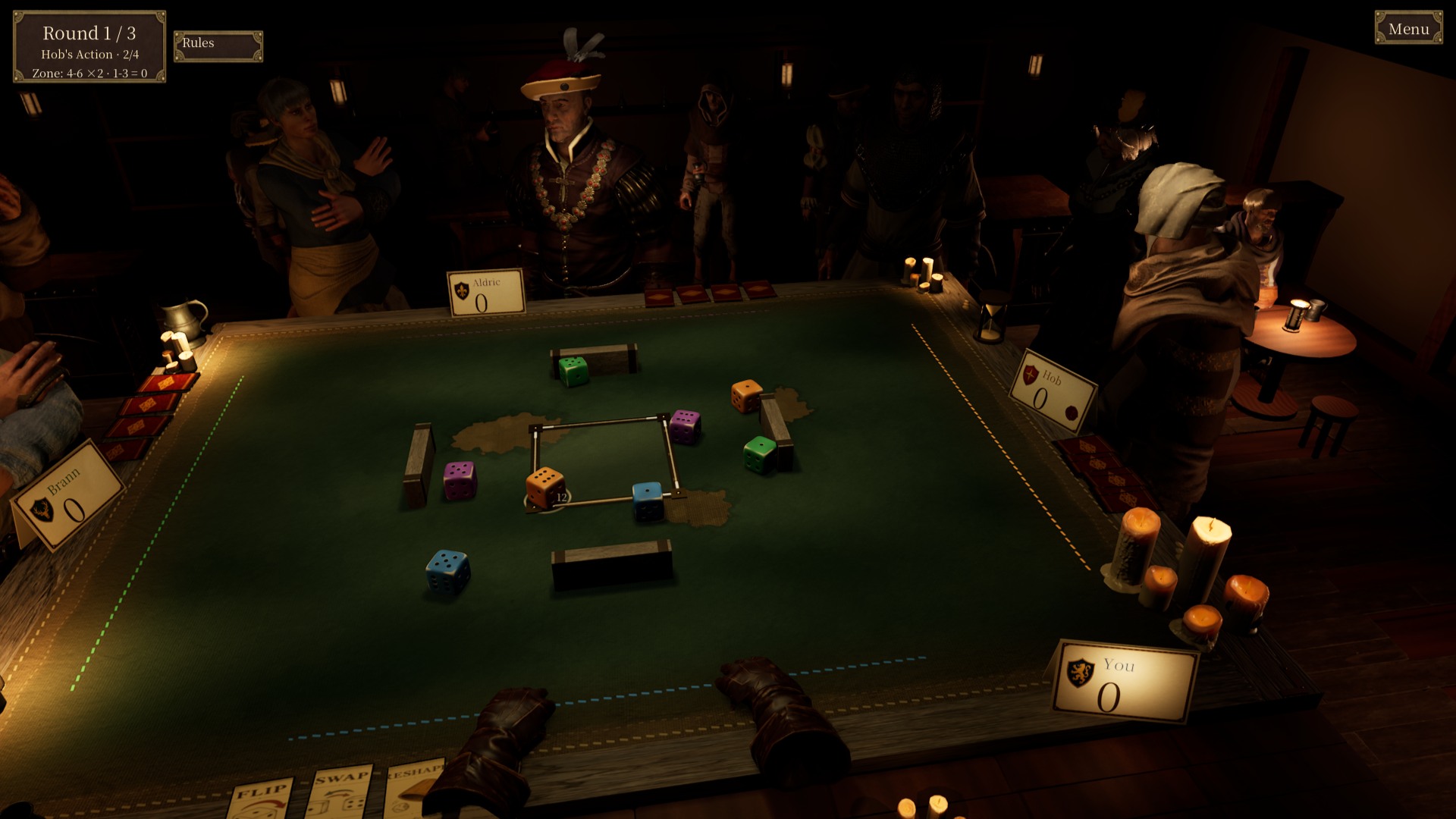
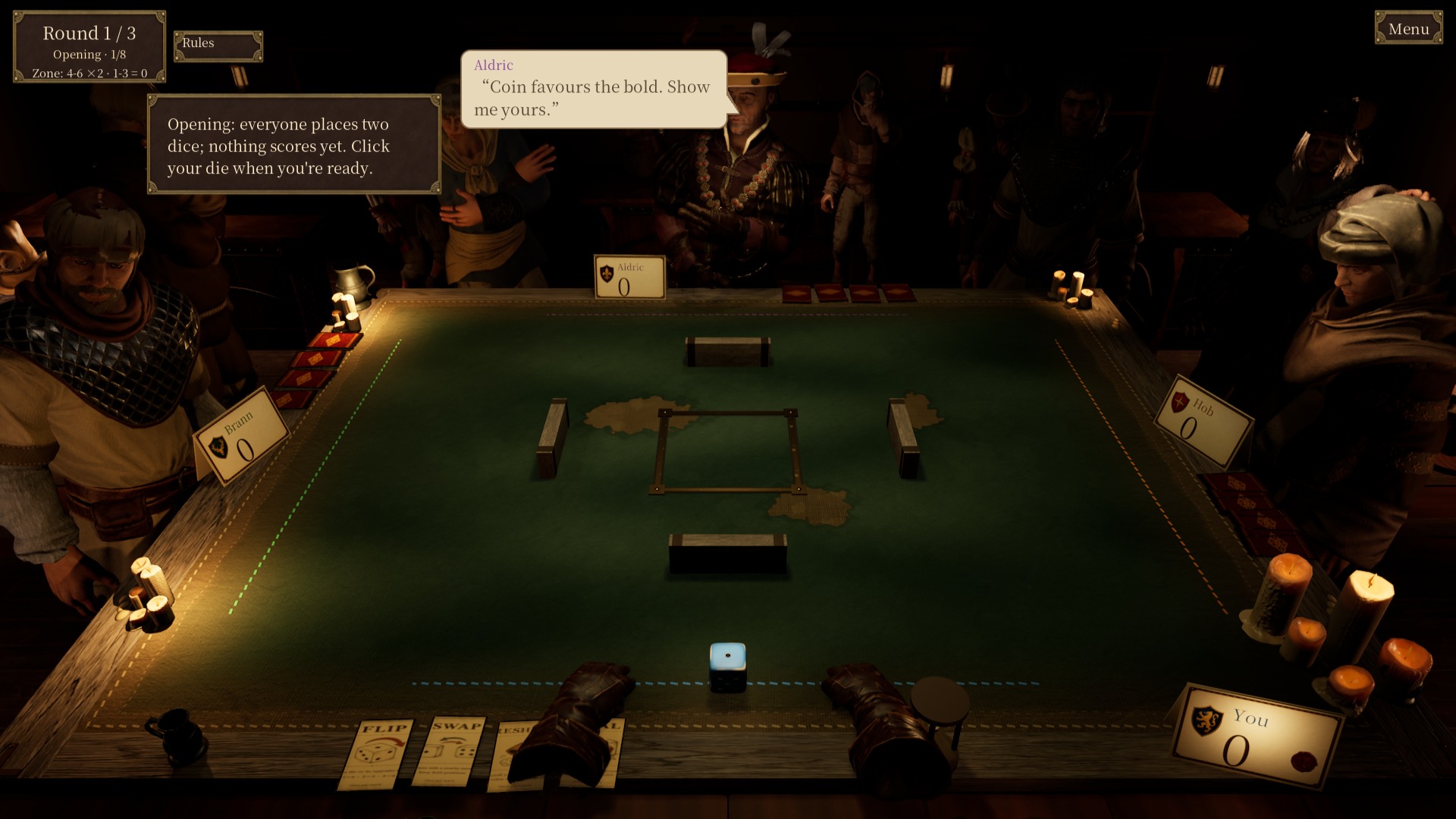
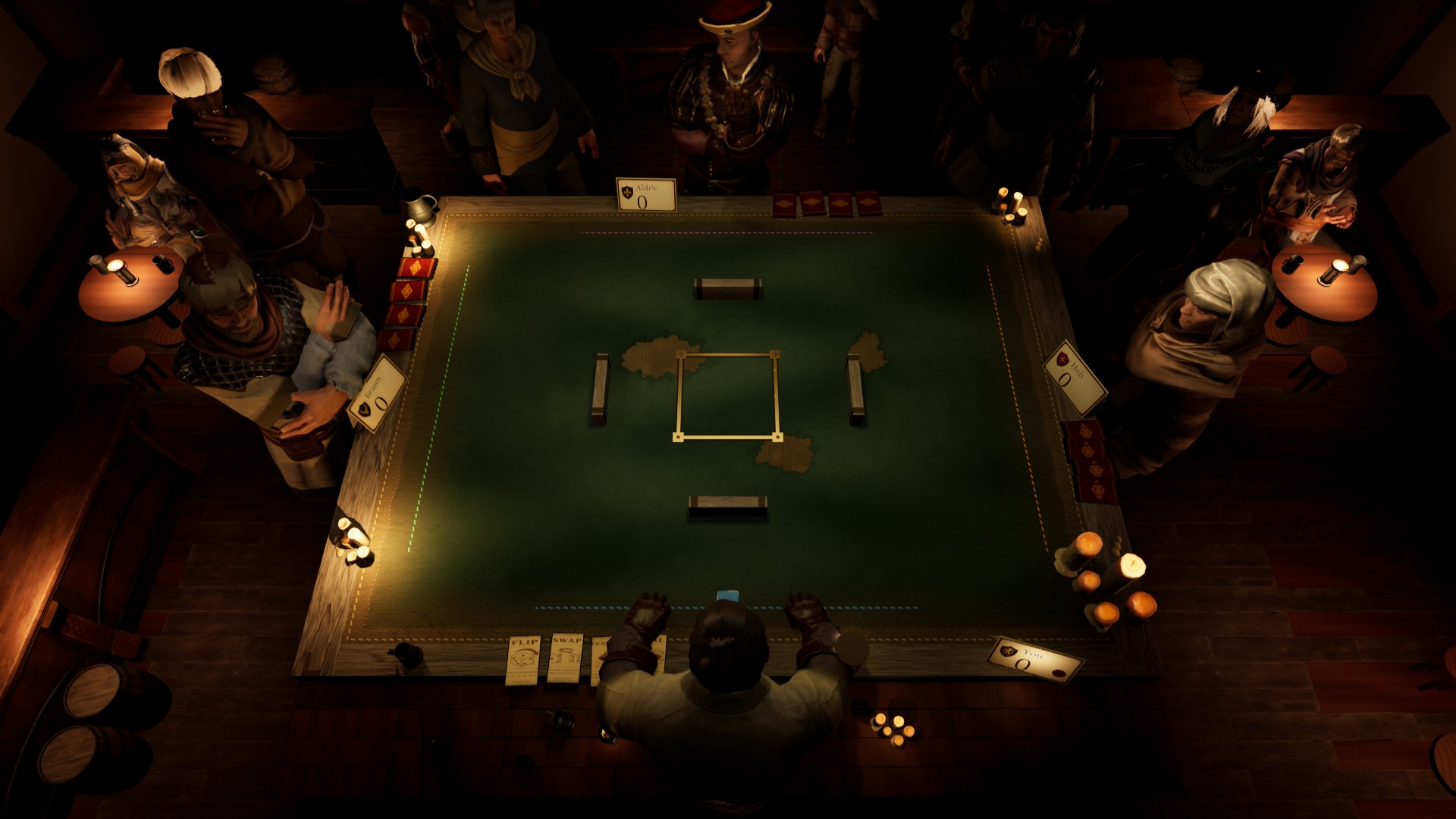
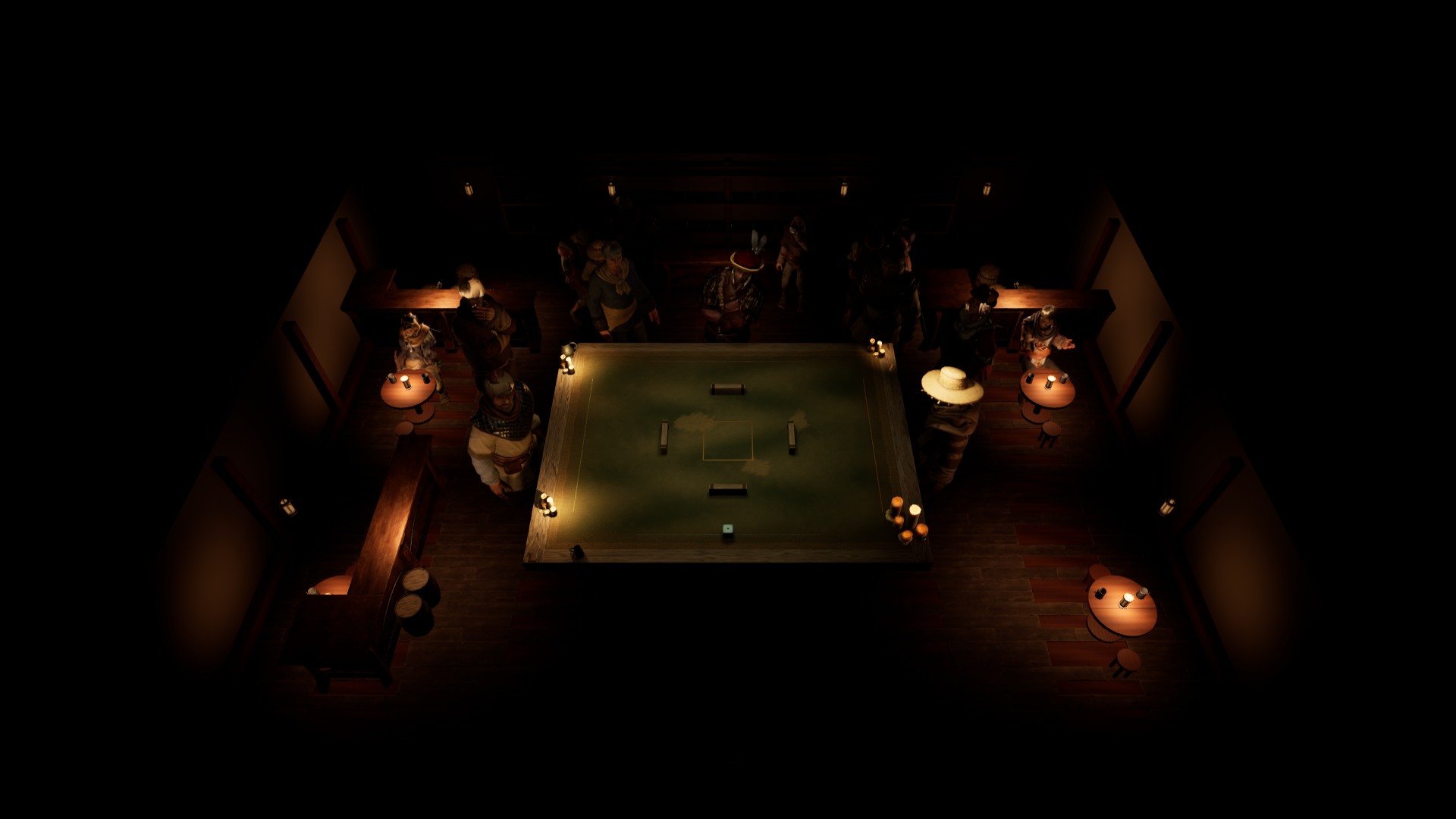
北地边陲的一间老酒馆。每逢雨夜,常客们就围着那张磨旧的绿毯长桌玩「骰碰骰」——骰子碰骰子:三巡过后,谁留在灯下得分区里的点数最多,谁就赢走今晚的酒钱。
An old tavern on the northern frontier. On rainy nights the regulars gather round the worn green-felt table to play DiceClash — dice knocking dice. After three rounds, whoever has the most pips in the lamp-lit zone wins the night's drinking money.
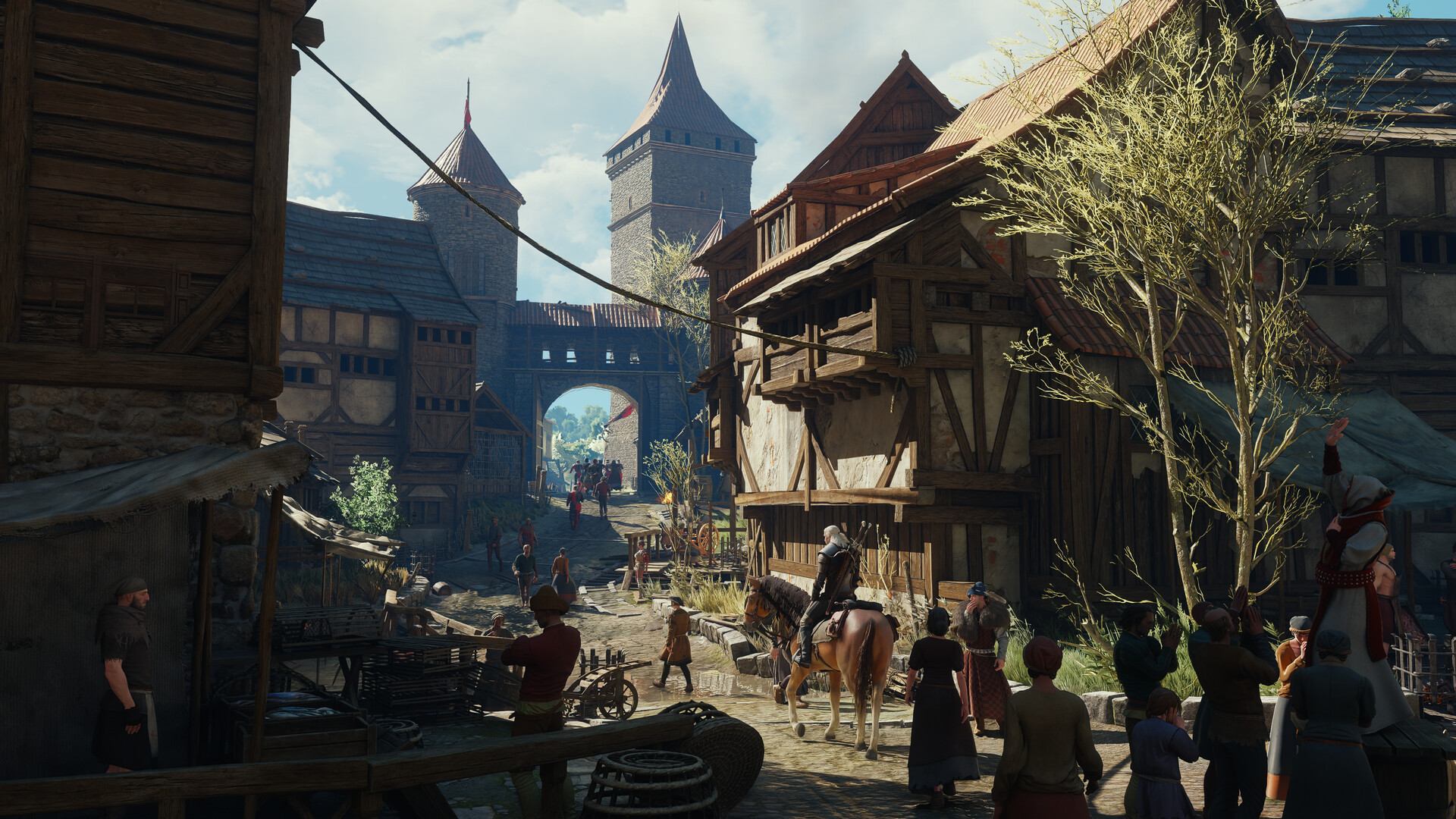
美术基调:仿中世纪北欧酒馆,参考《猎魔人》的时代感——烛光、木梁、羊皮纸。Art direction: a medieval Nordic tavern with the period feel of The Witcher — candlelight, timber, parchment.
桌毯是 0.45。滑得更远,也更容易出界,考验力度。
Felt is 0.45. Dice slide farther and risk going out; tests power.
可靠的停骰点与缓冲落点;不能倒酒。
A reliable stopping point; no pouring here.
逼出贴地绕行与高抛两种路线。
Force a choice between going around and lobbing over.
地形从固定变成玩家的选择。
Terrain becomes the player's choice.
对手的性格就是可以读出的打法。
A temper is a readable playstyle.
分数、累计与轮到谁都在桌上,少用 2D 面板。
Scores, totals and turn order live on the table, not in 2D panels.
本章回答:一局怎么进行,玩家每一手在决定什么。This part answers: how a match plays, and what each move decides.
骰子不会被收走,每一手的结果都留给后面的人;规则每回合轮换,同一个位置的价值会变。区内有效点数 × 2 计分,按回合末的最后局面结算。× 2 来自早期规则:最初只要进区就按点数 × 2 计分,缺少对抗和取舍;后来改成每回合只有部分点数计分(例如 4–6 点 × 2,1–3 点为 0),同一个位置的价值才会随回合变化。Dice are never cleared, so each move is left for the next player; the rule rotates, so a spot's value changes. In-zone pips × 2, scored on the final position of the round. The × 2 comes from an early rule where any die in the zone scored its pips × 2; that lacked conflict and trade-offs, so each round now scores only some pips (for example 4–6 × 2, 1–3 for zero), making a spot's value change from round to round.
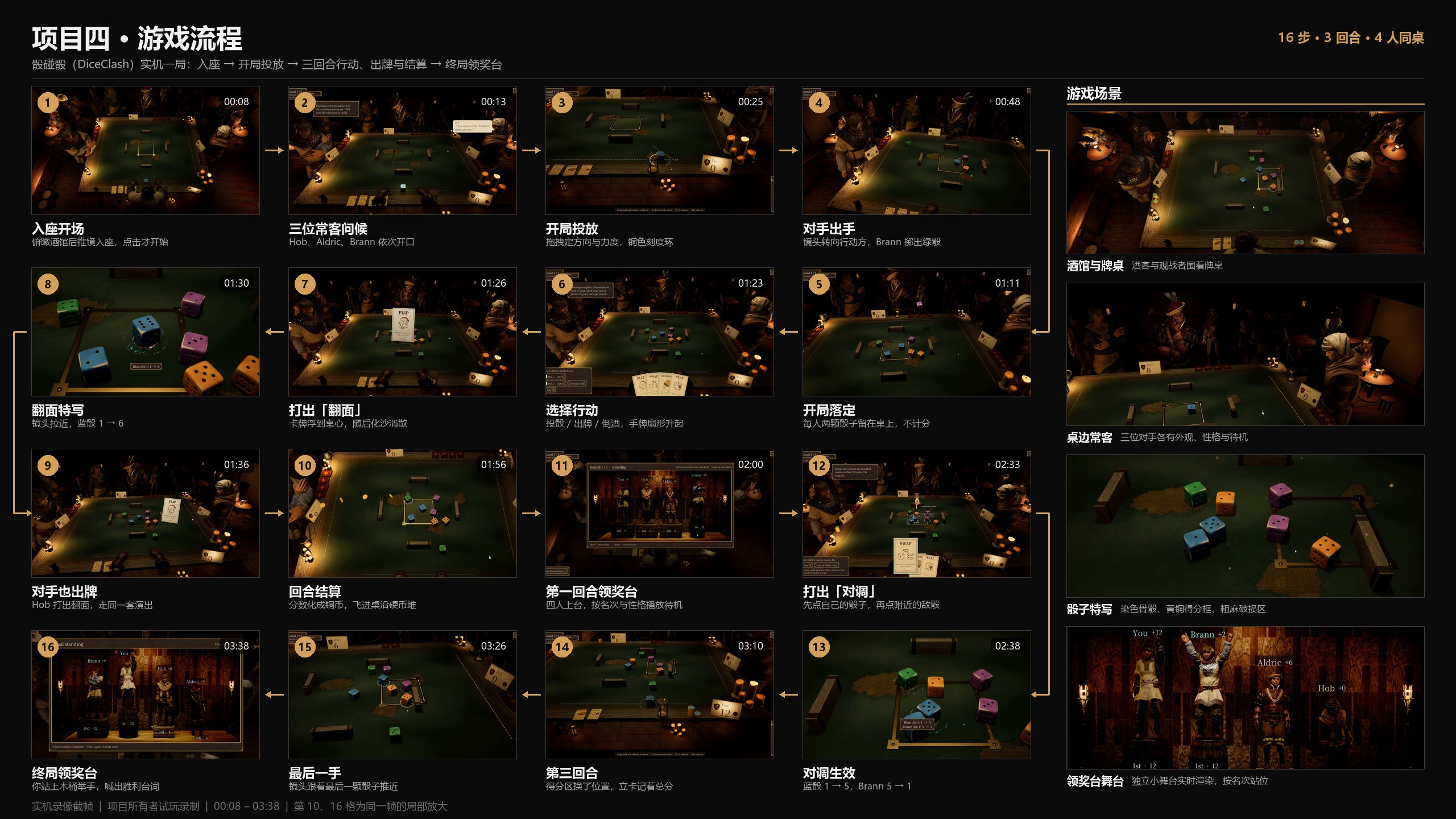
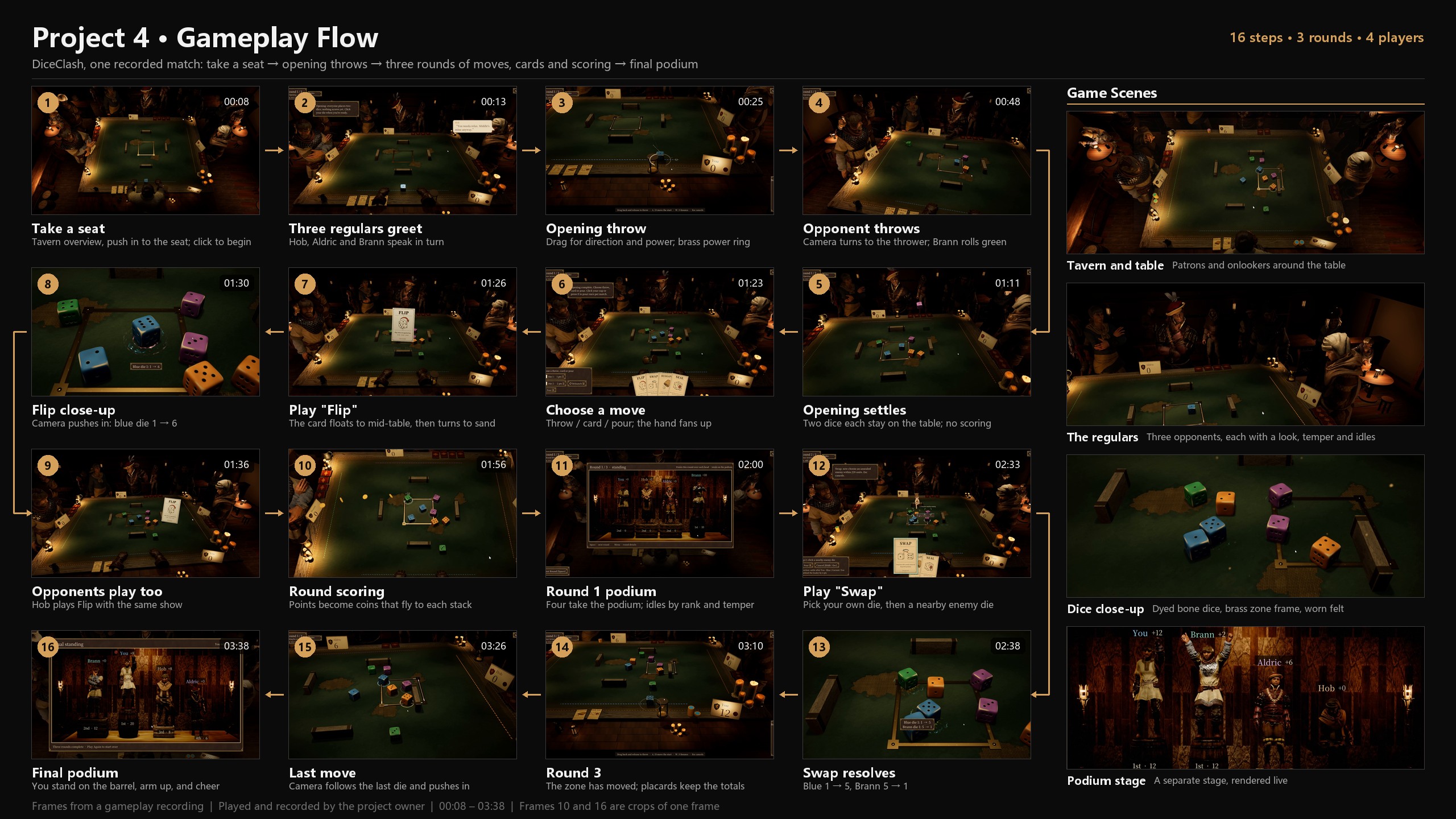
改变位置与点数,由物理决定。主要得分手段,技巧与运气并存。
Changes position and pips, by physics. The main way to score.
代价Cost拆掉原来的站位;出界骰必须先回收。
Breaks up your position; dice off the table must be recalled.
小范围挪动己方骰子,不拆局面的微调。
Move your own die a short way; fine-tuning.
代价Cost同样消耗一手,仍会带动翻滚。
Also costs a move, and still tumbles.
只改点数,位置不变。给随机结果一个回应。
Changes pips only. An answer to the random result.
代价Cost四张各一次、用后不补;出牌即结束本手。
Four cards, once each; playing one ends the move.
制造低摩擦的酒渍,改变之后所有人的路线。
Makes a low-friction spill that changes everyone's routes.
代价Cost每局一次;不能盖住破毯、挡板与桌外。
Once per match; not on torn felt, boards or off-table.
硬规则(试玩中确立):每一手只能做一件事——出牌或投骰二选一,不额外赠送行动。Hard rule (set in playtests): one thing per move — a card or a throw, never both.
本章回答:桌面怎样提供路线选择,场景如何从抽象走到酒馆,镜头怎样兼顾瞄准与全局。This part answers: how the table offers routes, how the scene became a tavern, and how the camera balances aim and overview.
符合当轮规则才得分。前两轮居中,第三轮换位,原有站位需要重新评估。
Scores only if the rule fits. Centred for two rounds, then it moves.
截断直接路线。贴地绕行与高抛越障需要不同的力度和落点。
Cut direct routes; going around and lobbing need different power.
降低滑行距离,提供停骰机会;同一位置不能倒酒。
Shortens slides and offers stopping points; no pouring.
保留进区与侧向攻击路线;合法位置可倒酒,湿区持续到本局结束。
Keep entry and flank routes; pour here, and the spill lasts the match.
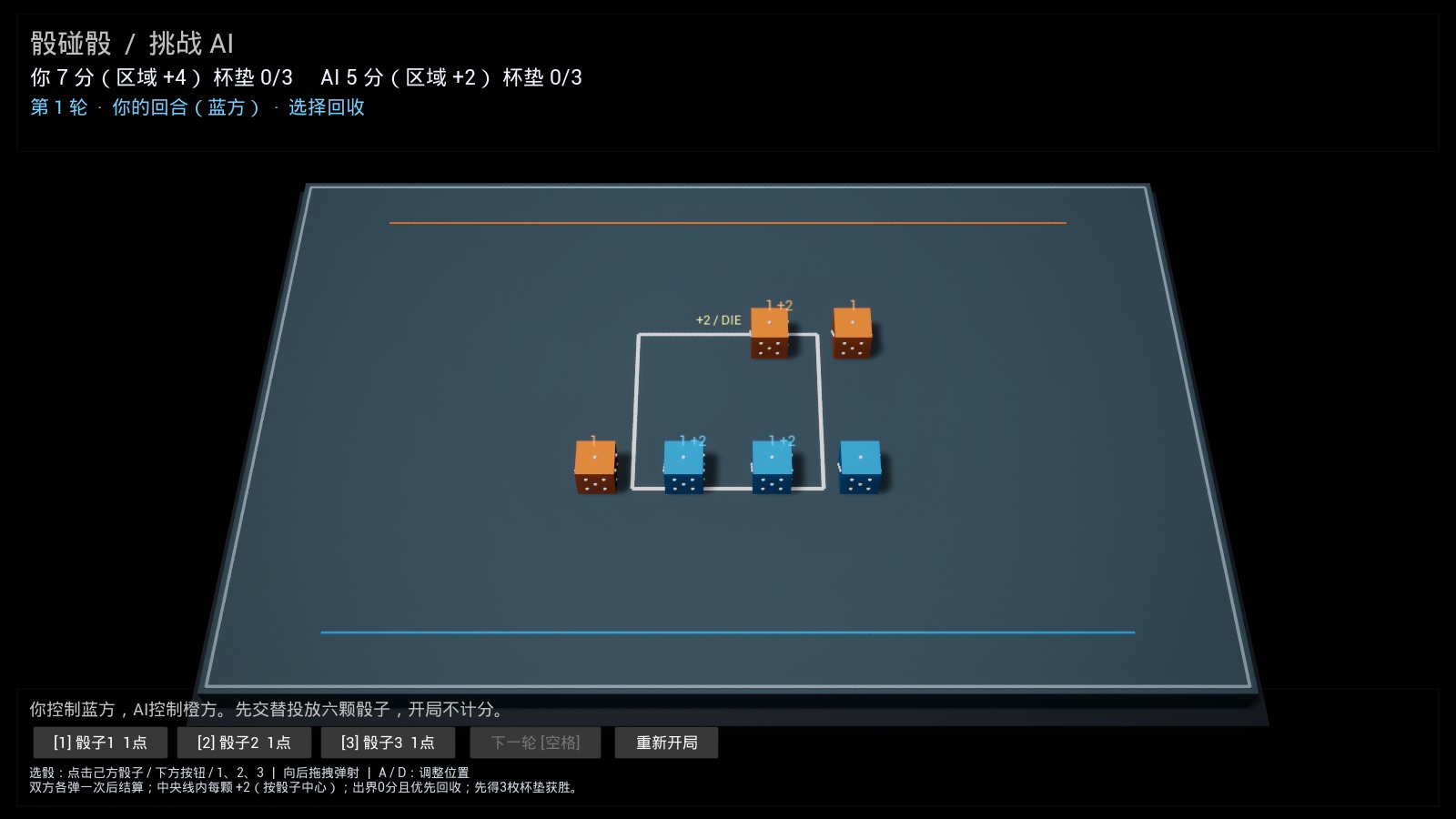
投骰、回收、停稳计分与跨轮保留。试玩反馈「玩法单一、AI 太笨」后,加入得分区、三个对手和低摩擦冰面。
Throw, recall, settle, keep across rounds. After "too simple, the AI is dumb", added the zone, three opponents and ice.
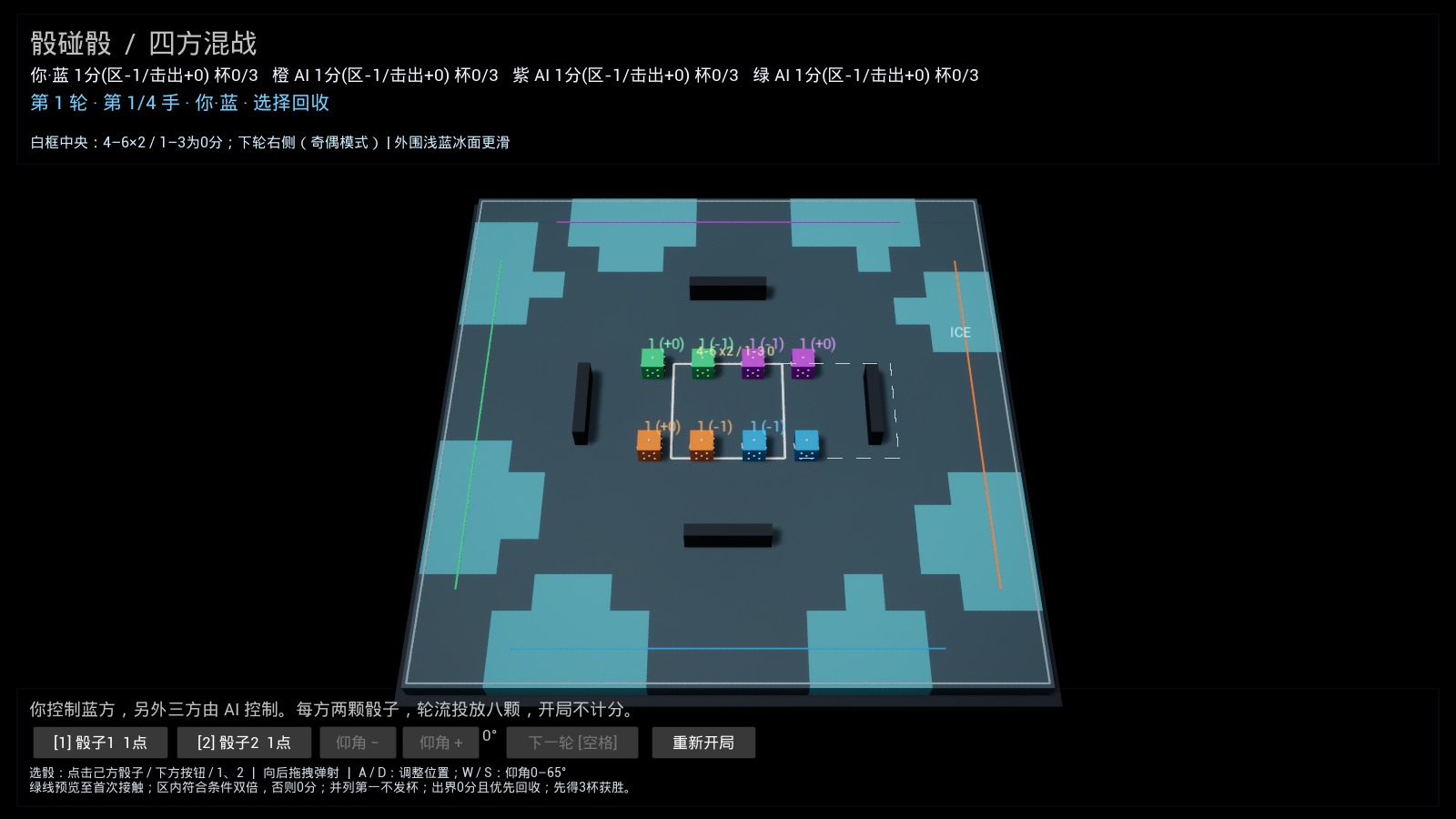
玩家提出「高射炮」机制。加入 0–65° 仰角与首段轨迹预览;冰面移到外围,中央保留争夺空间。
An "anti-aircraft gun" request led to 0–65° pitch and a first-arc preview; ice moved to the edges.
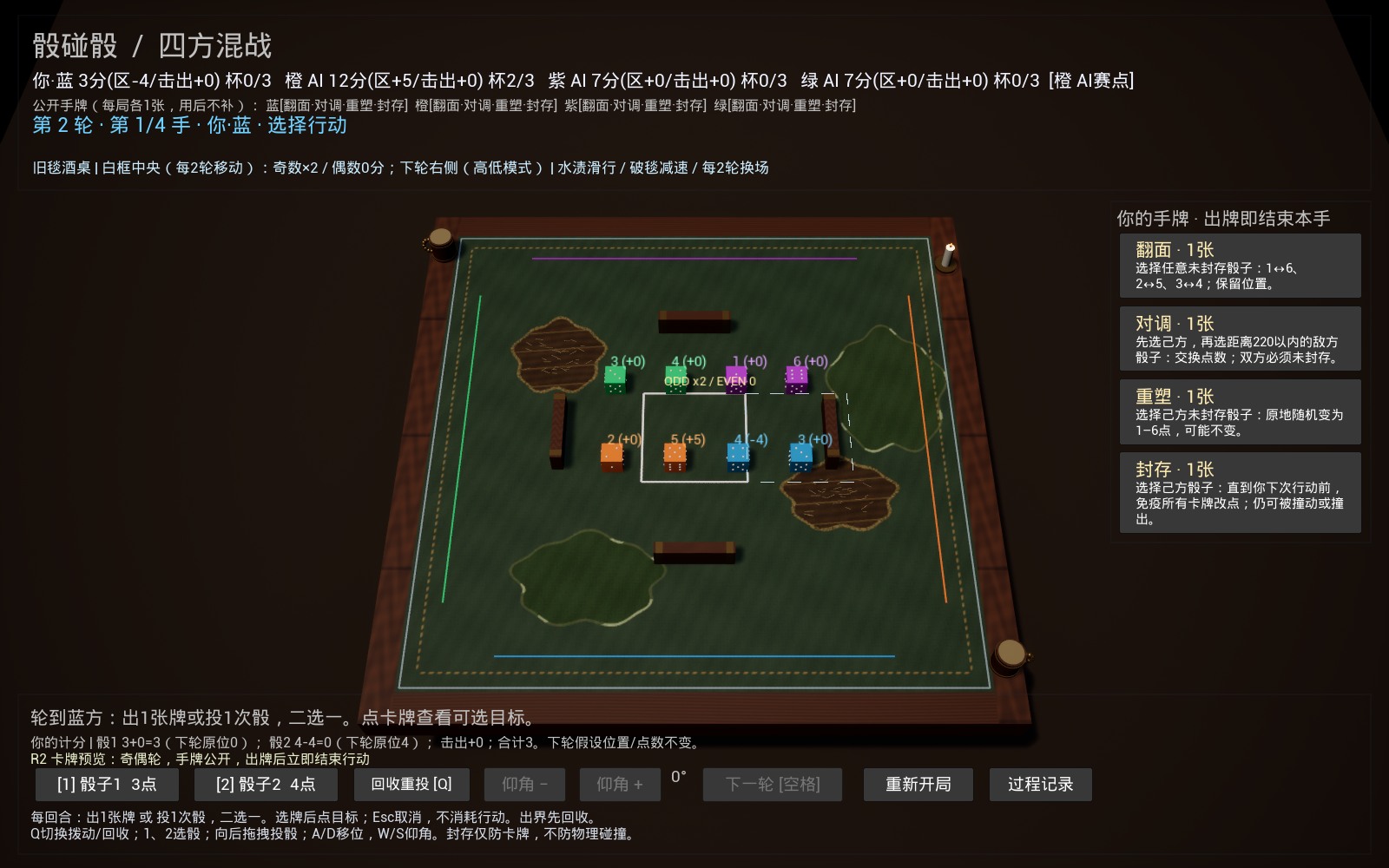
保留低摩擦、减速与阻挡的玩法功能,换成可理解的酒馆物件。
The roles stay — low friction, slowing, blocking — now as readable tavern objects.
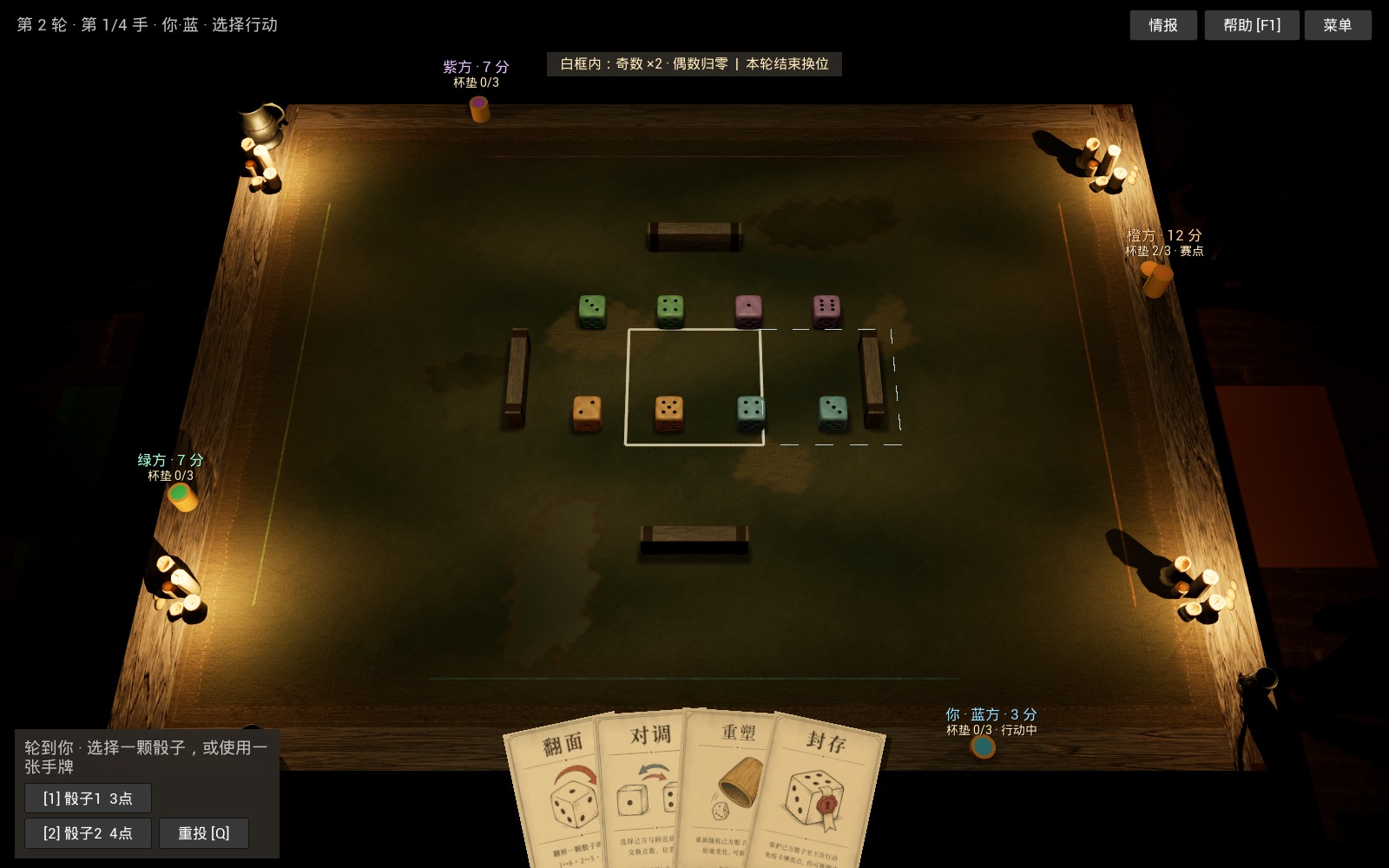
「太规整、像现代赌桌」:桌面横向加宽 1/3,按绕板、冲撞、停骰与占区重排区域。
"Too neat, like a modern casino": the table widened by a third and zones rearranged around routes.
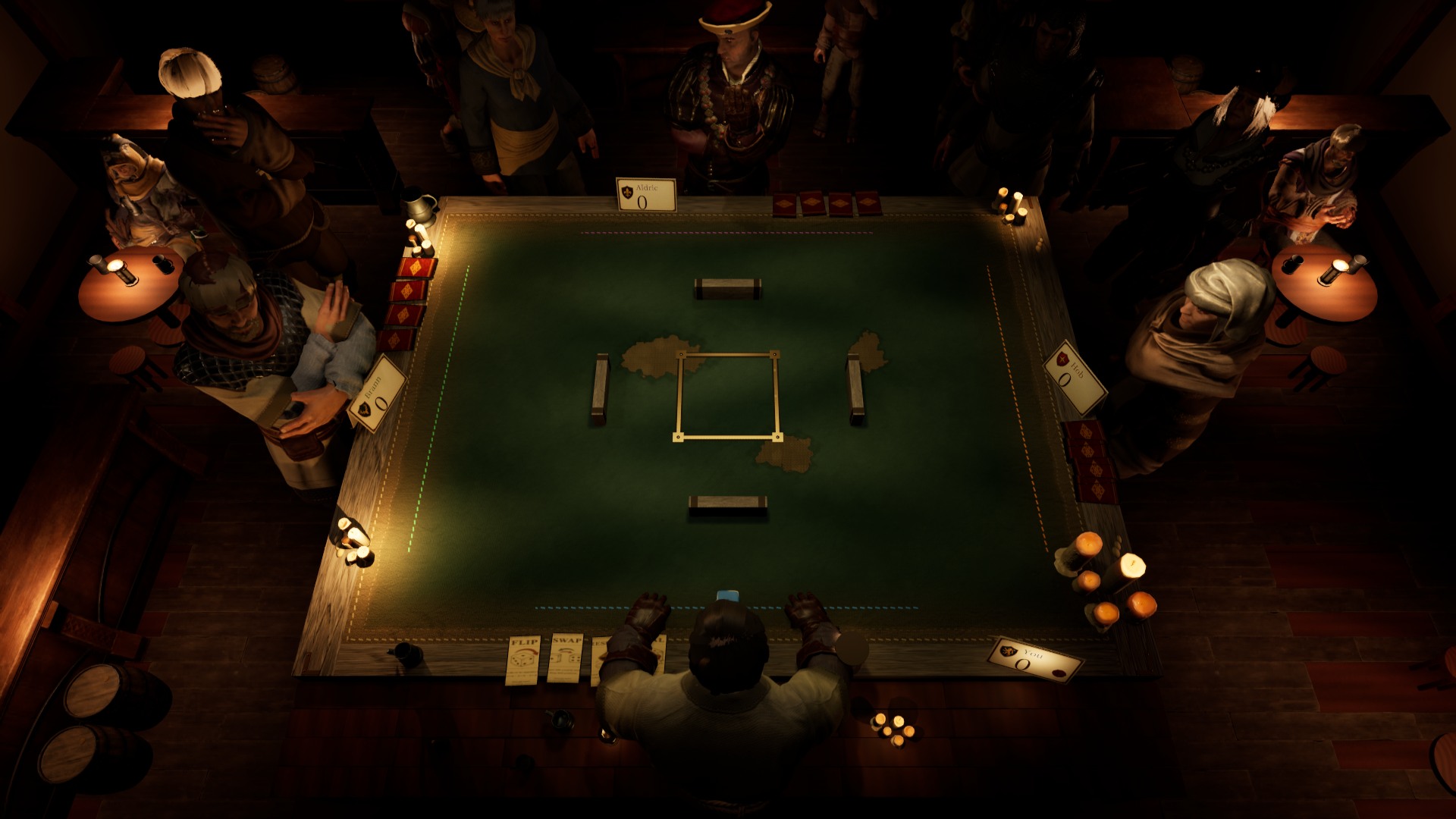
座位视角、具名对手与酒客、出牌演出、7 层环境声与每回合轮换的酒馆曲。
Seat view, named opponents and patrons, card show, 7 ambience layers and a tune per round.
← 左右滑动Scroll sideways →
本章回答:试玩反馈如何变成改动,AI 对手怎样既会打、又像人。This part answers: how feedback became changes, and how AI opponents play well and feel human.
数据来源:朋友测试和自测。Source: friend playtests and my own testing.
规则与评分公式不变。这是沉浸感改造中唯一一次有意修改 AI 决策;AI 也不修改真实骰子的运动结果。Rules and scoring are unchanged. This was the only deliberate change to AI decisions; the AI never alters real dice physics.
只改表现层:除 AI 出牌置信度这一项外,计分、物理、AI 决策一行未改;每项都可关闭,11 项自动检查在关闭状态下逐行一致。
Presentation only: apart from the AI card-confidence fix, no line of scoring, physics or AI decisions changed; every item can be switched off, and 11 checks match line by line when off.
入座开场;座位 / 瞄准 / 跟随 / 结算四种机位;你的双手搭在桌沿。
Seated opening; seat / aim / follow / scoring cameras; your hands on the edge.
按性格 1.3–3.3 秒的思考,出手手势;视线只看桌上的东西,三人反应错开。
1.3–3.3 s of thought by temper, throw gestures; eyes on the table, staggered reactions.
混音分类、房间混响、空间化;7 层环境声;每回合换曲;你也有配音。
Mix classes, reverb, spatialisation; 7 ambience layers; a tune per round; your voice.
酒客与观战者;对手换装、待机、反应;结算发铜币与真人领奖台。
Patrons; outfits, idles, reactions; coin payout and a live podium.
攻击方承担了大部分动能The attacker kept most of the energy
降低上抛与旋转、区分骰间反弹:85% 力度能撞出目标,自己留桌Less lift and spin, separate die-to-die bounce: 85% power knocks the target out and stays
胜利标记不产生决策The win marker created no decisions
先加击出奖励,后改为三回合累计计分A knock-out bonus first, then three-round totals
每回合换位,来不及经营It moved every round; no time to build
两个完整回合后才换位It moves only after two full rounds
出牌展示太小、太快The card display was small and fast
放大并延长,后升级为桌面出牌演出Bigger and longer, then a full card show on the table
缺少进入情境的过渡No transition into the scene
入座开场:俯瞰 → 推镜入座 → 问候 → 点击开始Seated opening: overview → push in → greetings → click
视线目标包含其他人的头Gaze targets included other heads
视线只看桌上的骰子与得分区Eyes only on dice and zones
本章回答:这是一个什么样的游戏,我为什么想做它。This part answers: what kind of game this is, and why I made it.
骰子游戏的乐趣来自运气,挫败也来自运气:投出去是几就是几。我想做一个运气依然有分量、输赢却取决于判断的桌边游戏——像在酒馆里和几位老熟客赌一局:手上要有准头,心里要算计别人。
Dice games are fun because of luck, and frustrating because of it. I wanted a table game where luck still matters but judgement decides who wins — like a wager with a few old regulars in a tavern: a steady hand, and a mind on what the others will do.
对抗性要发挥出来,而不是大家各自弄自己的。
Make it about playing against each other, not everyone doing their own thing.
— 朋友测试和自测中的一句话(原话精简)— from friend and self-testing (shortened)
保留物理翻滚的惊喜,同时让方向、力度、位置和事后干预都掌握在玩家手里。
Keep the surprise of tumbling, while direction, power, position and intervention stay in the player's hands.
骰子留在桌上互相阻挡与碰撞,改点、倒酒都会影响对手。
Dice stay on the table to block and hit each other; changing pips and pouring both affect opponents.
酒渍、破毯、木挡板就是地形;对手是有名字、有脾气的常客,不靠说明书解释规则。
Spills, torn felt and boards are the terrain; opponents are regulars with names and tempers. No manual needed.
拖拽距离就是力度;0–65° 仰角:贴地、绕行或高抛;轨迹只预告到第一次接触;碰撞传力调到「撞得动别人」。
Drag distance is power; 0–65°: along, around or over; preview only to first contact; hits strong enough to shove.
怎么检验How it's tested能否稳定地把骰子打进区、把对手撞出区。
Can you reliably land in the zone and knock rivals out?
投骰、拨动、出牌、倒酒只能选一;卡牌每张一次,倒酒每局一次;规则每回合轮换,旧位置会贬值。
Throw, nudge, card or pour; cards once each, one pour; rules rotate, old spots fade.
怎么检验How it's tested玩家能否说出「这一手为什么这样选」。
Can players say why they chose this move?
座位视角与入座开场;三位有名字、有脾气的对手;酒客围观,关键时刻有反应;每回合轮换的酒馆曲。
Seat view and seated opening; three named, tempered rivals; patrons react; a tune per round.
怎么检验How it's tested玩家是否会留意对手的反应并据此判断。
Do players notice opponents' reactions and act on them?
本章回答:验证了什么,还缺什么,下一步做什么。This part answers: what was verified, what is missing, and what comes next.
先找到「玩家为什么不爽」的根因,再用最小的规则改动去回应,而不是继续堆内容。
Find the root cause of why players are frustrated, then answer it with the smallest rule change — not by piling on content.
— 这个项目最大的收获— the biggest lesson of this project
Portfolio · 90 页pages
七章正文加技术附录:31 条试玩反馈与优化、AI 决策细节、19 张蓝图复现核心逻辑。
Seven chapters plus a technical appendix: all 31 playtest notes, AI decision details, and 19 Blueprint graphs rebuilding the core logic.