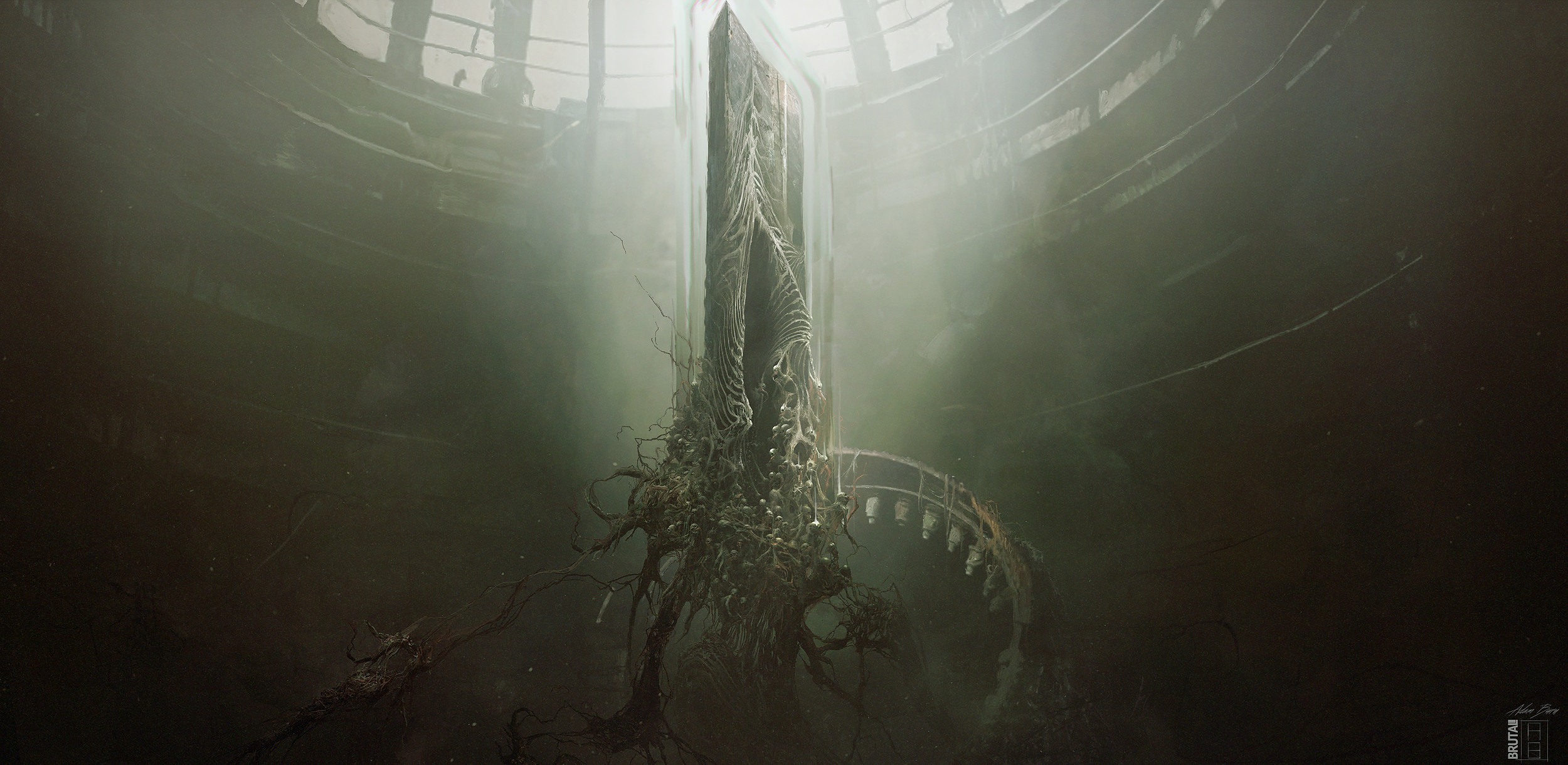
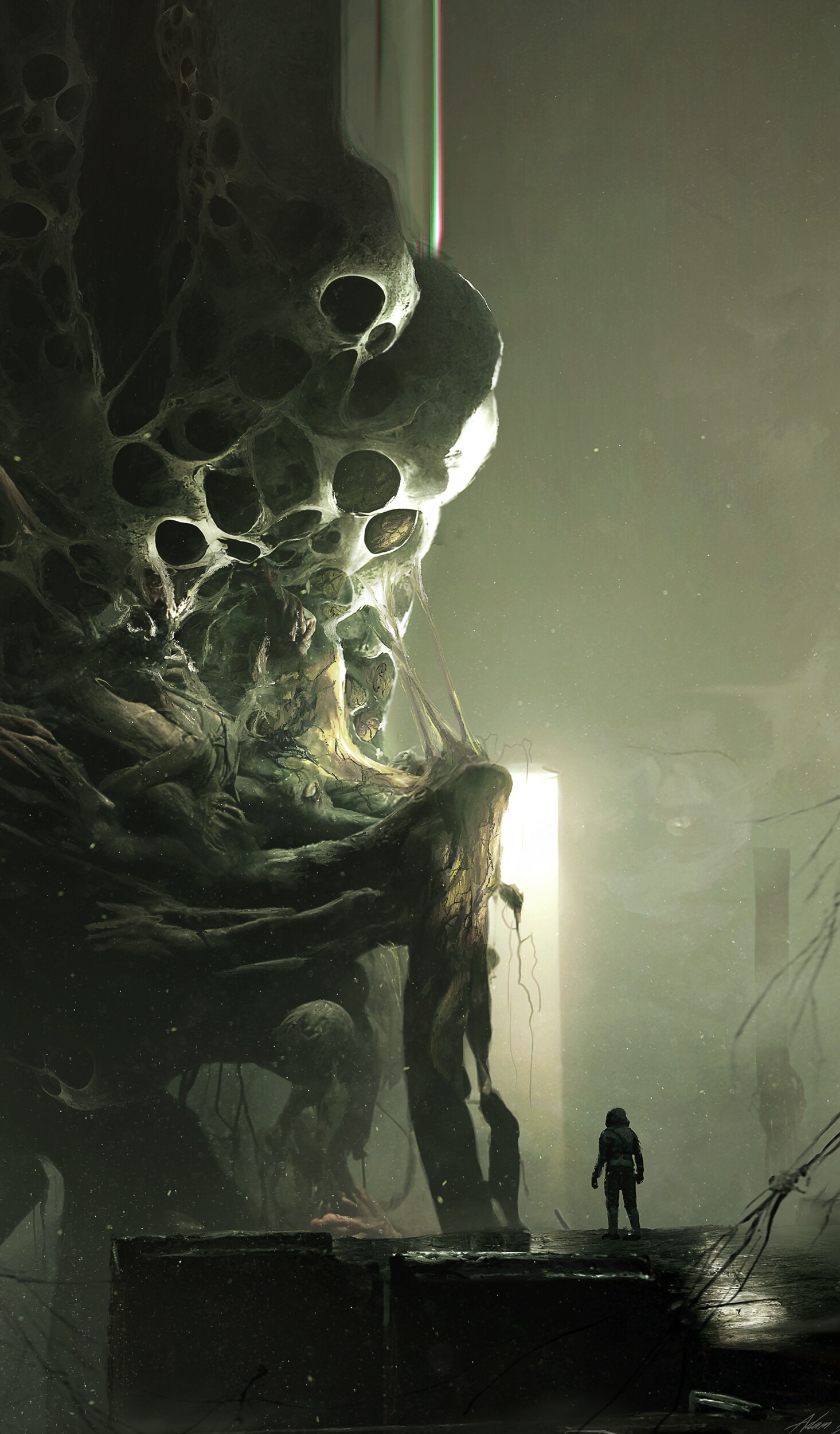
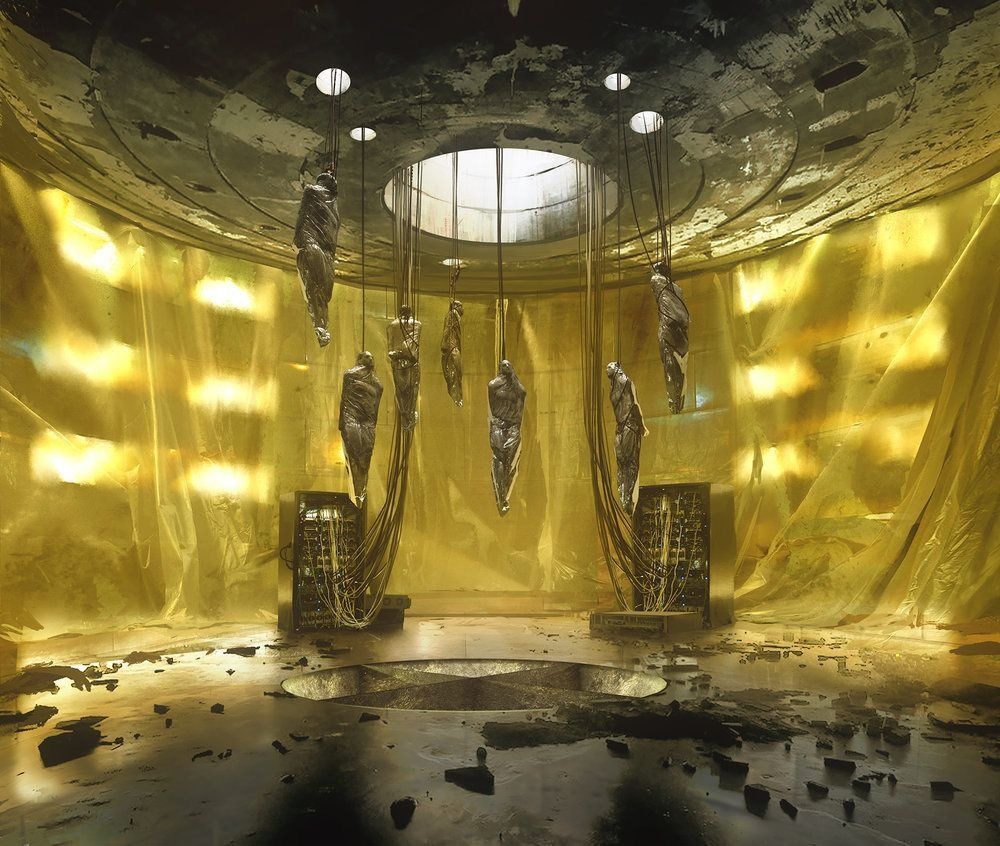
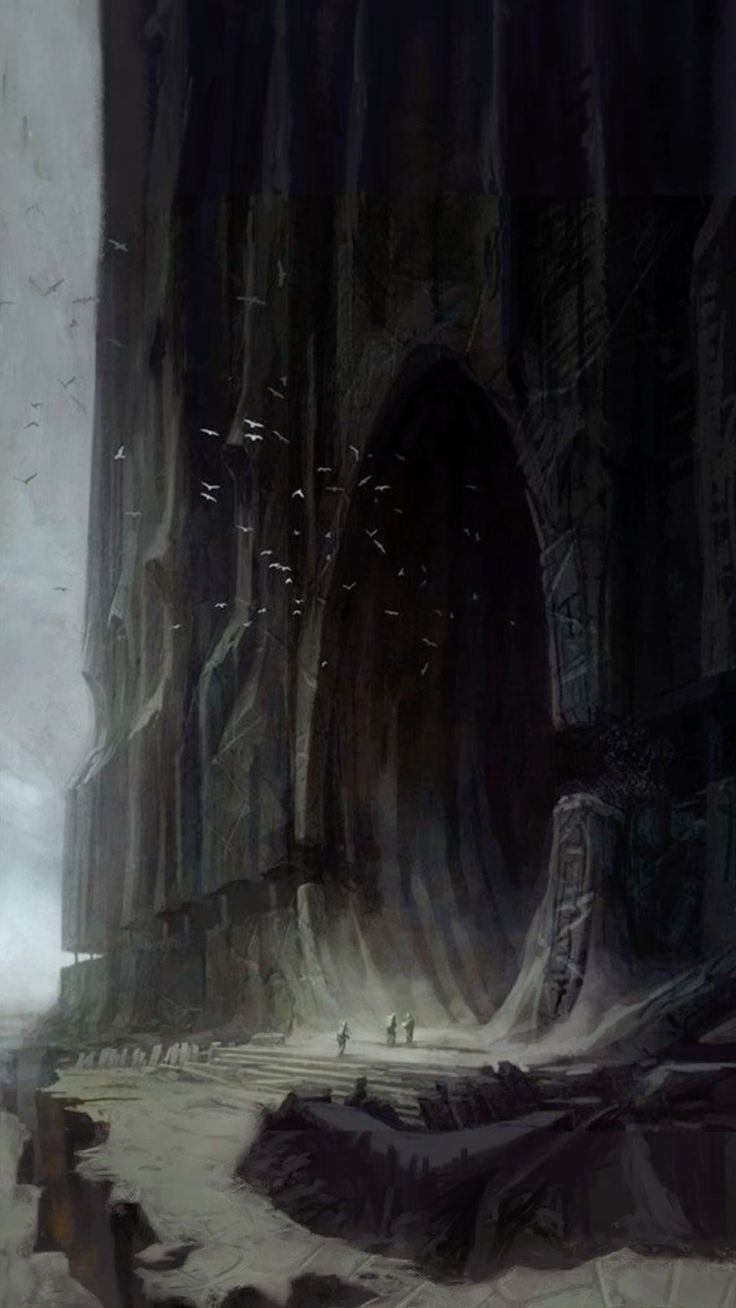
外部朝圣空间 + 内部仪式空间Exterior pilgrimage + interior ritual space
主题Theme
宗教巨构与巨物压迫感Religious megastructures and the weight of the immense
01 / 07
两处场景,一段朝圣Two spaces, one pilgrimage
从荒野中的巨门,到高墙之间的仪式核心。From a gateway in the wilderness to a ritual core between towering walls.
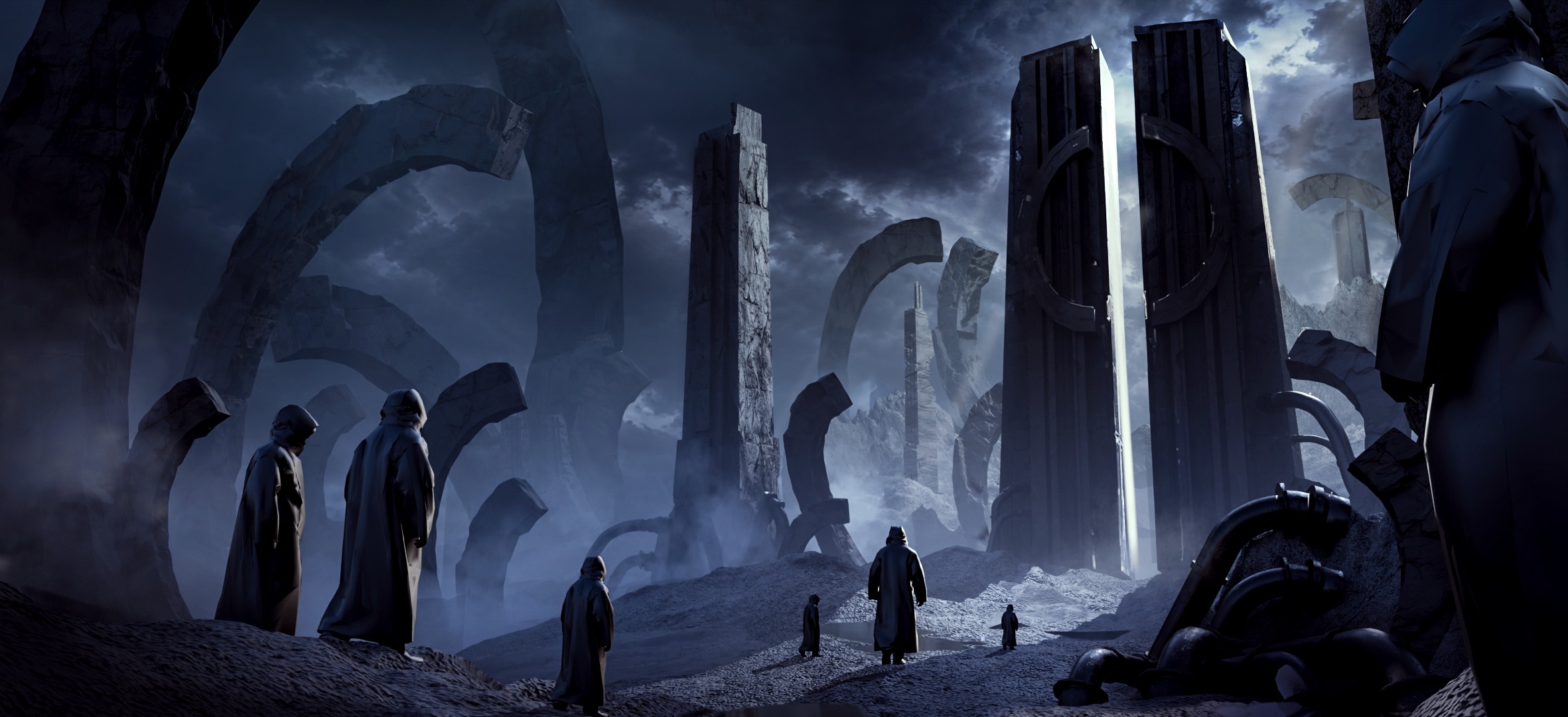
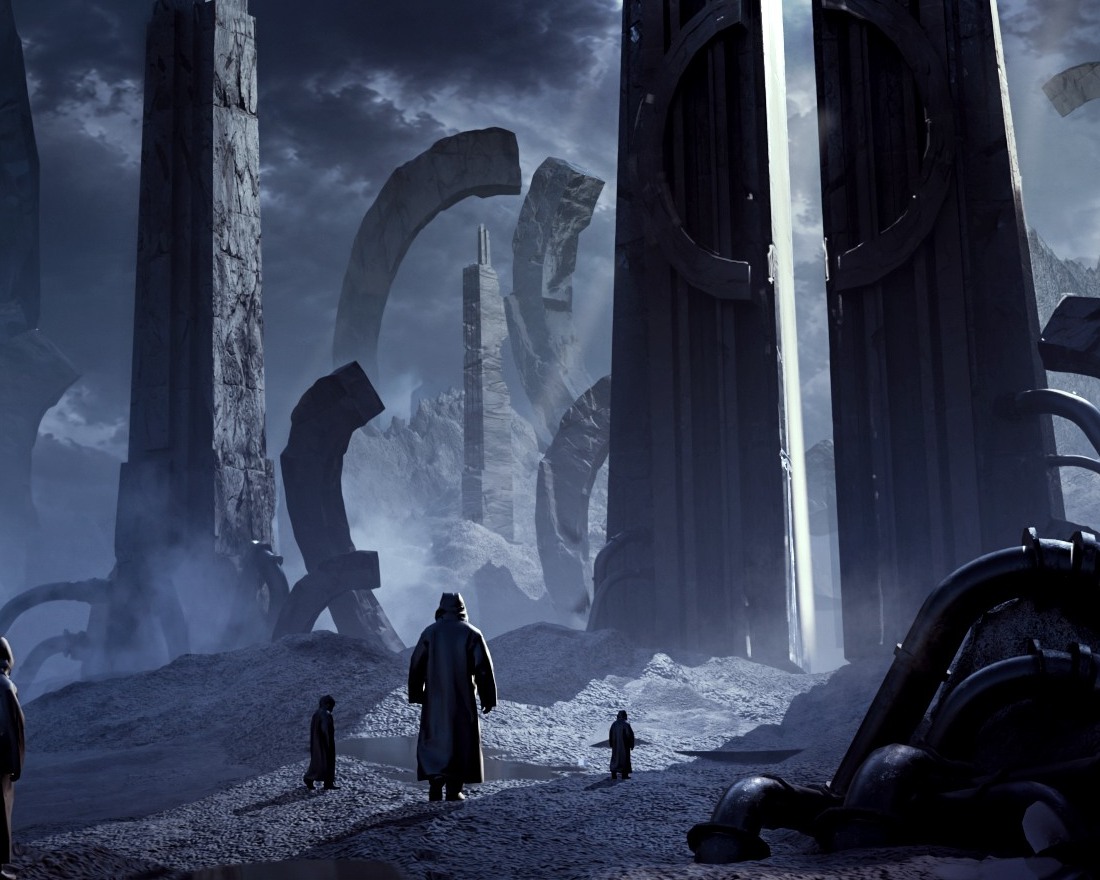
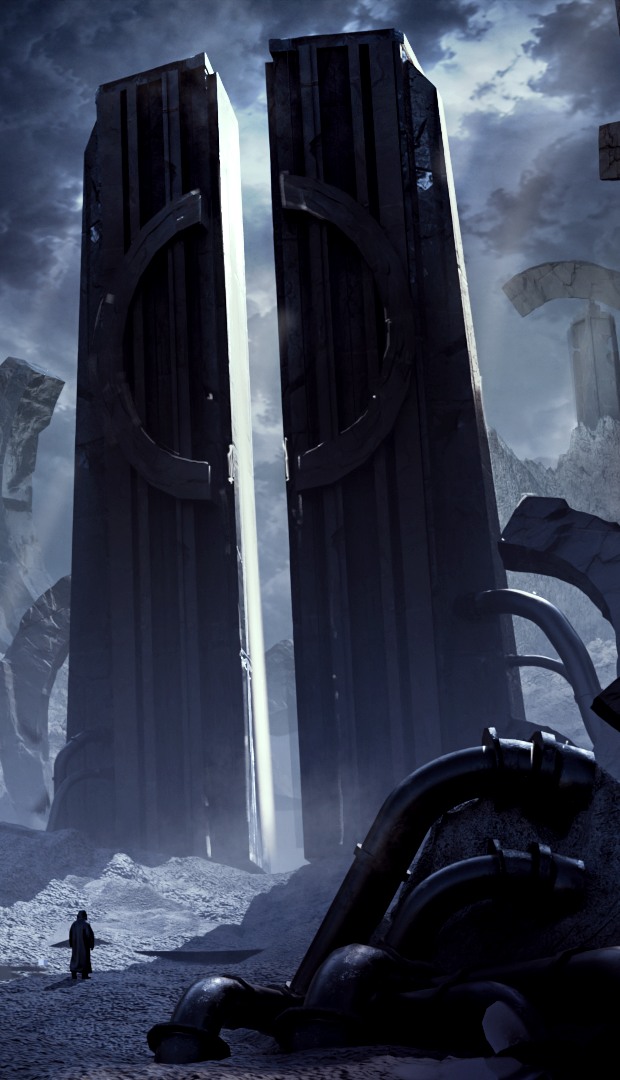
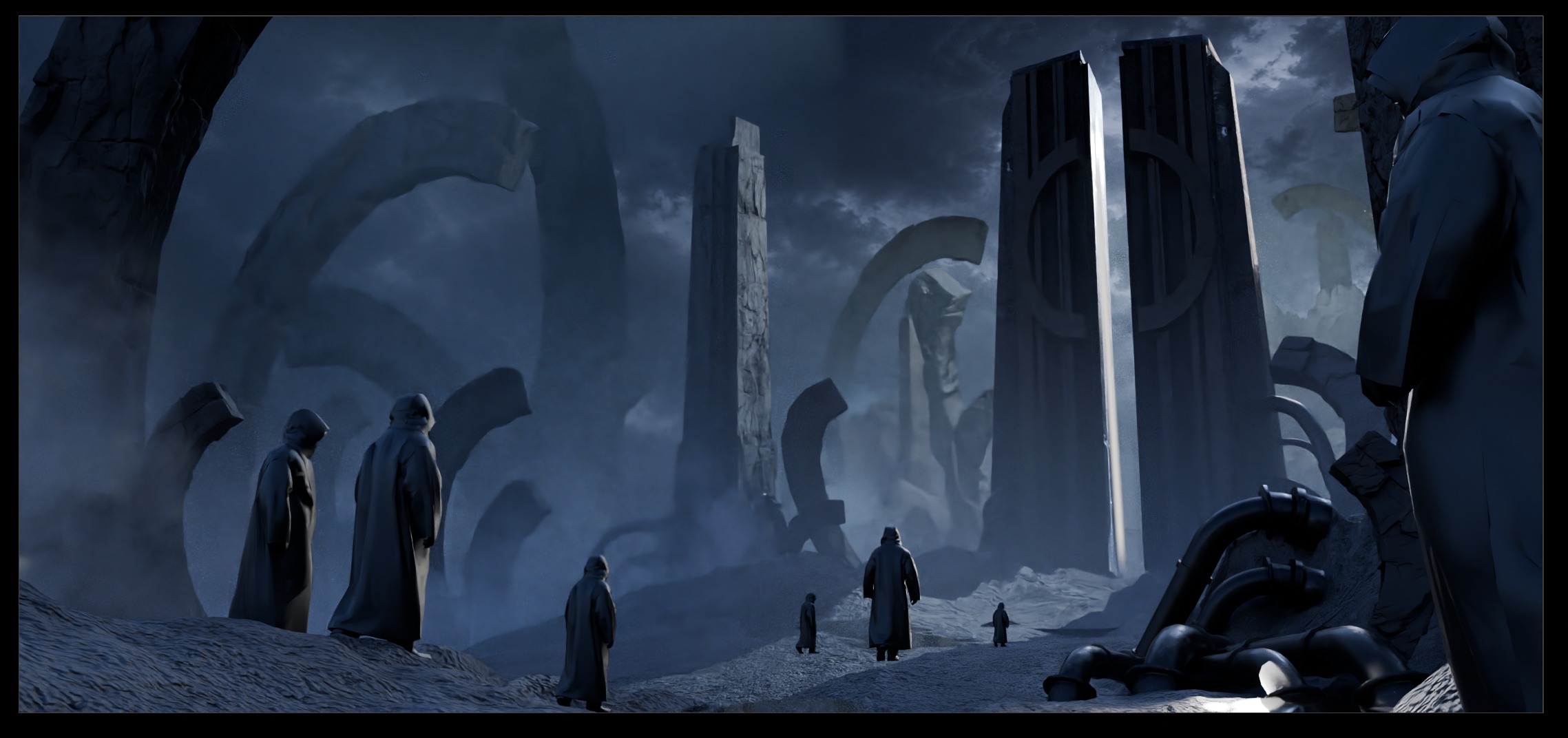
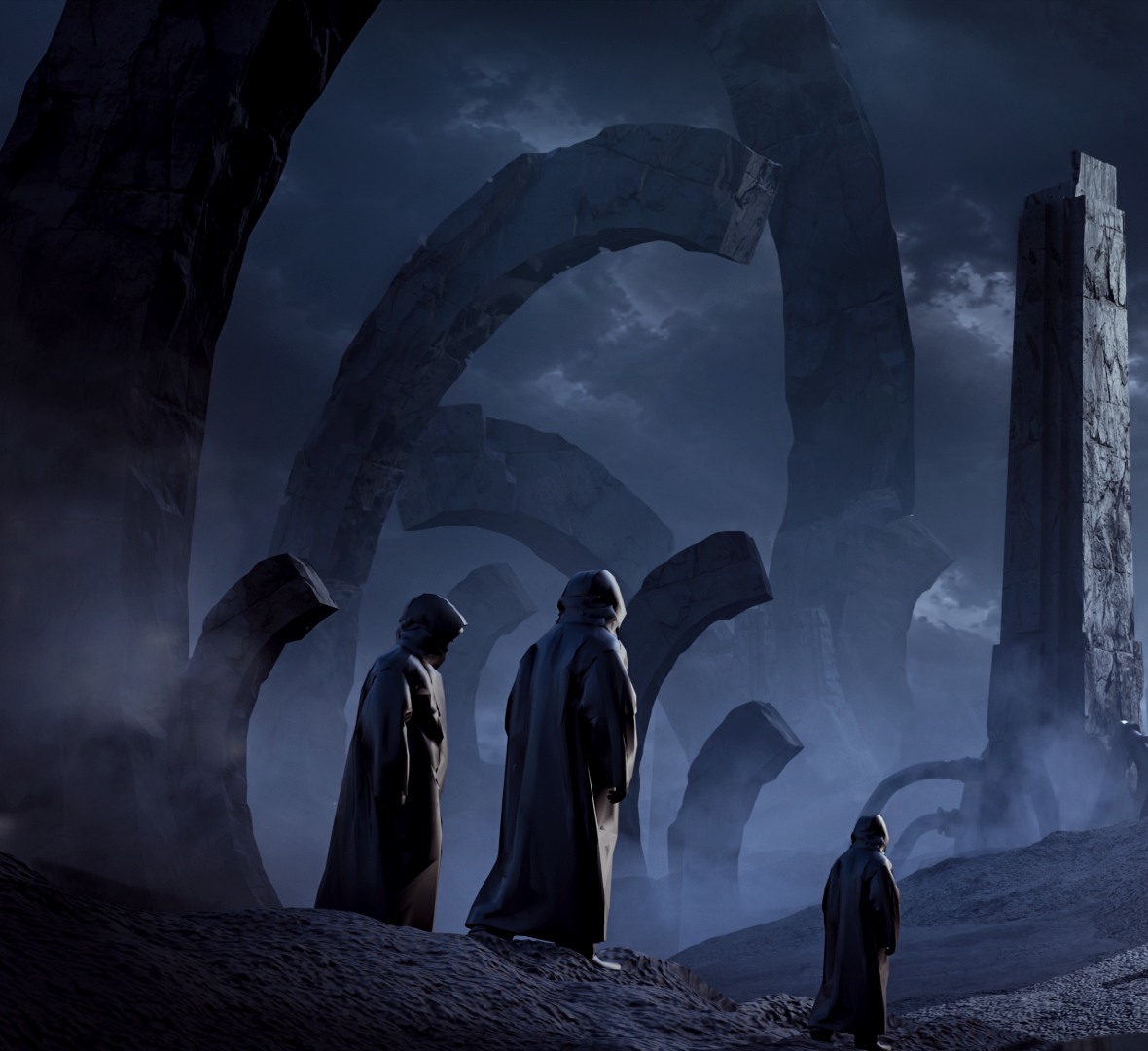
场景 1 · 接近圣域Scene 1 · Approach最终渲染。残环与石柱建立重复的节奏,远处的巨门成为行进目标。Final render. Broken rings and pillars set a repeated rhythm; the distant gateway becomes the destination.
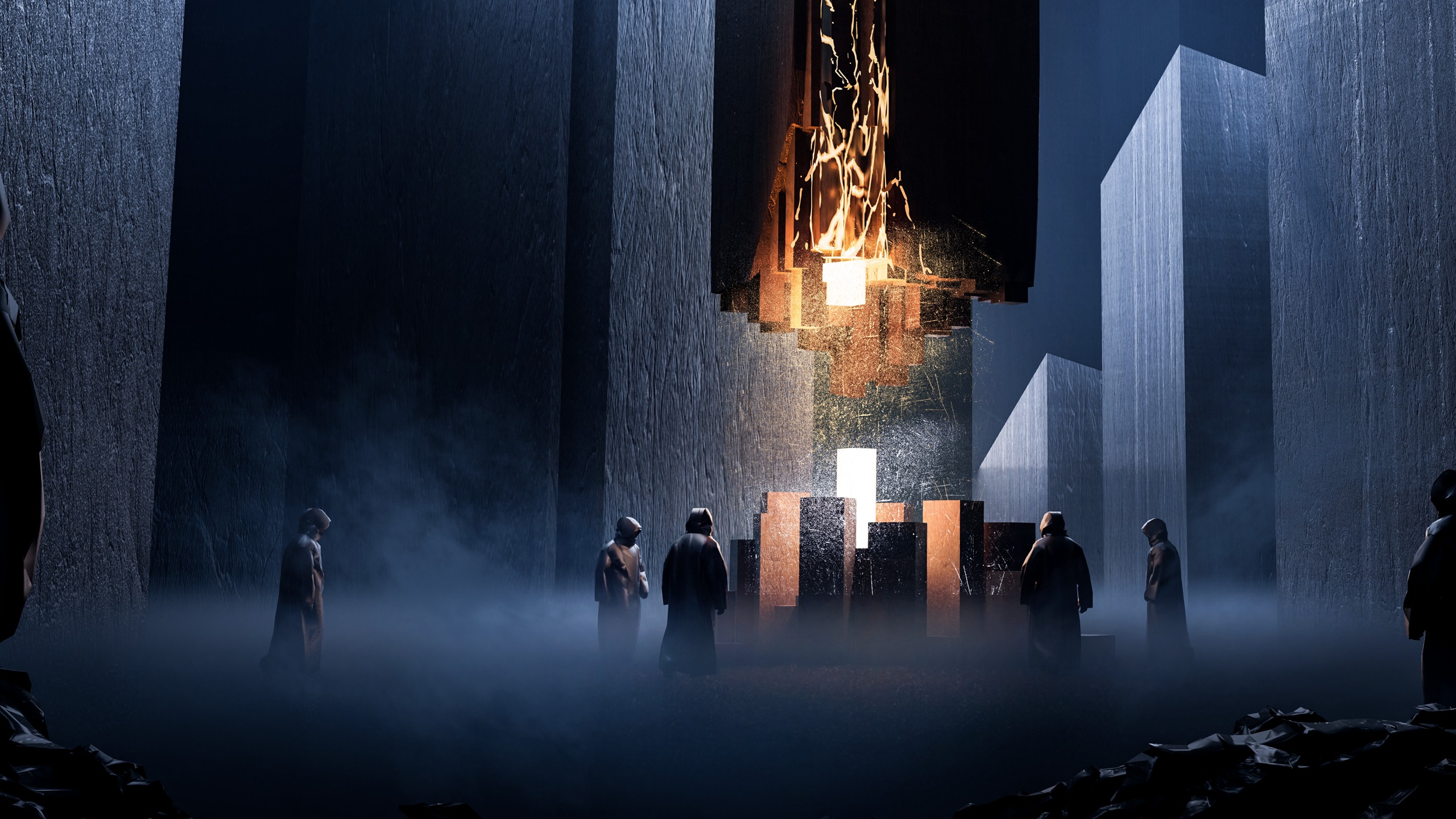
场景 2Scene 2面对仪式装置Facing the ritual device
这一幕的叙事任务:揭示朝圣者追随的目标,同时保留人与未知存在之间的距离。
Narrative purpose: reveal the pilgrims' destination while keeping the distance between people and the unknown.
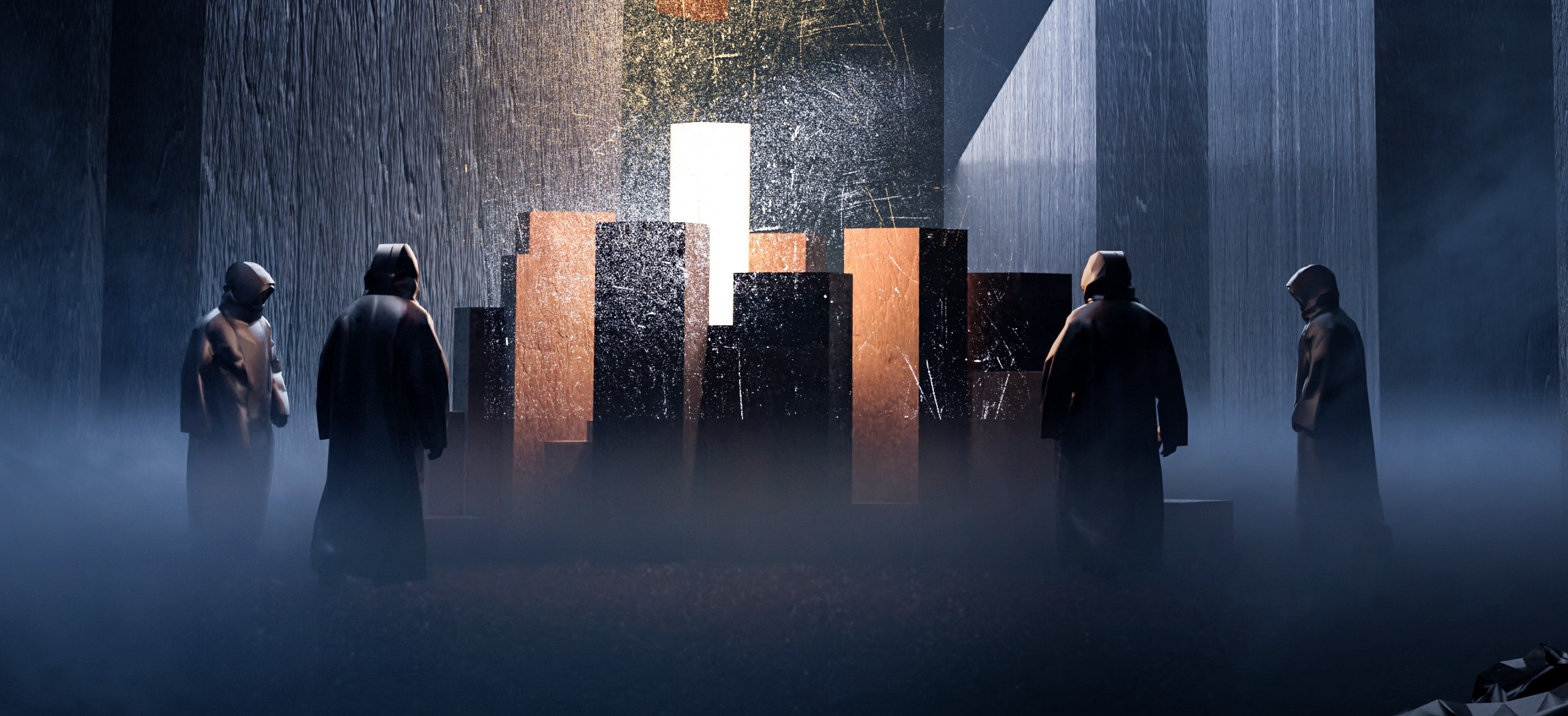
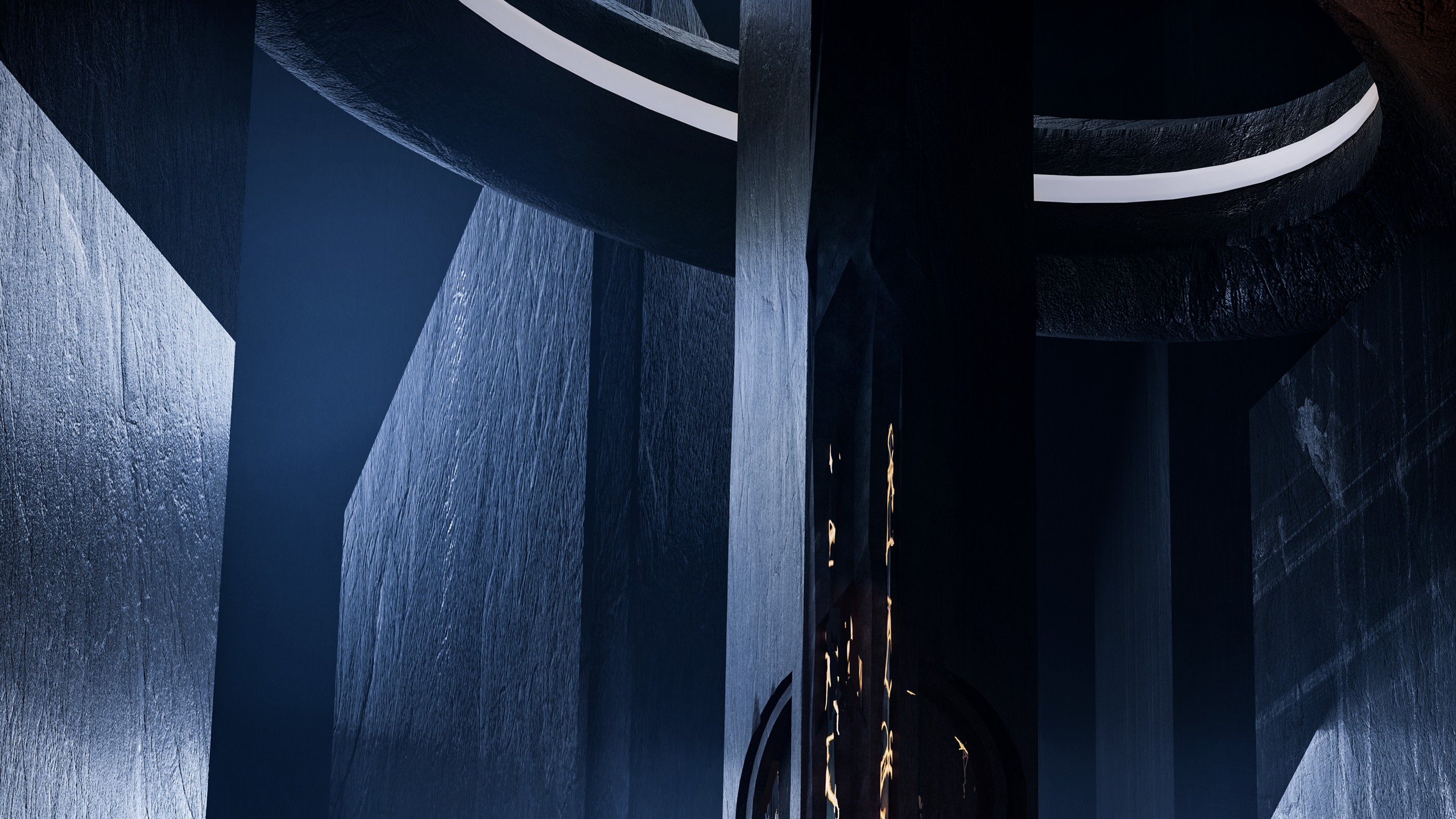
高墙与高悬的装置,让人物持续仰望。Tall walls and the suspended device keep the figures looking up.
冷暗的环境衬托核心的暖光。A cool, dark setting sets off the core's warm light.
中央基座形成共同的停留位置。The central pedestal creates a shared place to pause.
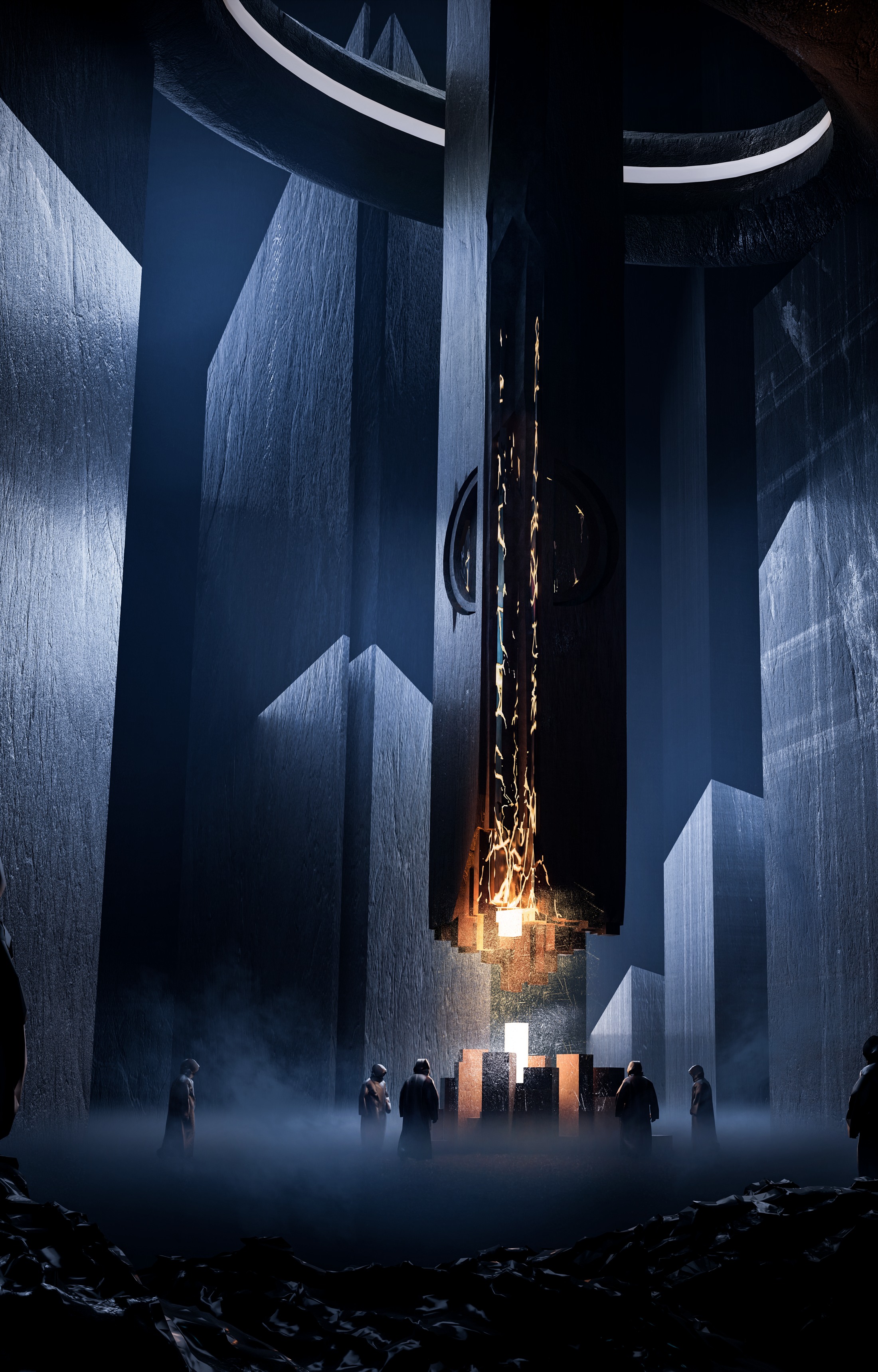
竖幅构图,把人压在画面最底部。A vertical frame presses the figures to the very bottom.
最终渲染Final render点击看原图(4320 × 6748)。Click to view the original (4320 × 6748).
The project explores religious megastructures and their oppressive scale. Extreme contrasts between figures and architecture, repeated monumental forms, contrasting light and volumetric fog create smallness, awe and a sense of being dominated.
02 / 07
研究参考:尺度、入口与光Research: scale, threshold and light
参考了什么,从中提取了哪些设计原则。What I studied, and which design principles came out of it.
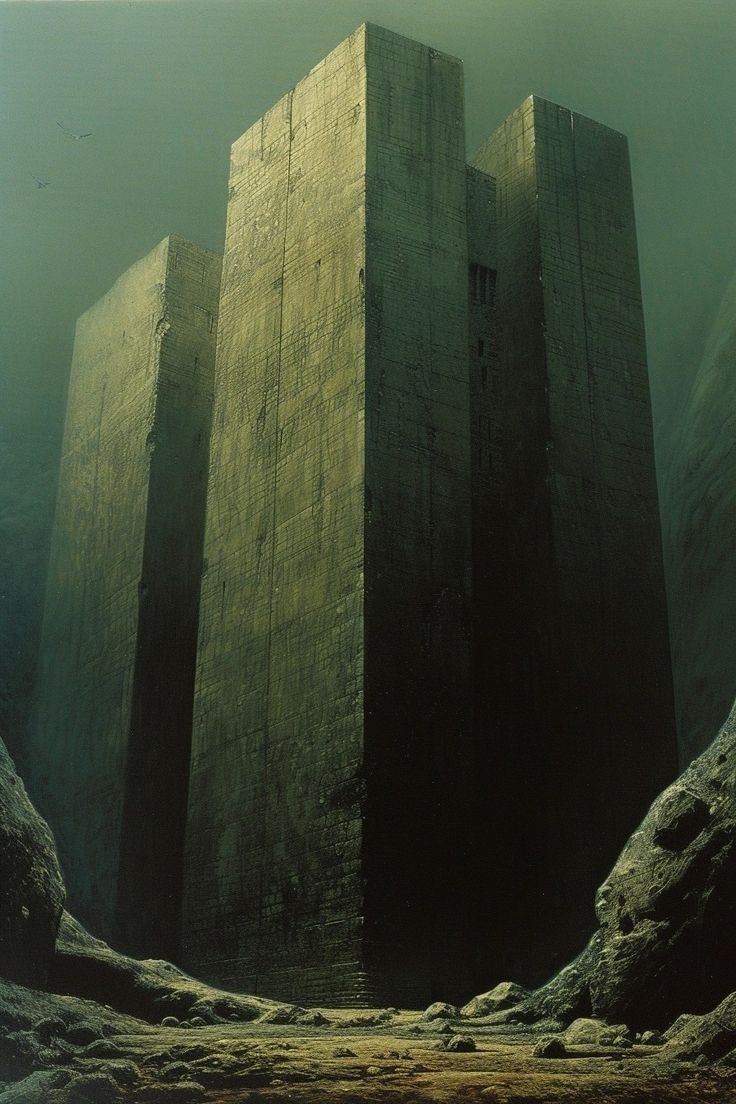
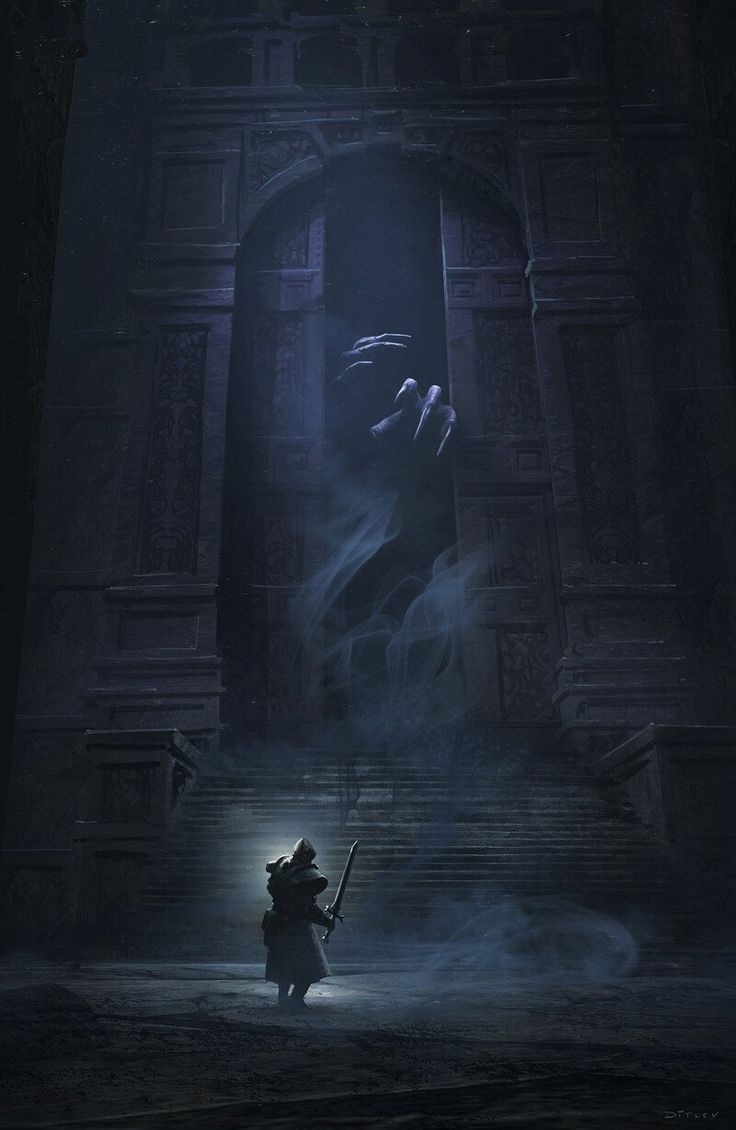
The visual direction came from monumental brutalist architecture, decayed organic structures and ceremonial spaces. I was interested in how towering vertical forms and vast interiors reduce the human figure to a fragile scale — repeated arches, monoliths, suspended objects and concentrated shafts of light suggest ritual, mystery and an unseen higher presence.
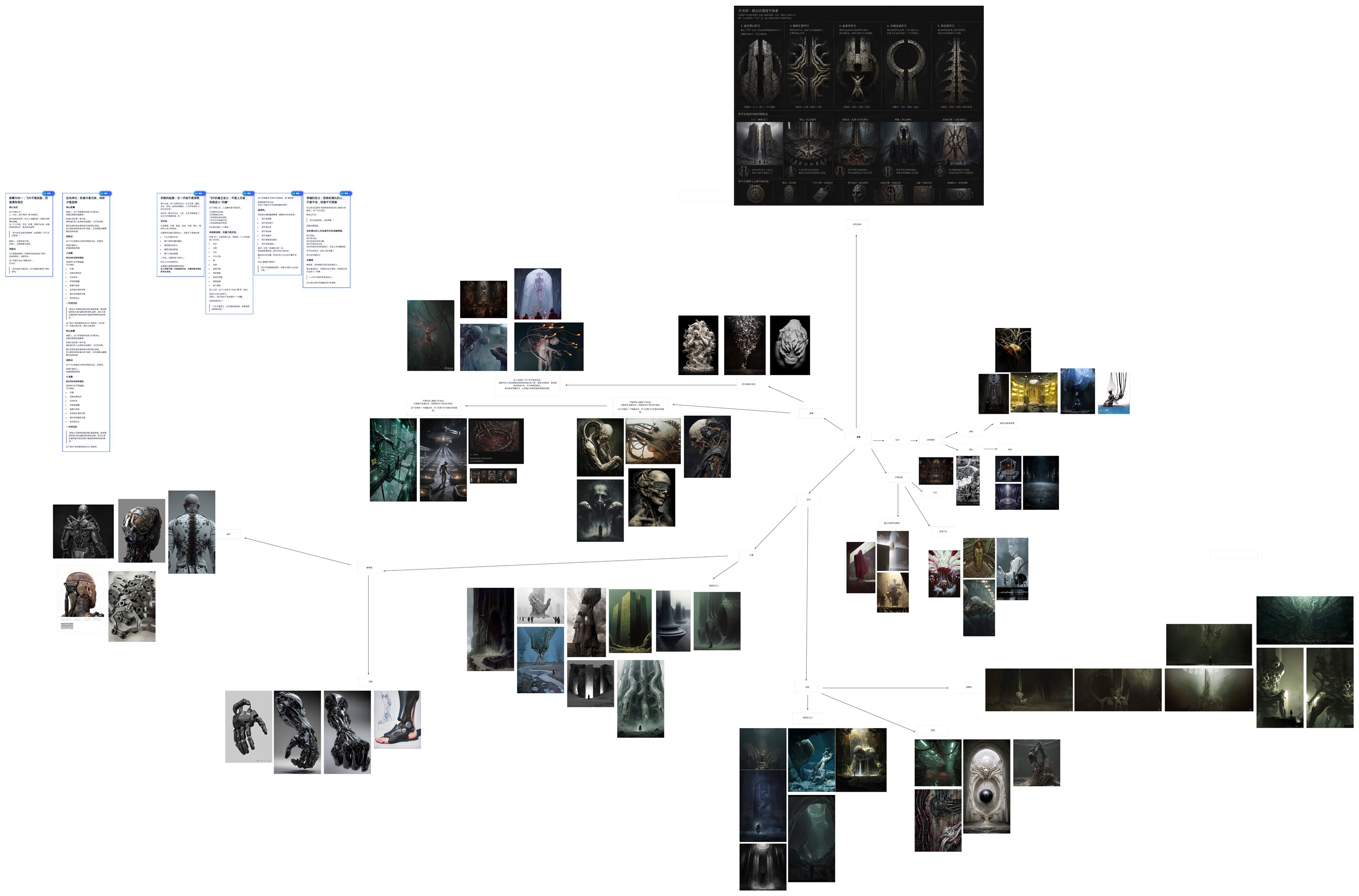
Brainstorm头脑风暴:从一个宗教出发Brainstorm: starting from a religion
The research centres on a religion and branches five ways: narrative (ascension used as control; those who fail are recycled as rejects), ritual (living sacrifice, extraction through pipes, refining and the altar), environmental style (Chinese, megastructural technology, mechanical ascension), space (surreal megastructures and mechanical bodies outside; surreal halls and organs inside) and a religious symbol system. The fusion of flesh and machinery grew out of the extraction-pipe and mechanical-body branches.
头脑风暴画布Brainstorm board以宗教为中心的思维导图,每个分支挂着对应的灵感图。点击看大图。A mind map centred on the religion, with inspiration images on each branch. Click to enlarge.
灵感图节选,图片来自 Pinterest,仅作研究引用,版权归原作者。Selected inspiration from Pinterest, used for research reference only; rights remain with the original creators.
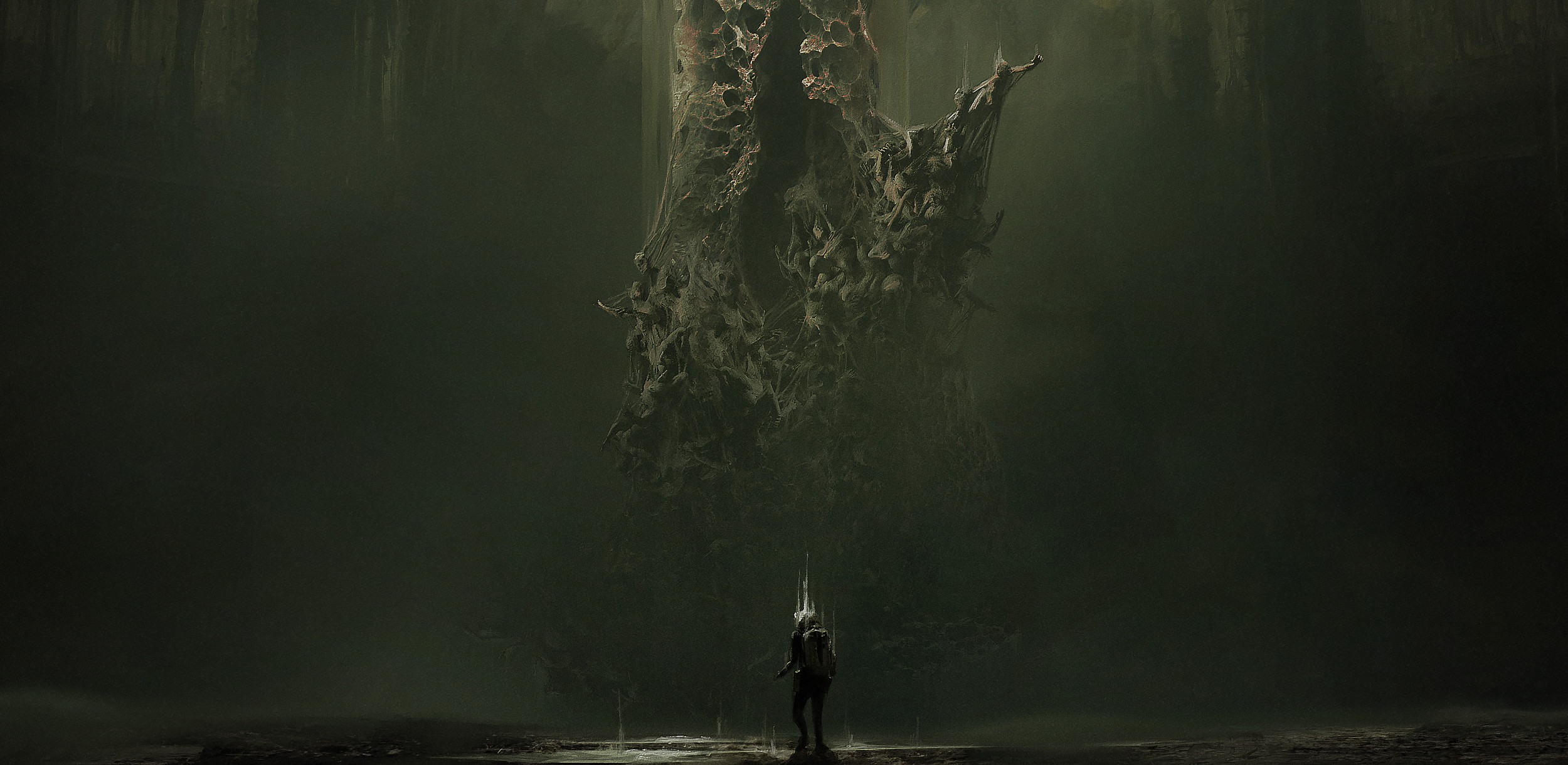
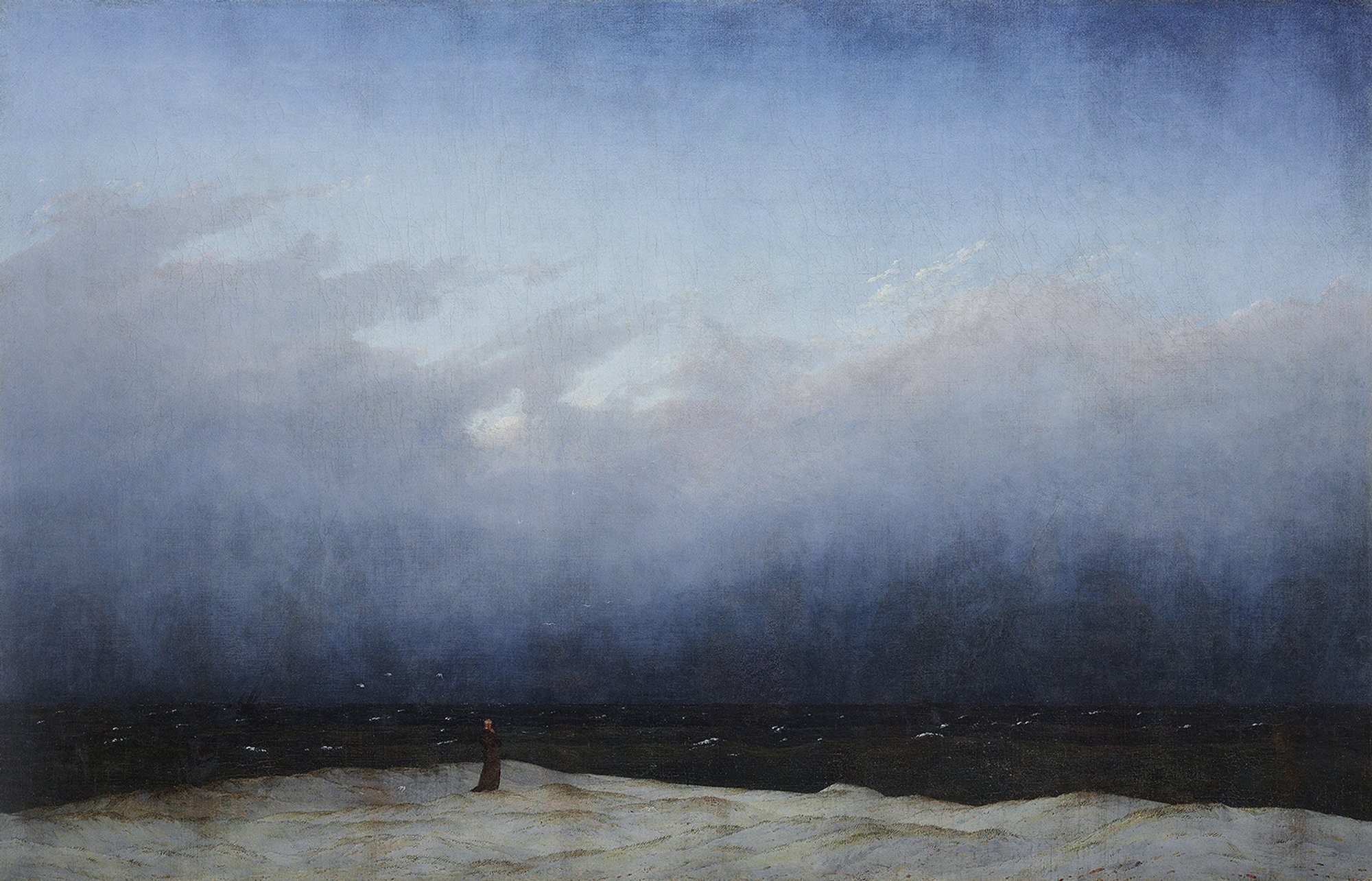
Observation: a small figure faces an immense sea and sky; open space evokes solitude and makes distance tangible. Applied: figures act as a scale reference; their backs, positions and orientation point to the distant gateway.
参考Reference弗里德里希《海边的僧侣》,1808–1810Friedrich, Monk by the Sea, 1808–1810
我的场景My scene外景局部:朝圣者背对镜头,走向远处的巨门。Exterior detail: pilgrims with their backs to us walk toward the distant gateway.
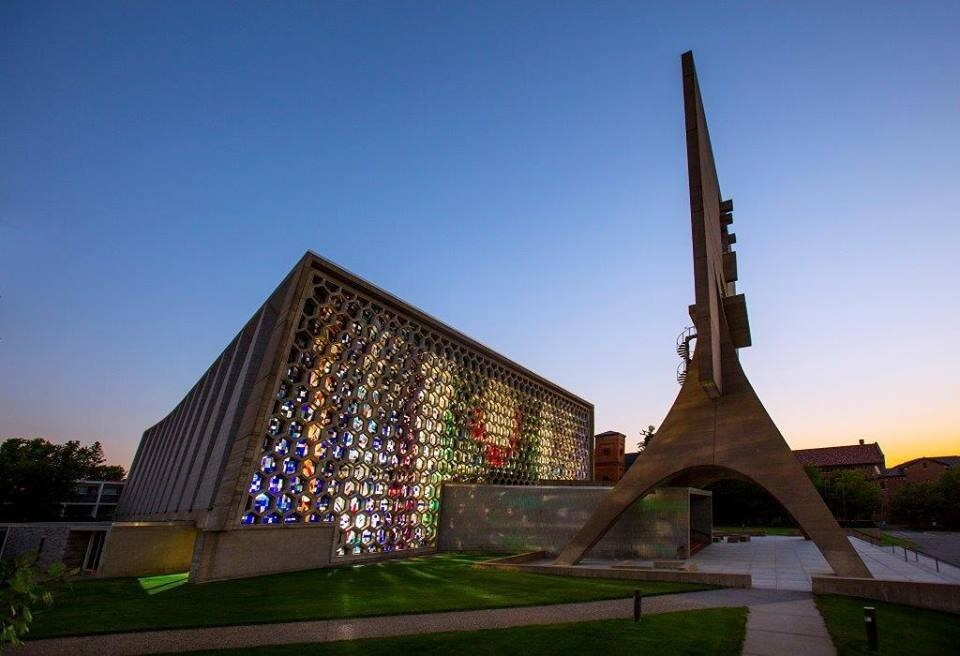
Observation: a monumental structure at the entrance marks a special place; the interior creates a shared focus. Applied: clarify the passage from gateway to interior device, so entering the sanctuary is part of the pilgrimage.
参考Reference马塞尔·布劳耶,圣约翰修道院教堂Marcel Breuer, Saint John's Abbey Church
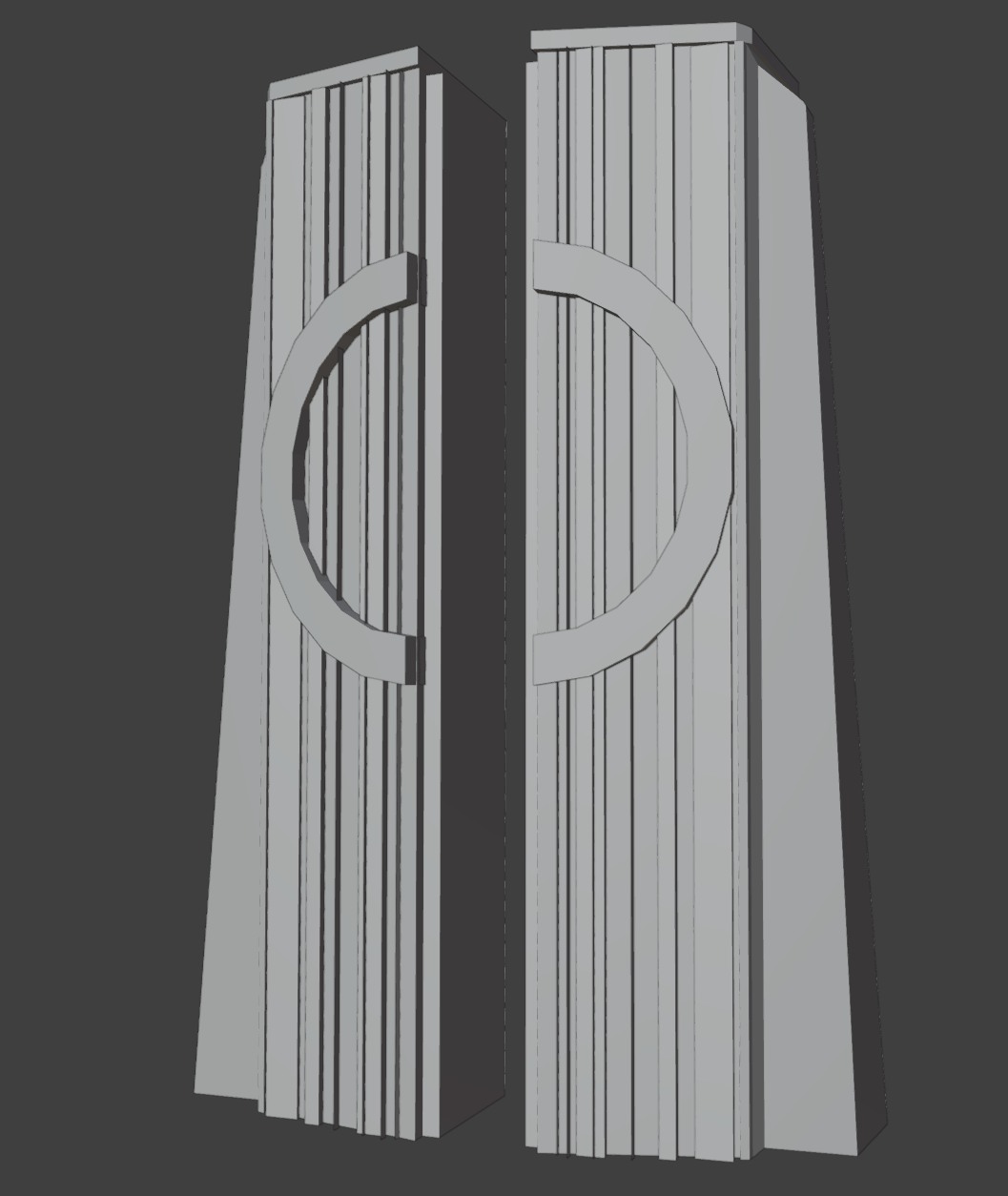
我的场景My scene巨门模型:竖向沟槽与圆形标记,立在圣域入口。The gateway model: vertical grooves and a circular mark at the sanctuary entrance.
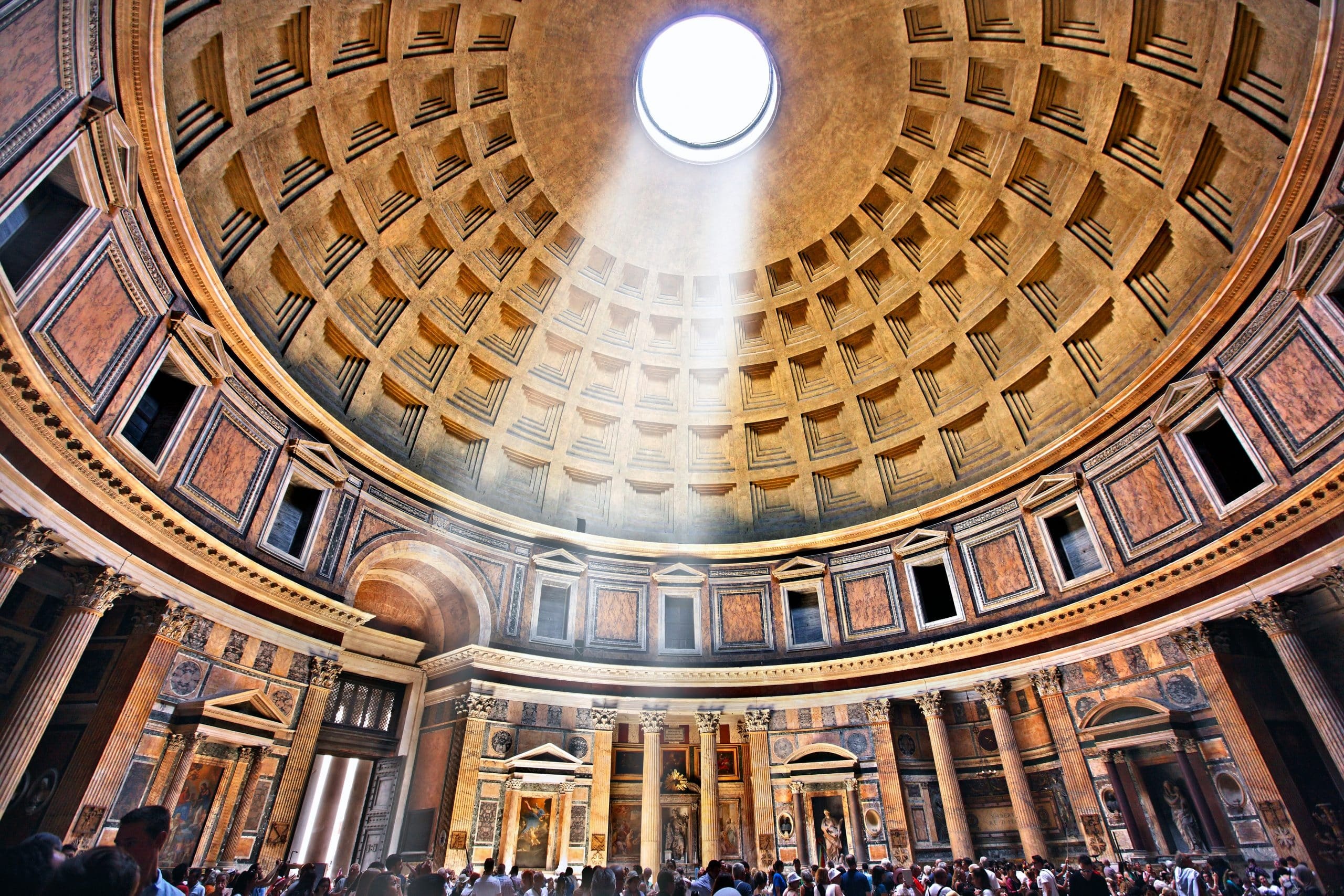
Observation: the oculus admits daylight from above, creating a distinct bright area inside. Applied: only a faint glow outside; the entrance reveals part of the core; the interior shows the full device and light source.
参考Reference罗马万神殿的天窗与光束The Pantheon's oculus and light
我的场景My scene内景:光从高悬的核心装置向下打出,朝圣者在光下停留。Interior: light falls from the suspended core, and the pilgrims stop beneath it.
01
巨构尺度Monumental scale
用极端的建筑比例强调人的渺小。
Extreme architectural proportions emphasise human insignificance.
02
有机衰败Organic decay
把侵蚀的自然形态与人造结构结合在一起。
Eroded natural forms combined with artificial structures.
03
仪式构图Ritual composition
人物与建筑都围绕一个主导的中心物体组织。
Figures and architecture organised around a dominant central object.
04
引导之光Guiding light
用集中的光线引导视线,暗示神圣的存在。
Concentrated light directs attention and suggests a sacred presence.
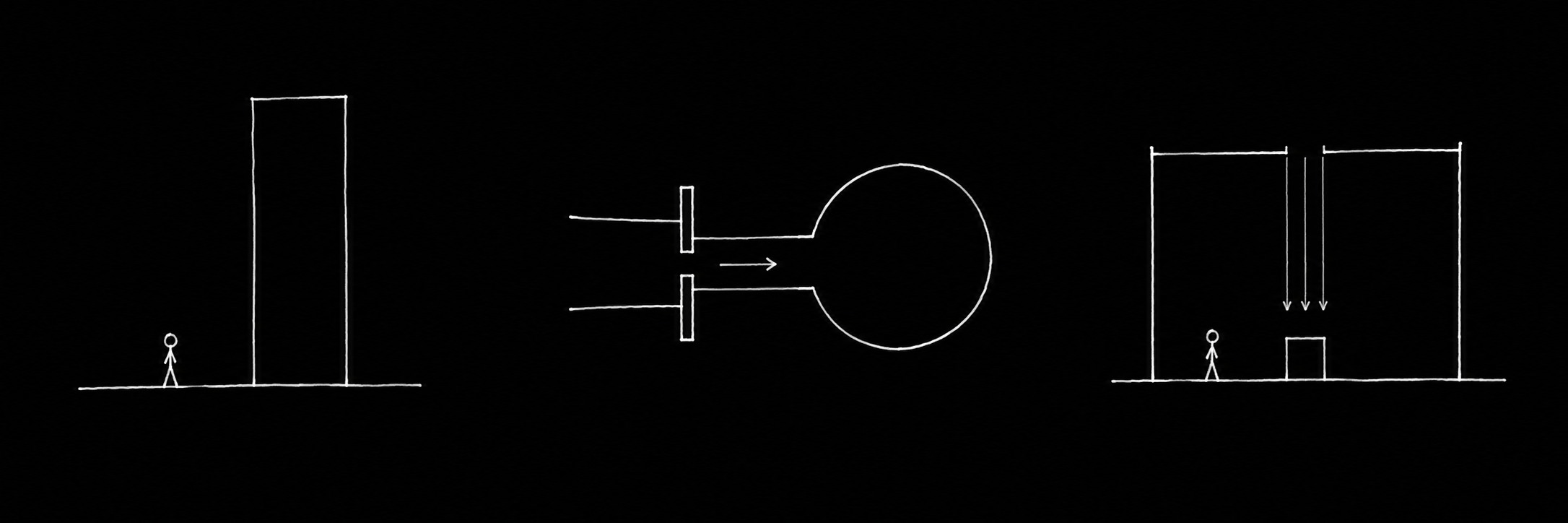
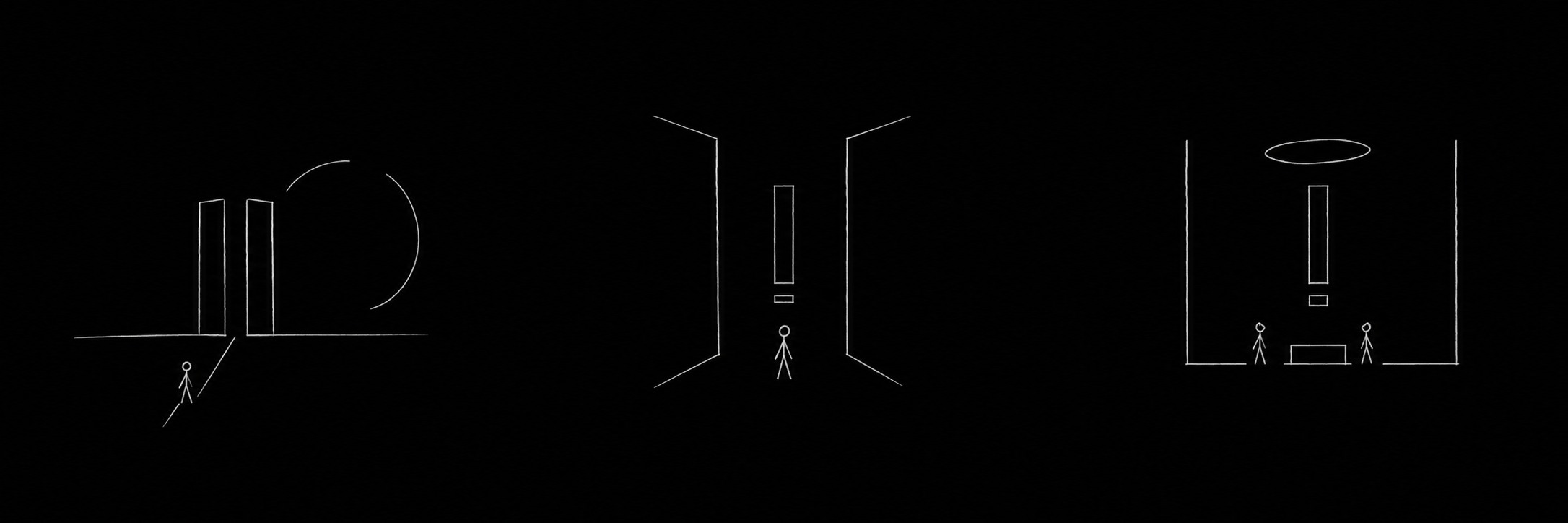
转化草图Study sketches人物与巨构的尺度差 · 入口与核心的连接 · 开口与集中光线。Human vs. monumental scale · entrance to core · opening and focused light.
03 / 07
朝圣者追随引路之灯Following the guiding light
两个场景怎样构成同一段朝圣经历。How two scenes become one pilgrimage.
朝圣者相信,圣域深处的光,是未知存在留下的回应。
The pilgrims believe the light deep within the sanctuary is a response from an unknown presence.
世界观World升井:以飞升为名的宗教The Ascension Well: a religion in the name of ascension
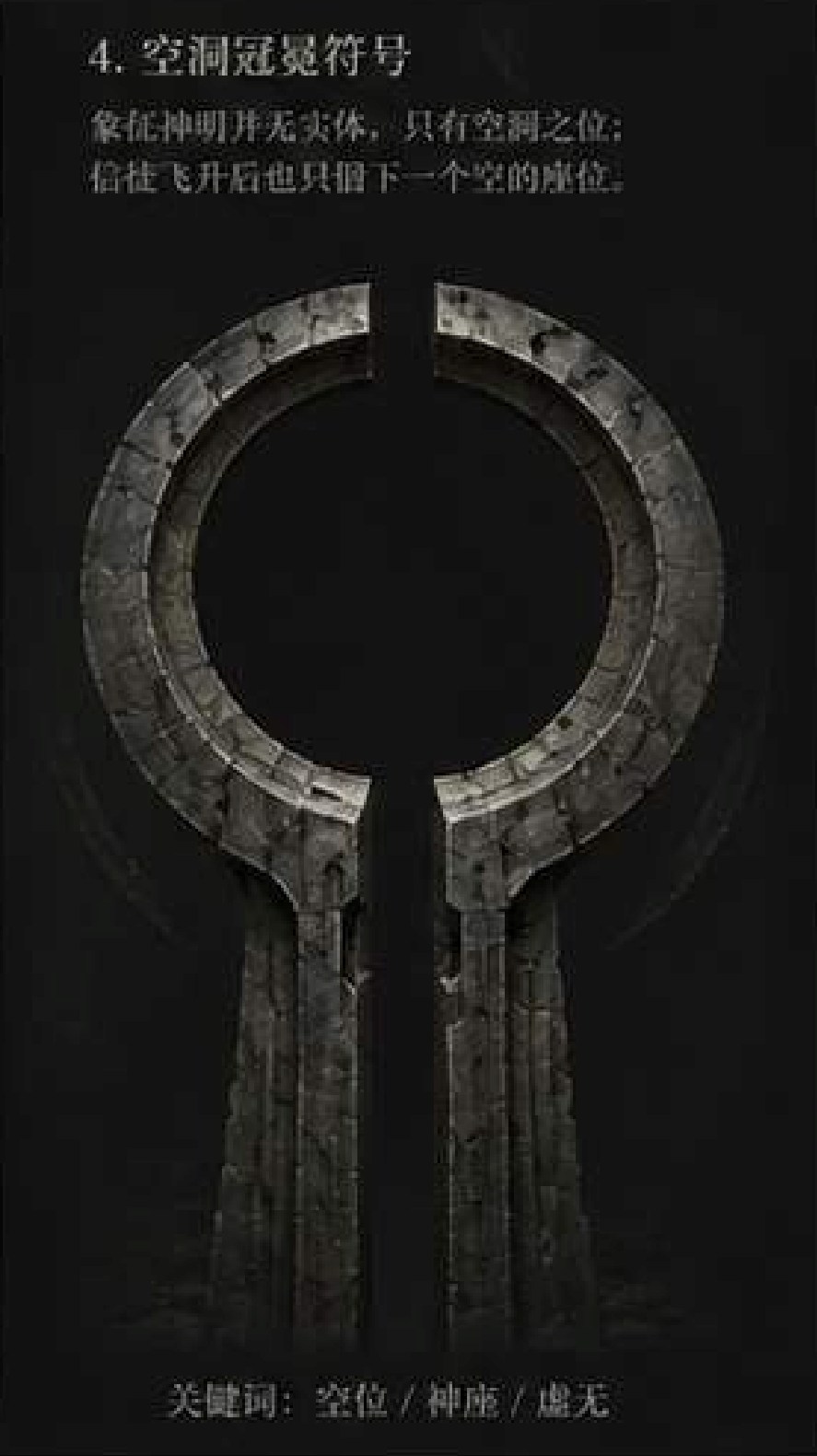
This religion worships the Ascension Well, a vertical shaft into the god's abyss. The god never appears, leaving only an empty throne: the broken ring that recurs throughout. The church uses ascension as a means of control: the chosen have their life and memory drawn through pipes into the core, and those who fail to ascend are recycled as rejects. The pilgrims cross the wilderness toward the gateway and look up beneath the suspended device, waiting. They believe they are witnessing a miracle; what the scene holds are the traces of extraction.
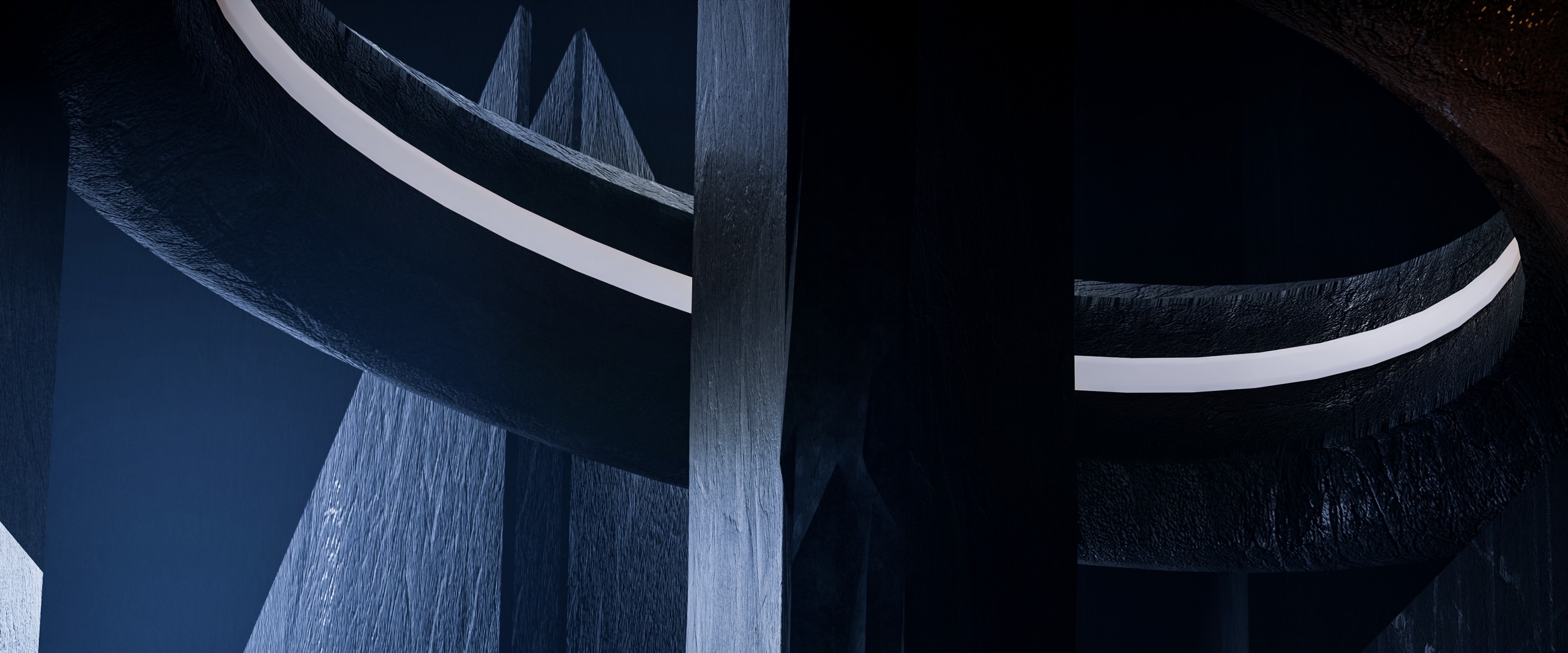
They cross the wilderness and broken ring-shaped ruins, following a faint light toward the gateway. Beyond the threshold, tall walls close off the open sky and a suspended device emerges; movement gives way to stillness. Reaching the core does not resolve the mystery — the device hangs beyond reach, and the pilgrims can only stop, look up and wait.
接近圣域Approach人物分散行进,远处的巨门引导方向。情绪:敬畏、期待。Scattered figures advance toward the distant gateway. Mood: awe, anticipation.
跨越入口Cross the threshold视野收窄,开放的天空被高墙遮蔽,装置开始露出。The view narrows; walls obscure the sky; the device begins to appear.
面对核心Face the core人物停留、聚集,抬头等待。Figures pause, gather, look up and wait.
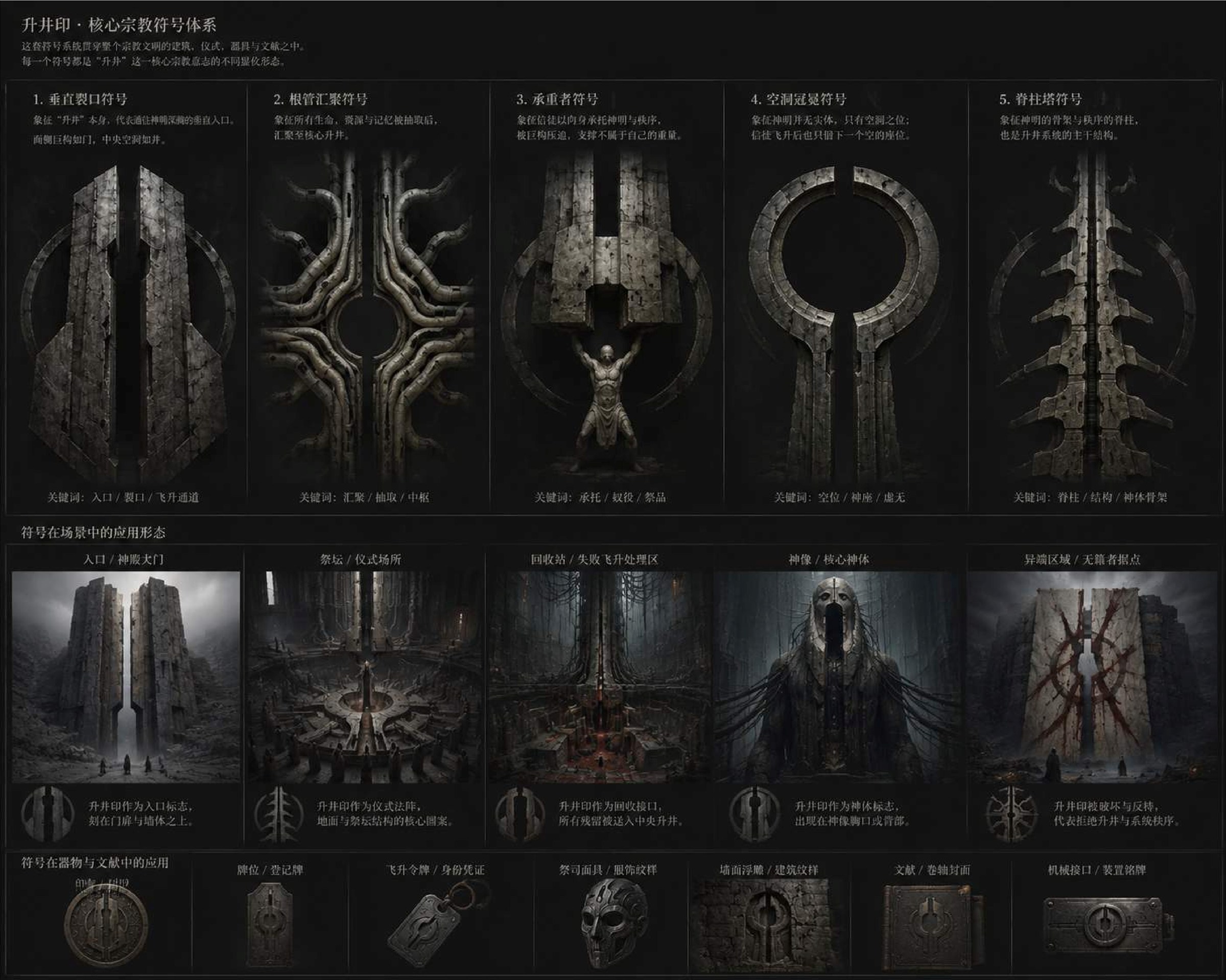
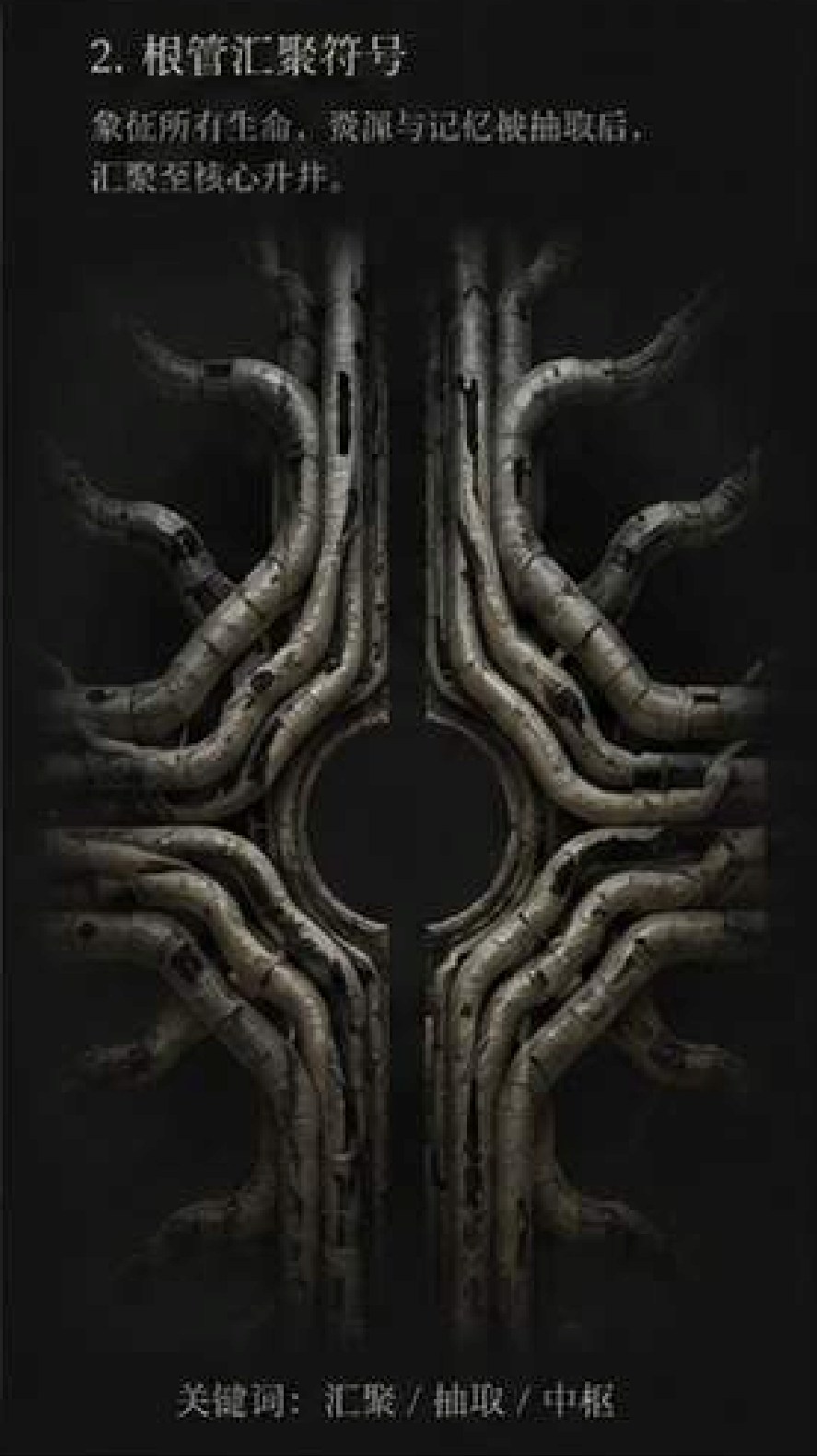
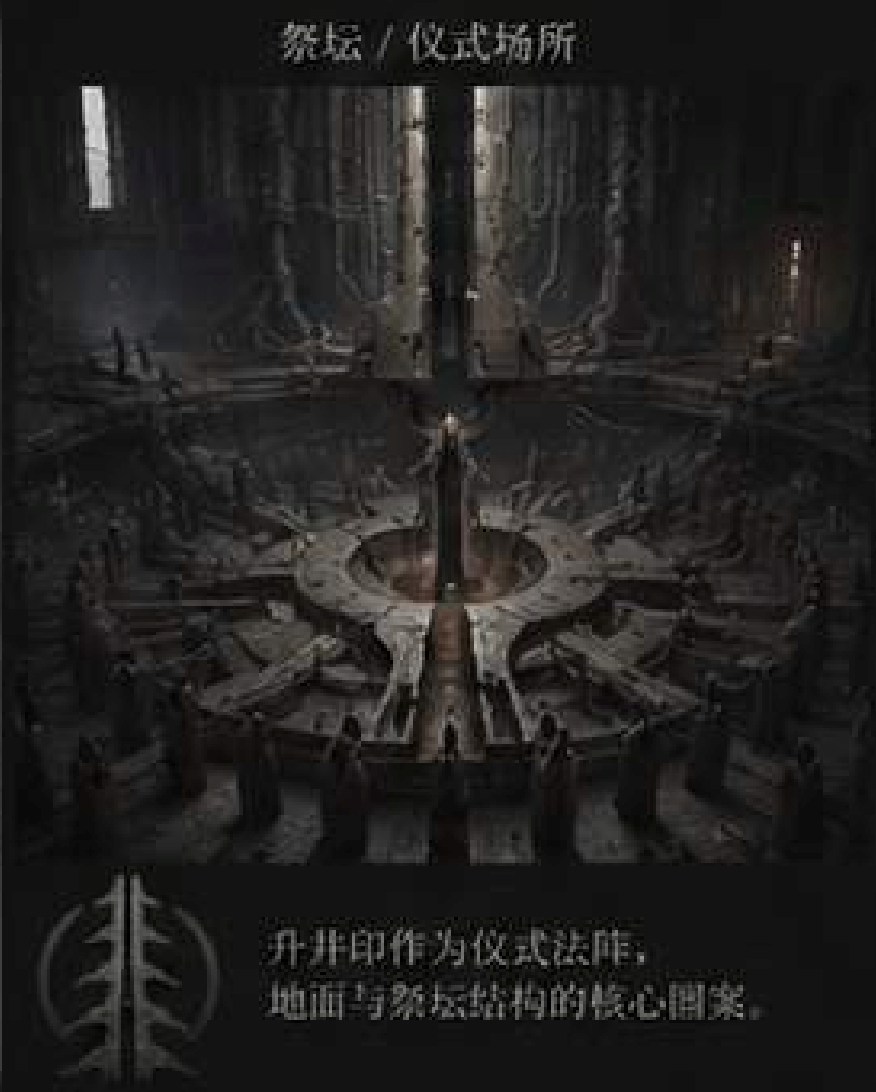
The religion's central image is the Ascension Well, a vertical shaft into the god's abyss. I designed five symbols for it (vertical rift, converging roots, the bearer, hollow crown, spine tower) and planned how they appear on gates, altars, recycling halls, idols and objects. The gateway, rings and pipes in both scenes come from this system.
升井印 · 核心宗教符号体系The Ascension Well seal五个符号,以及它们在场景、器物和文献中的应用。点击看大图。Five symbols and how they appear in scenes, objects and documents. Click to enlarge.
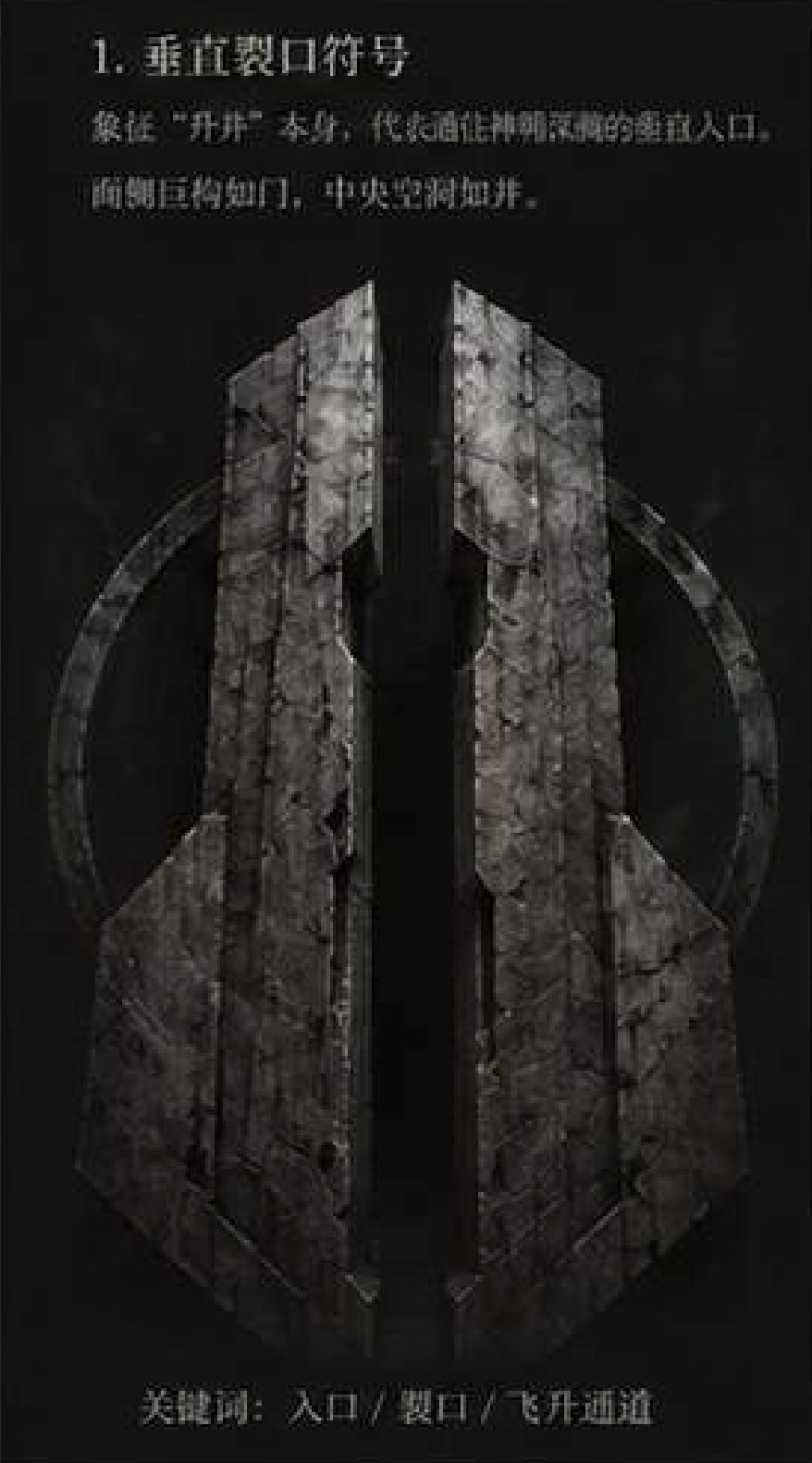
Meaning: the Ascension Well itself, a vertical entrance to the god's abyss; two masses form a gate around a well-like void. In the scene: a vertical slit of light between the two halves of the gateway.
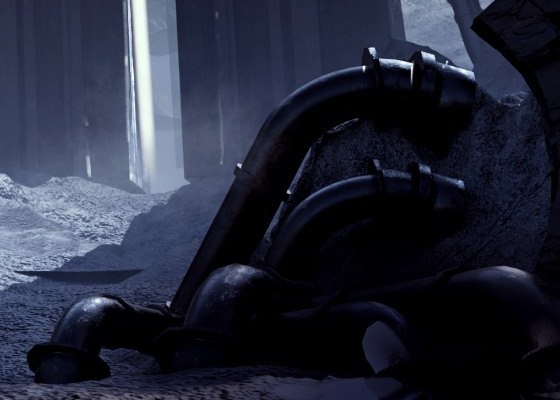
Meaning: all life, resources and memory are extracted and drawn into the core well. In the scene: pipes on the ground, meant to read as flesh fused with machinery.
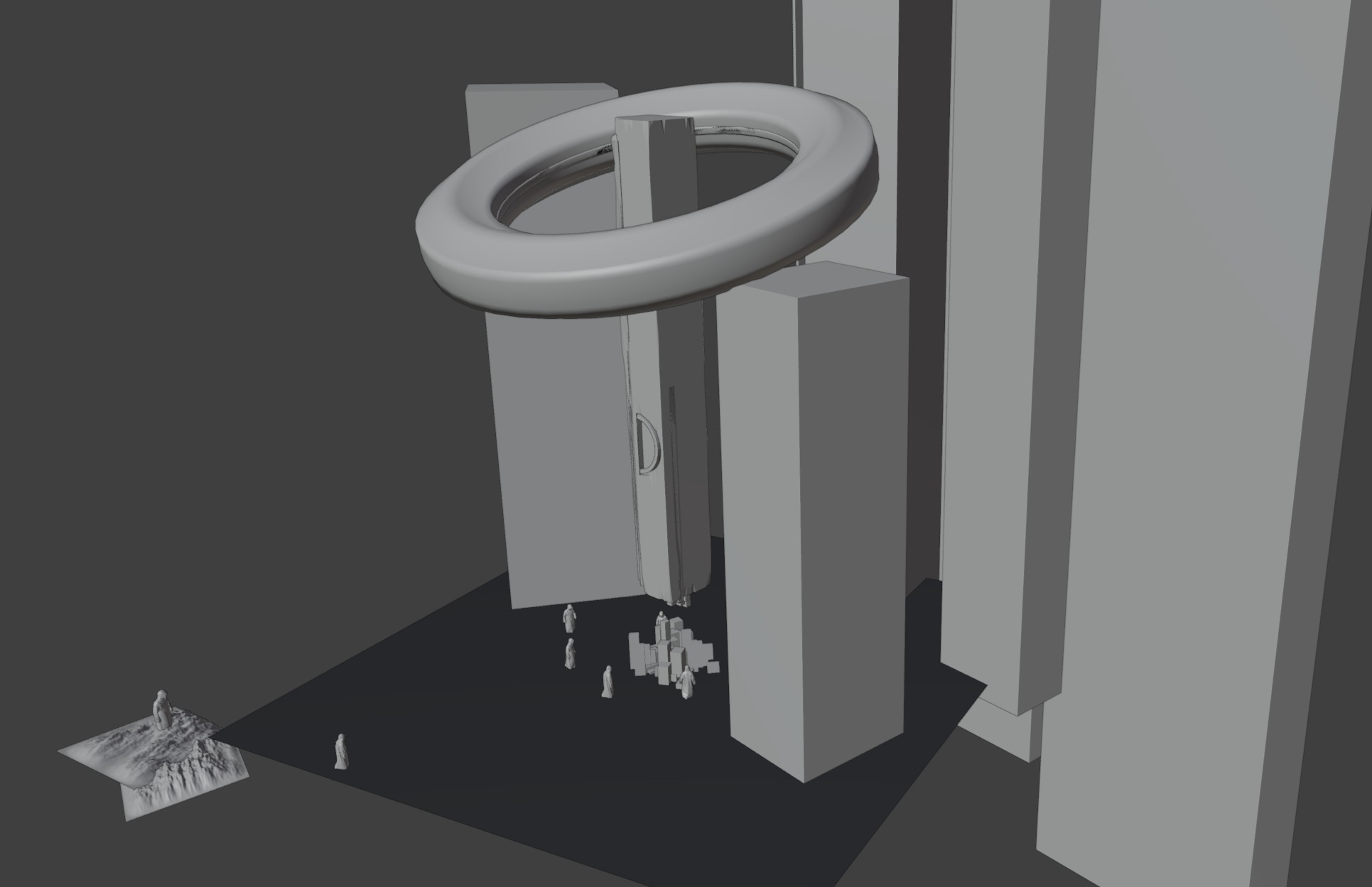
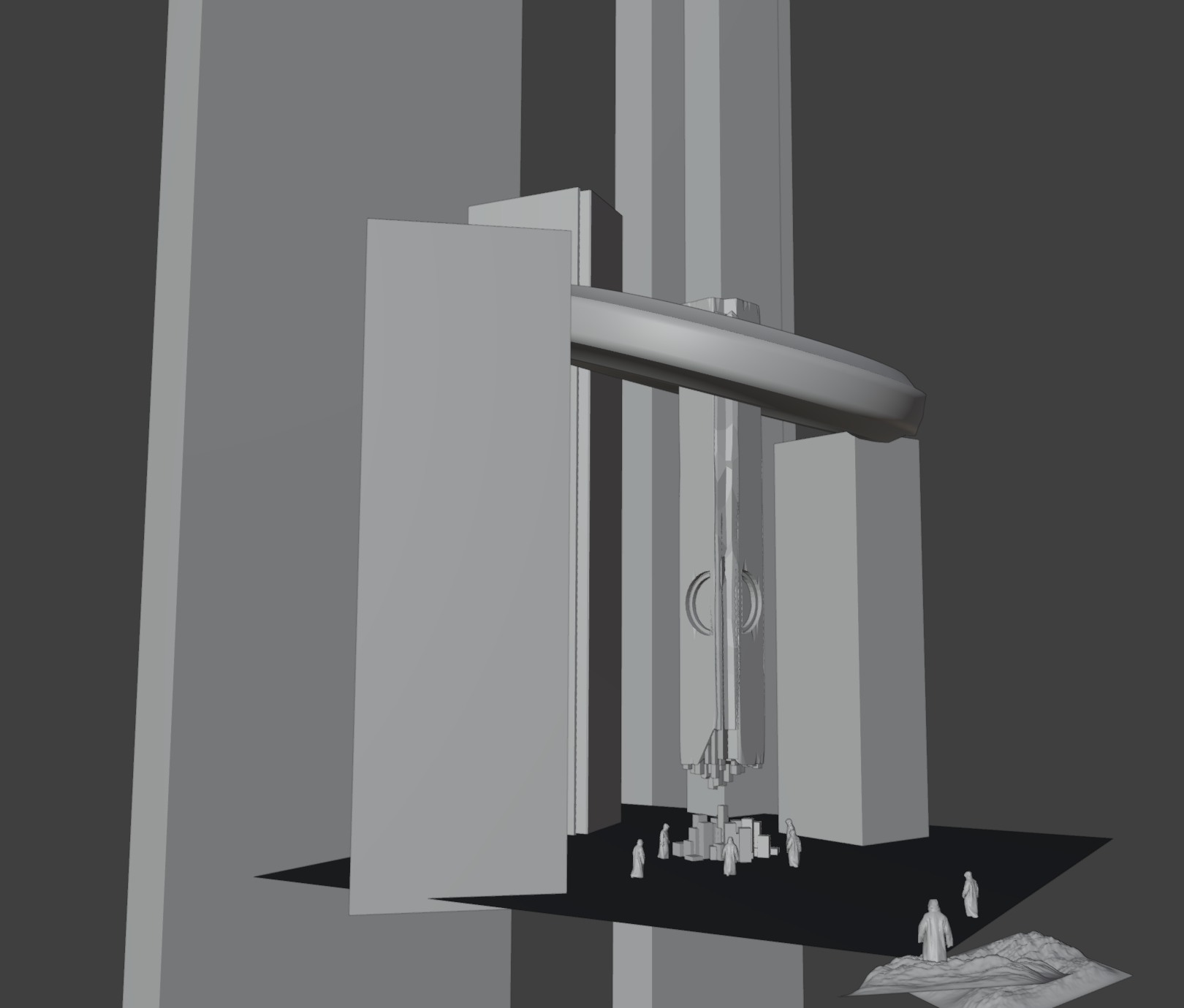
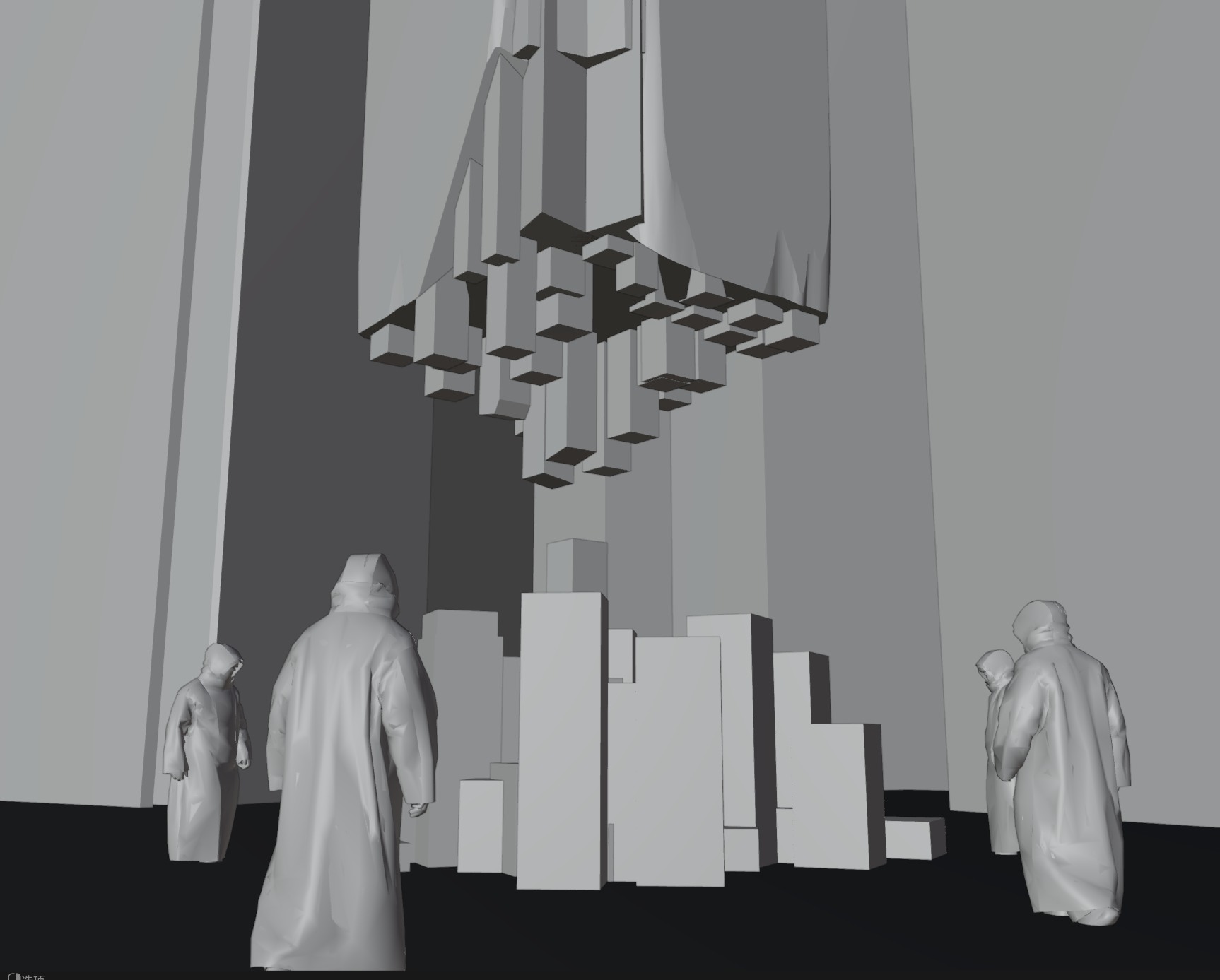
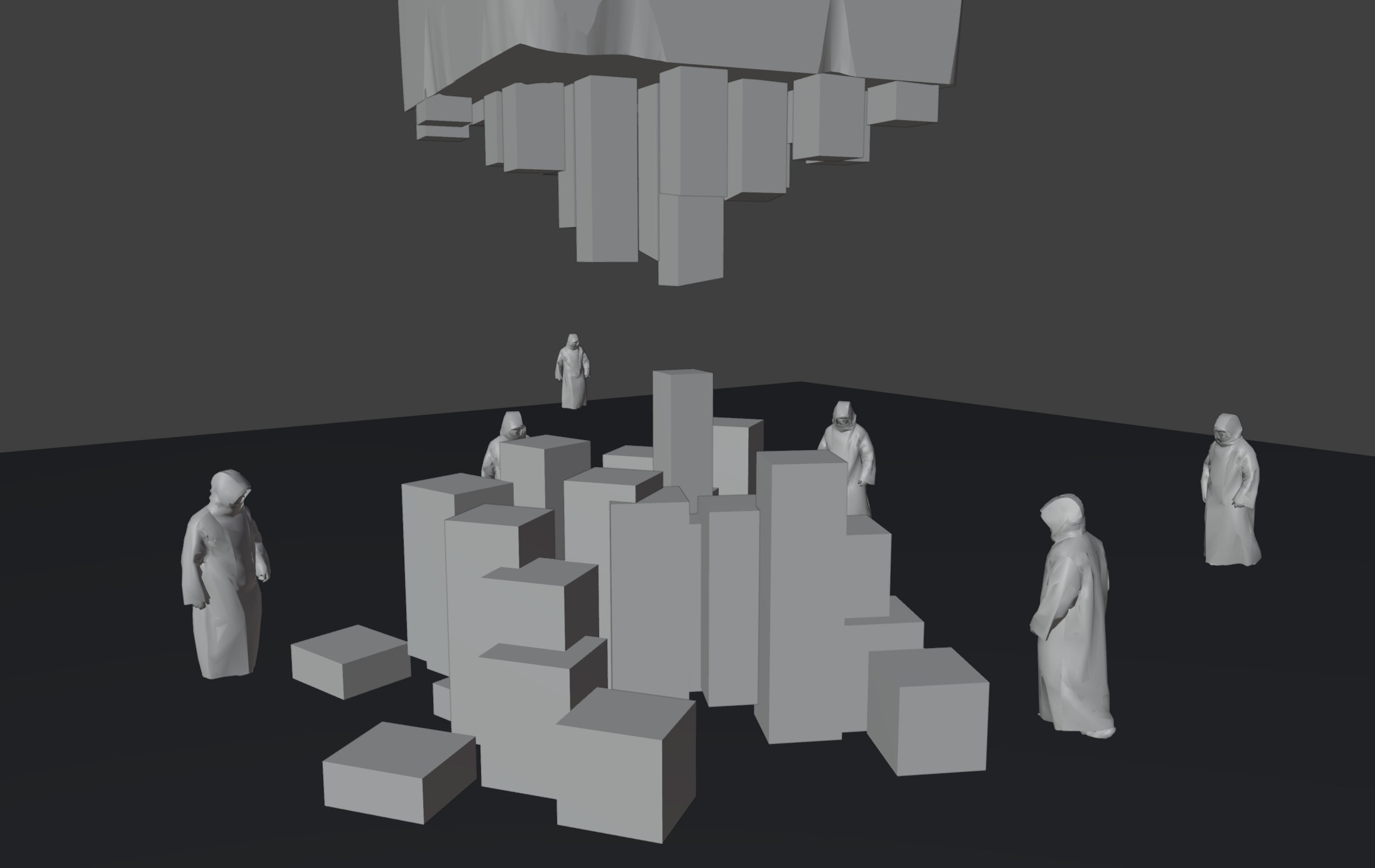
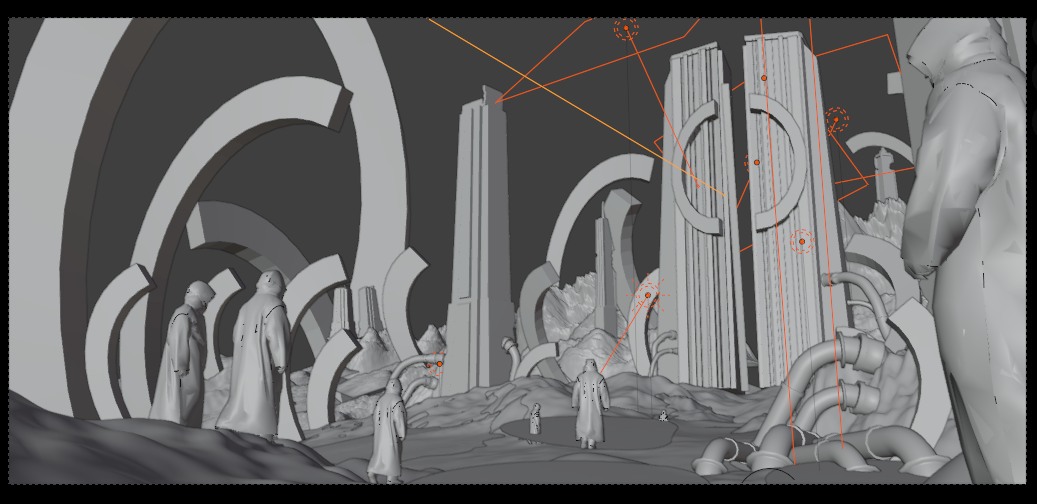
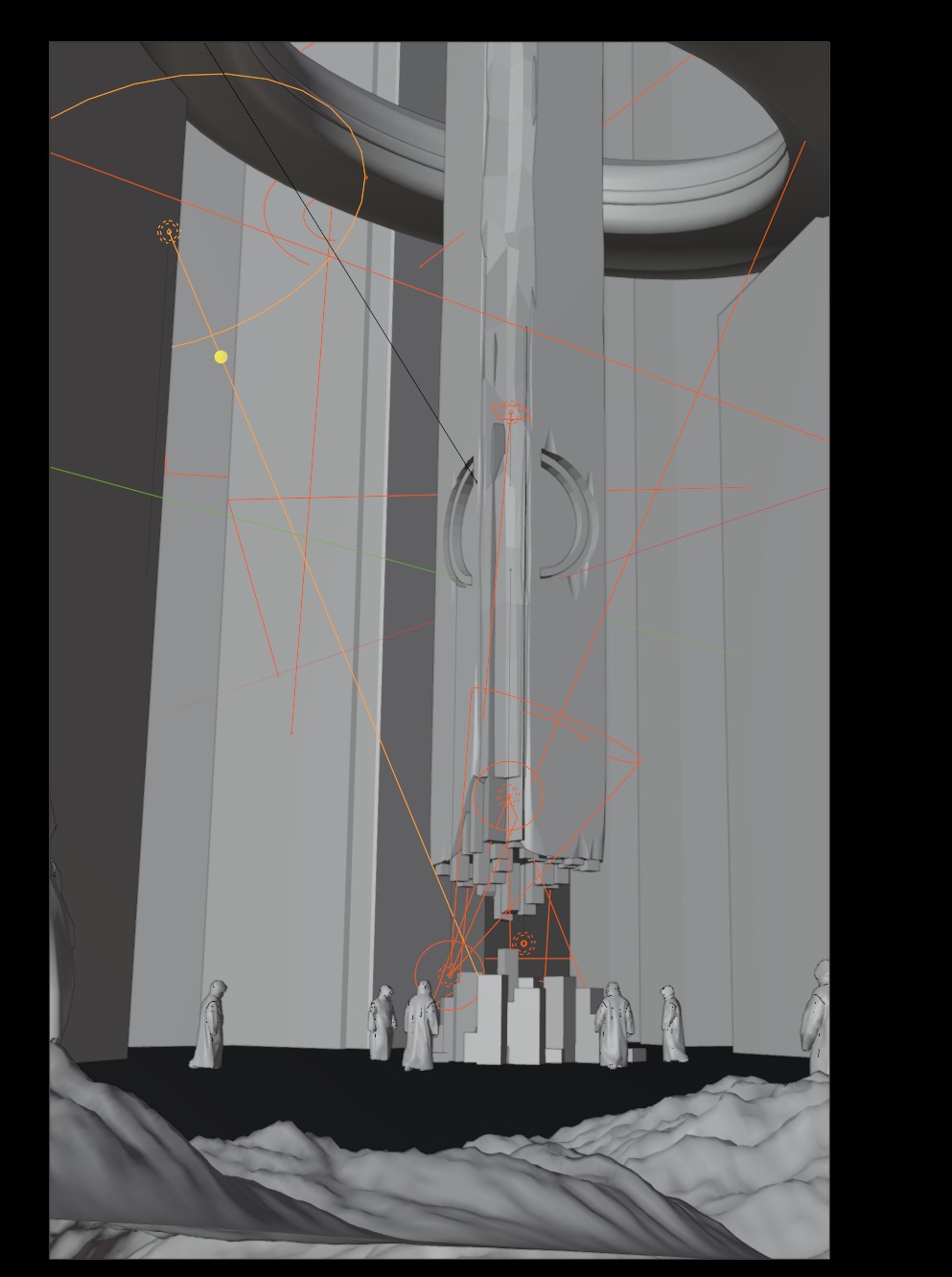
Initial sketches explored the architectural silhouette, human scale and the ritual focal point. These became Blender blockouts to test spatial proportion, camera composition and visual hierarchy before detailed modelling began.
外部Exterior巨门、圆环与竖向巨构的比例关系。Gateway, ring and vertical masses in proportion.
外部Exterior人物作为尺度参照放在巨构脚下。Figures at the foot of the structure as a scale reference.
内部Interior悬挂装置下的仪式中心与人物站位。The ritual centre beneath the suspended device, with figure positions.
内部Interior基座体块与围绕它的人群。Pedestal masses and the gathered figures around them.
05 / 07
建筑建模与资产Architecture and assets
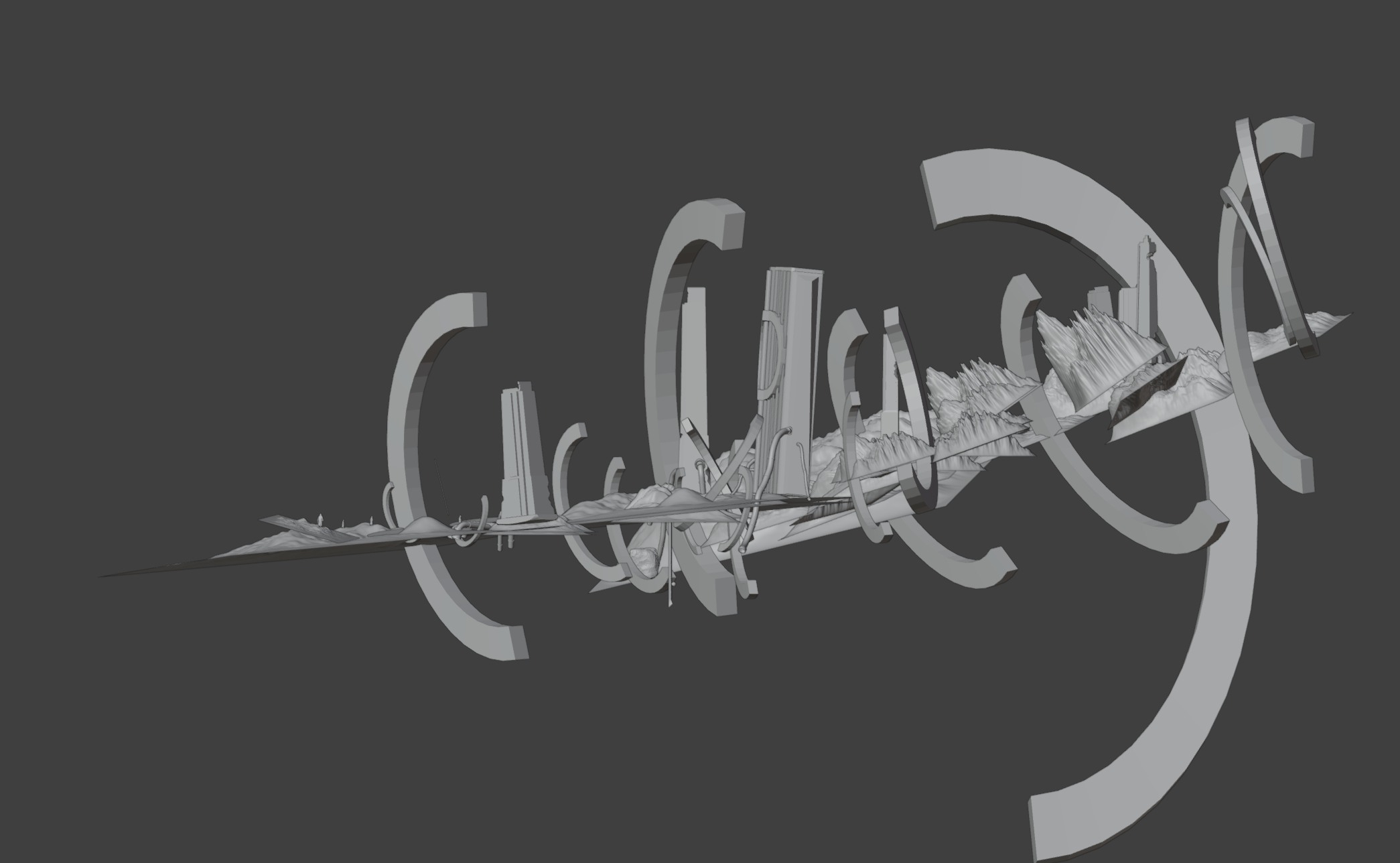
巨门、石柱、残环、地形和管道逐个建模。Gateway, pillars, rings, terrain and pipes, one by one.
资产布局Asset layout残环、地形碎块与竖向结构在外部场景中的整体排布。Broken rings, terrain pieces and vertical structures laid out for the exterior.
巨门Gateway竖向沟槽与圆形标记。Vertical grooves and the circular mark.
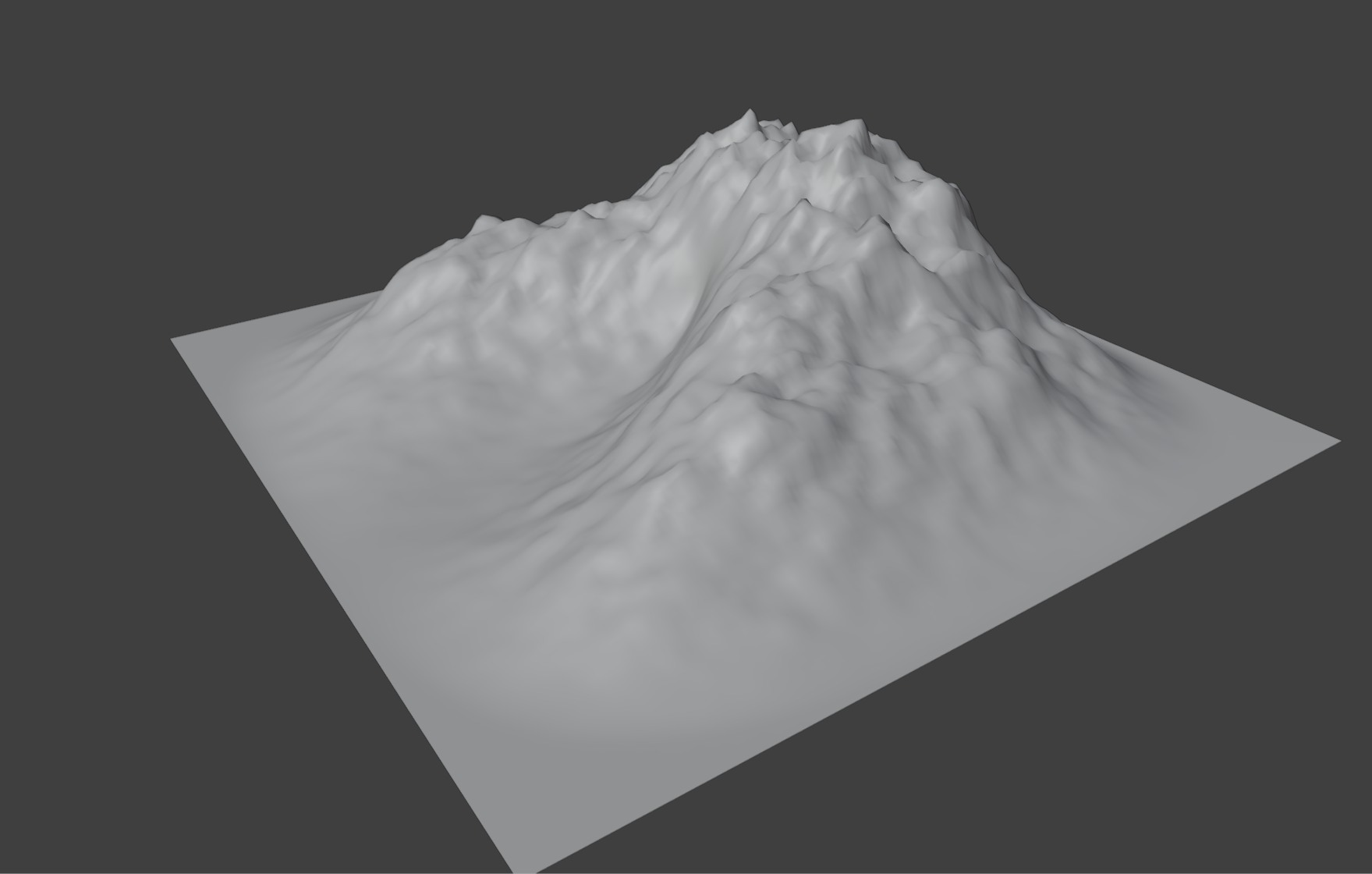
地形Terrain荒野的起伏与岩脊。Wilderness relief and ridges.
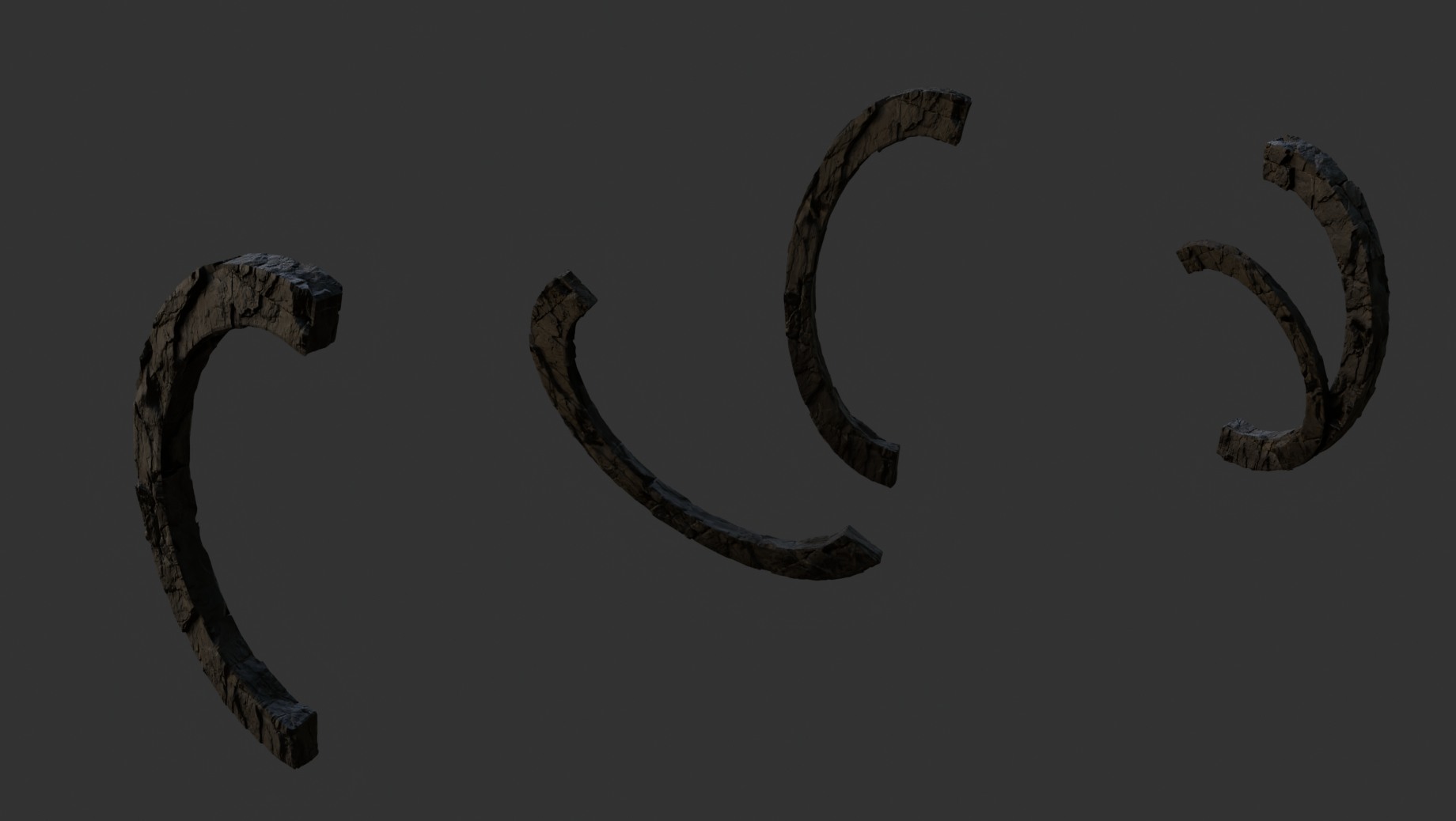
残环Broken rings破损、倾斜的环形构件。Damaged, leaning ring pieces.
06 / 07
用光确立核心,用雾拉开距离Light defines the core; fog gives it depth
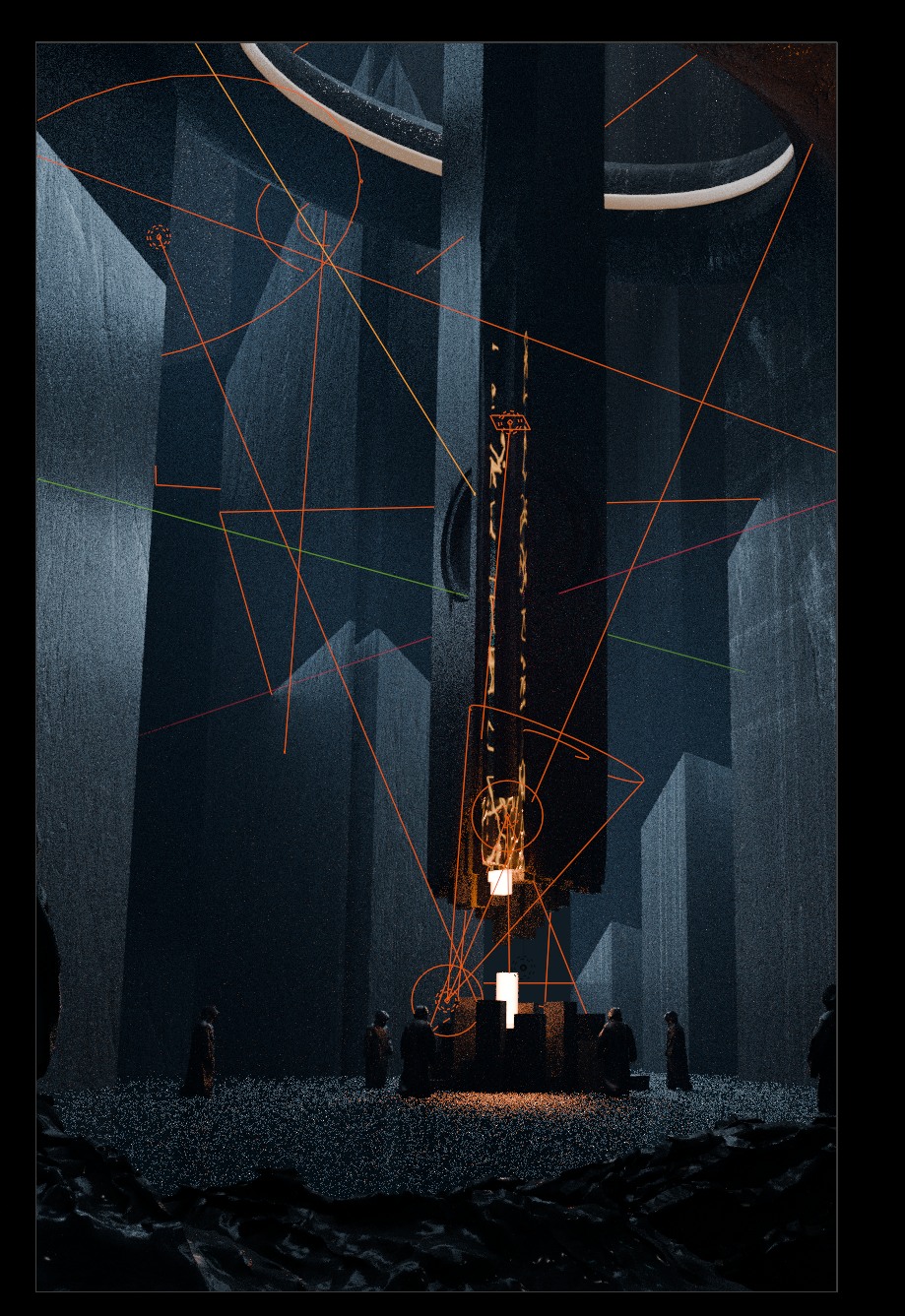
冷暗的世界,只留一处暖光。A cold, dark world with a single warm light.
灯光过程Lighting process从灯光布置到体积雾From light placement to volumetric fog
01 · 布光Placement
白模上的光线方向Light directions on the blockout
先确定主光从哪里来、照向哪里。
First decide where the key light comes from and where it lands.
02 · 体积雾Fog
冷色体积雾Cold volumetric fog
雾吃掉远处的结构,只留下剪影与光束。
Fog swallows distant structures, leaving silhouettes and shafts.
03 · 内部Interior
内部布光Interior light rig
光从核心向上、向外打出。
Light radiates up and out from the core.
04 · 完成Final✓
暖光核心The warm core
冷暗的高墙衬托核心唯一的暖光。
Cold, dark walls set off the only warm light.
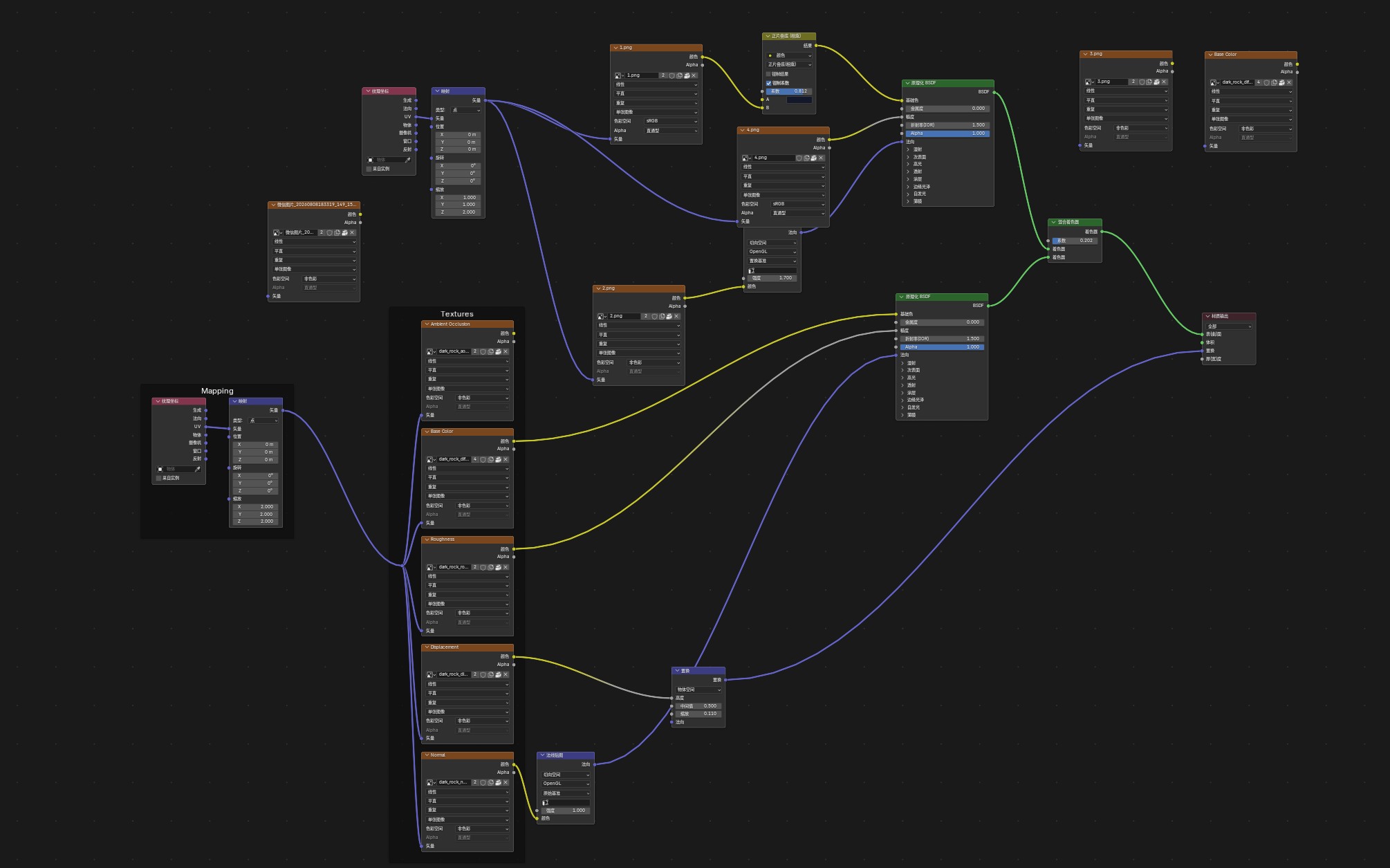
材质细节与节点Material details and shader nodes
材质节点Shader nodes程序化的石材与风化。Procedural stone and weathering.
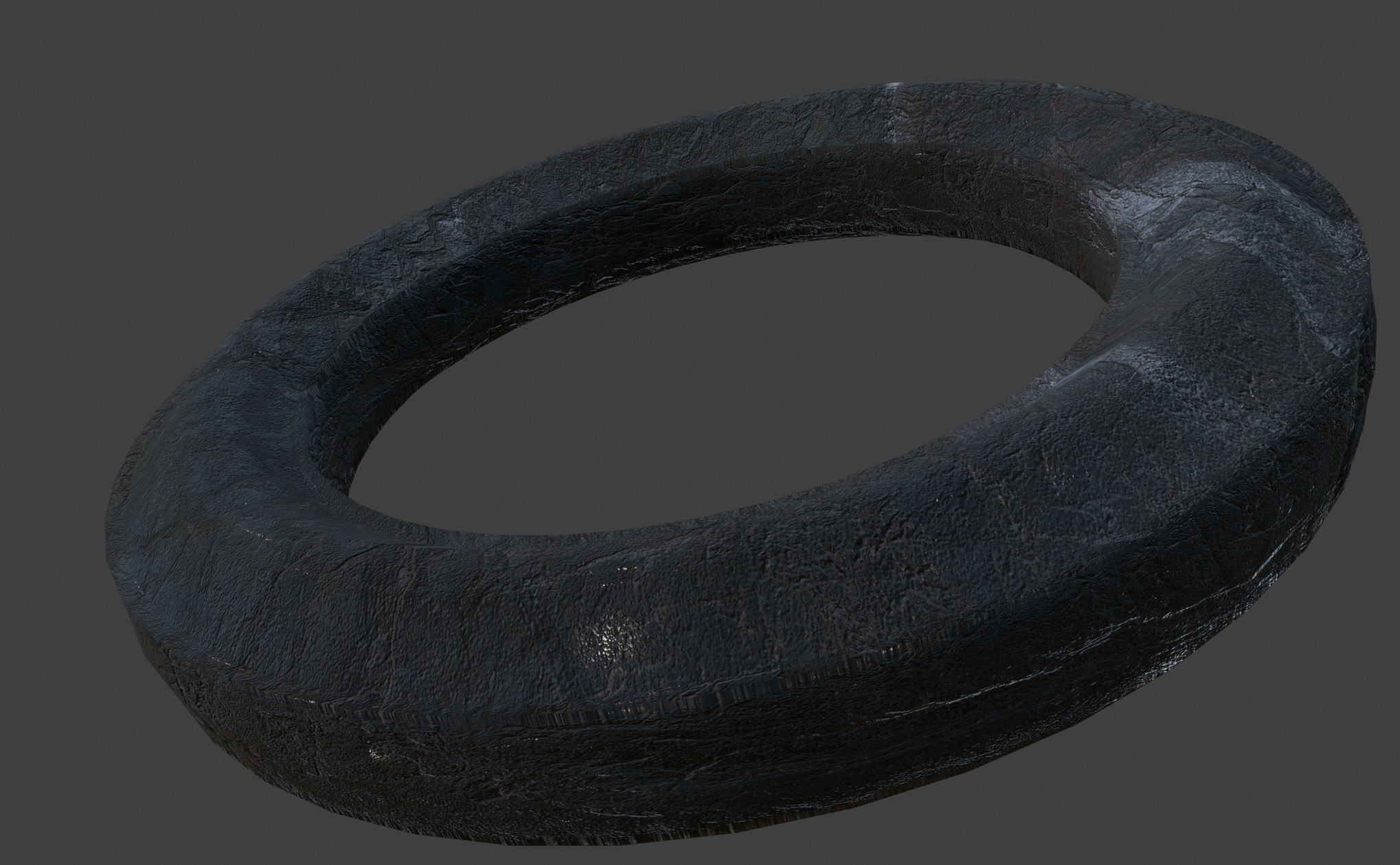
圆环材质Ring material暗色石材上的侵蚀痕迹。Erosion on dark stone.
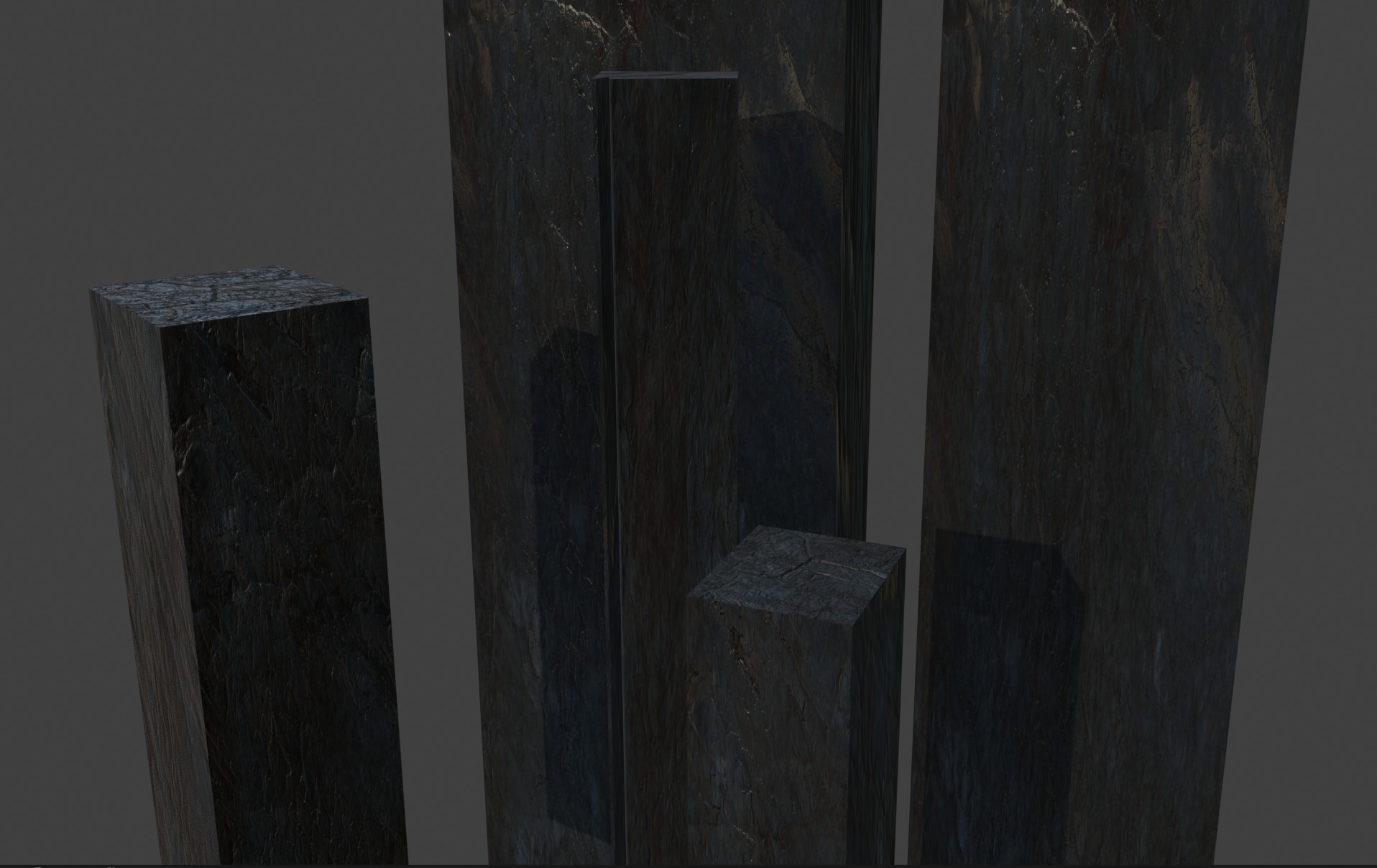
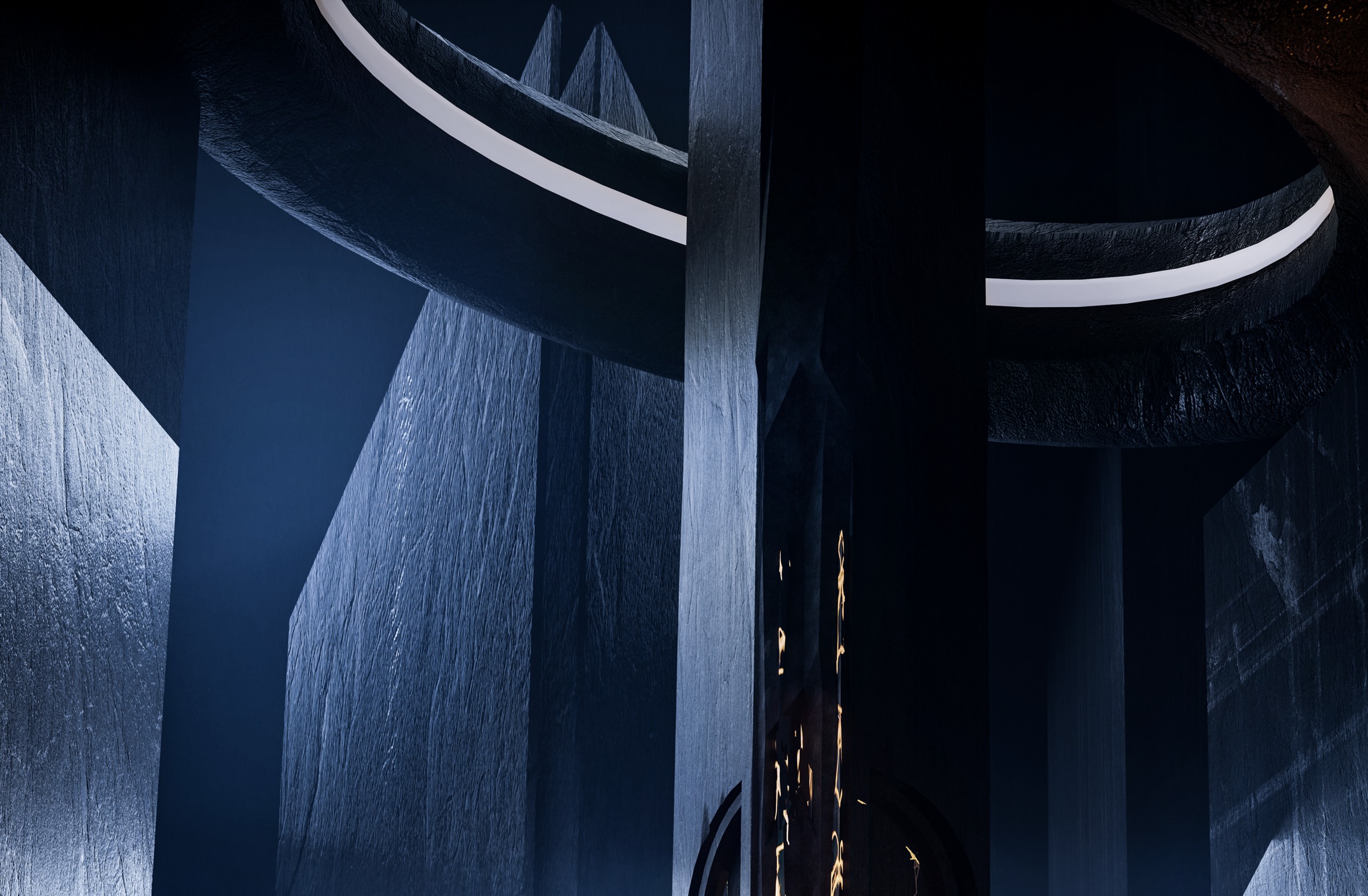
石柱Pillars竖向纹理与湿冷的反光。Vertical texture and cold, damp highlights.
残环Broken rings赋予材质后的环形构件。Ring pieces with materials applied.
07 / 07
一套符号,随行进逐步显现One motif, revealed along the way
两个场景的共同线索、自我评价与下一步。What ties the two scenes together, a self-assessment, and what comes next.
○
外部残环Broken exterior rings
破损与倾斜留下时间的痕迹,也标示朝圣路径。
Damage and leaning forms suggest time passing and mark the route.
◐
巨门圆形标记Circular gateway mark
保留可辨认的共同符号,标识进入核心的边界。
A recognisable shared symbol marks the boundary of the core.
●
内部环形结构Interior ring structures
完整、有序的结构围绕核心,强化仪式中心。
Complete, ordered structures surround the core and reinforce the ritual centre.
连续的路径、重复的圆环符号与逐步显露的光源,让两个场景构成同一段朝圣经历。
A continuous route, repeated ring motifs and a gradually revealed light source connect the two scenes into one pilgrimage.
自我评价Self-assessment哪些达到了,哪些还没有What worked, and what didn't yet
✓
达到预期Worked
人与建筑的尺度反差、冷暖光与体积雾营造的距离感,以及圆环符号在内外两个场景中的延续。
The contrast in scale between figures and architecture, the distance created by warm and cold light with volumetric fog, and the ring motif carried across both scenes.
✕
没有达到Not yet
部分管道的设计。原计划通过管道的分布营造肉体与机械结合的效果,但目前在视觉上还没有达到这个目标。
Some of the pipe design. The plan was to use the distribution of pipes to suggest flesh fused with machinery, but visually it does not reach that goal yet.
下一步:入口过渡Next: the threshold
在巨门附近补一个过渡镜头:两侧保留门体轮廓,远景先露出部分悬浮装置,进入后才看清完整核心。
Add a transition shot at the gateway: door slabs frame both sides, part of the device shows in the distance, and the full core is revealed only after entering.
下一步:人物行为Next: figure behaviour
让人群从分散行进转为有序聚集,朝向核心,姿态明确表达停留与等待。
Turn scattered movement into an ordered gathering, facing the core, with poses that clearly read as pausing and waiting.
下一步:材质关联Next: material continuity
石材、竖向沟槽与风化程度在内外两个场景中保持关联,让符号的变化更可信。
Keep stone, vertical grooves and weathering related across both scenes so the motif's change reads as believable.
Project 01 · Blender
仰望, 然后等待。Look up. Then wait.
两张最终渲染都可以点开看原图。
Both final renders open at their original resolution.